Roof waterproofing: where is the leak beneath the tiles coming from?
Hi, it’s Ivar. A leak under the roof tiles often comes from a faulty junction, a damaged tile, or a missing or punctured roofing underlay. To stop it for good, you need to trace it back to the actual entry point, then repair the roof covering and check the insulation and attic ventilation. The stain on the ceiling may be several metres away from the leak.
Quick checklist:
- Look for water stains, blistering paint, and musty smells after rain.
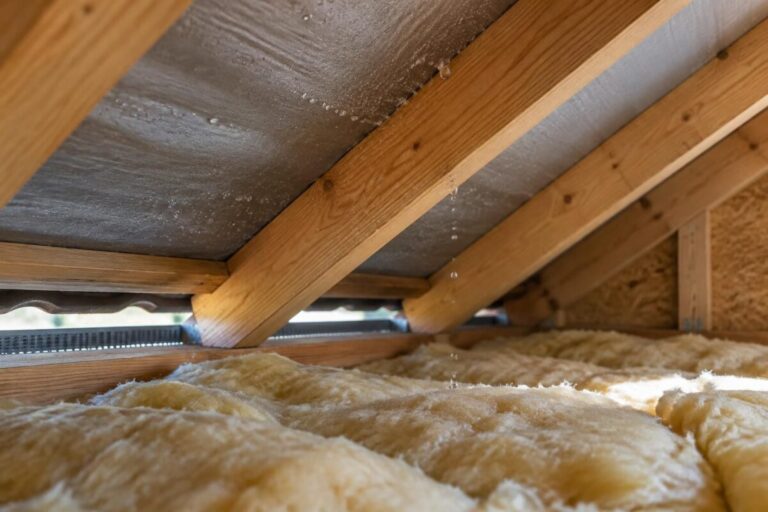
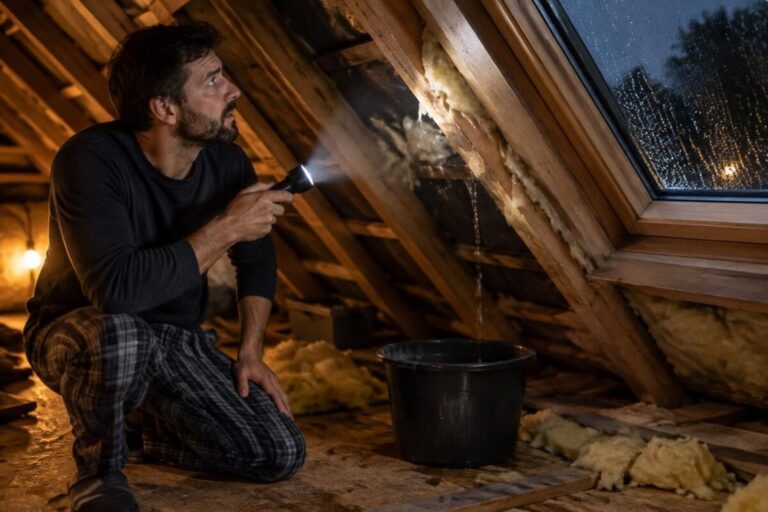
- From the attic, look for water marks on the rafters, without walking on the roof covering.
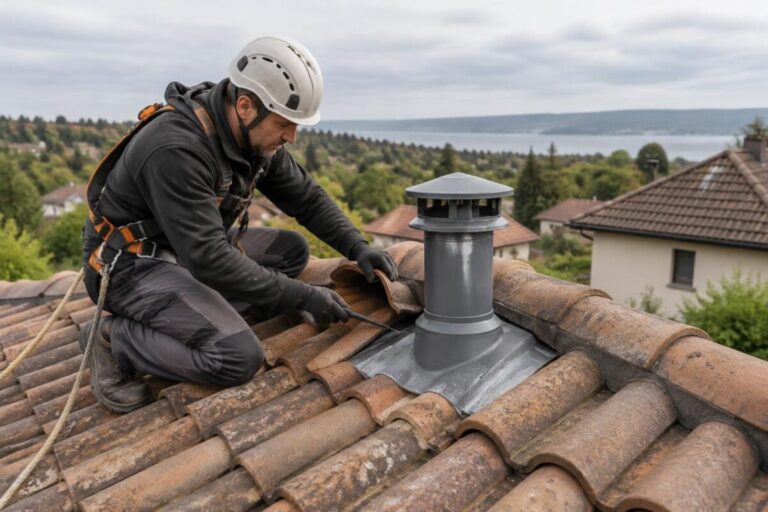
- Have any displaced or broken tiles, the ridge, and the junctions around chimneys and roof windows checked.
- Clear blocked gutters and make sure the water drains away properly.
- If the damp returns, ask for a leak assessment before making any interior repairs.
Water does not always drip straight down. It can run along a batten or purlin, then emerge through the ceiling far from where it entered. That is why repainting the stain without repairing the roof covering is like covering up a warning sign.
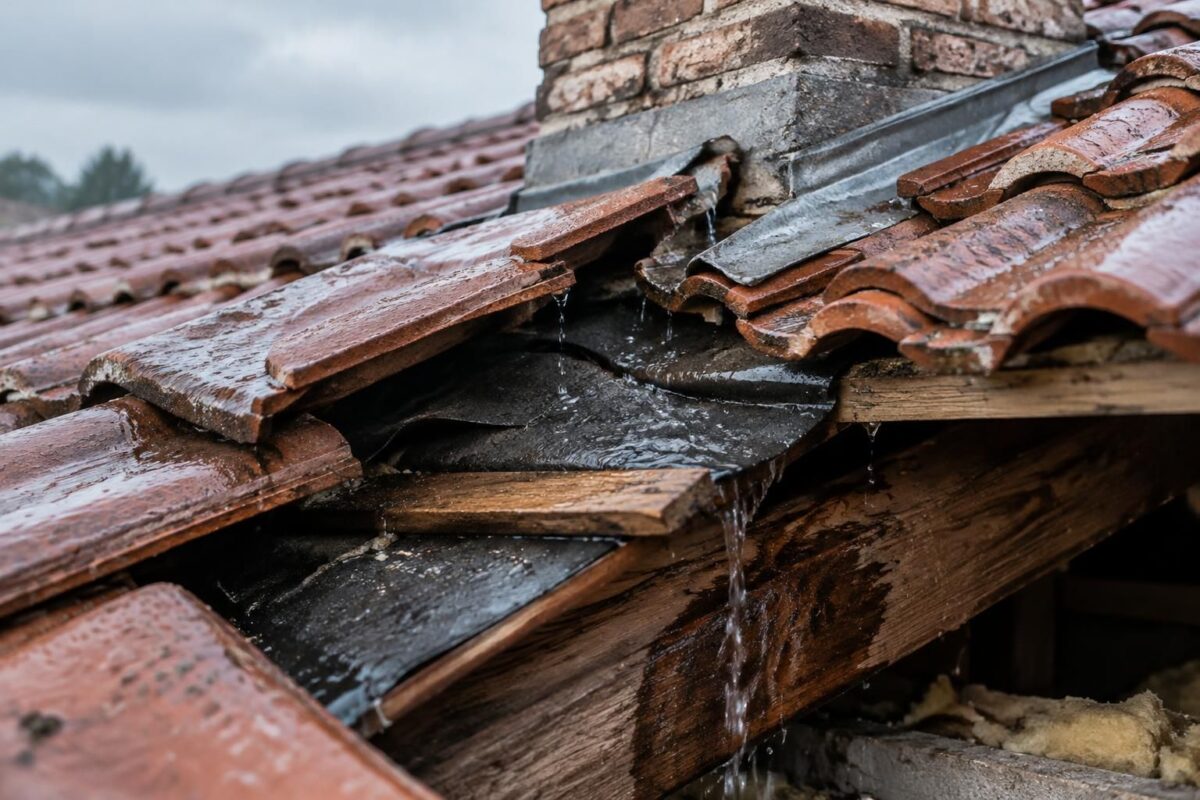
Junctions are often the first places to inspect: cracked roof flashing around a chimney, a clogged valley, a worn roof-window flashing, or a damaged ridge. A broken or displaced tile can also let water in, especially when rain is driven by wind.
| Possible cause | Common sign | Useful check |
|---|---|---|
| Broken or displaced tile | Water mark after heavy rain | External inspection by a roofer |
| Damaged flashing or valley | Dampness near a chimney or roof corner | Check the junctions and seals |
| Missing or torn roofing underlay | Water in the attic despite the tiles being in place | Inspect the underside of the roof covering |
| Condensation or inadequate ventilation | Widespread dampness, sometimes with no clear link to rainfall | Check ventilation and insulation |
The roof covering forms the first barrier, but the roofing underlay can catch water that gets between the tiles and guide it towards the eaves. If it is torn, poorly installed, or missing, driving rain can reach the insulation and roof structure. During a renovation, an underlay suited to the roof and installed with the correct overlaps improves watertightness without trapping water vapour; these points are covered in this guide to roofing underlay and airflow.
Bear in mind: not every damp mark is caused by a leak. Condensation due to poor ventilation can affect a larger area, while a leak often gets worse after rain. These pointers on ventilation and misleading signs of leaks can help you tell the difference. Wet insulation loses effectiveness and should be inspected once the water ingress has been stopped.
If the stain appears after driving rain, first have the flashing and roof covering on the windward side inspected. If the dampness is widespread and persists even in dry weather, also check the attic ventilation before concluding that there is a leak.
A common mistake is to patch the ceiling or apply sealant from inside without locating the source. Water often comes back by another route: the repair needs to address the cause, not the visible mark.
Rule of thumb: “Fix the entry point, then dry out whatever the water has affected.” Waterlogged insulation or darkening wood should be checked promptly to limit mould and lasting damage.
For a leak assessment, a roofer generally starts by inspecting the attic and the roof’s vulnerable junctions. If the source remains hidden, a zone-by-zone water test or a thermal imaging camera can help locate it; avoid climbing onto the roof yourself, especially when it is wet.
The repair involves three simple steps: 1) find the damp mark in the attic and link it to the suspected areas of the roof; 2) fix the cause — tile, flashing, valley, ridge, or underlay — and check that water drains away; 3) dry the area, then check the condition of the insulation, roof structure, and ventilation. This method protects the roof better than a temporary patch.
To keep the roof watertight over time, inspect the roof covering after strong winds, clean the gutters at least in spring and autumn, and control moss without damaging the tiles. A well-ventilated roof and materials suited to the pitch and climate also help protect the insulation and roof structure in the long term.
Thanks for reading this far; Ivar