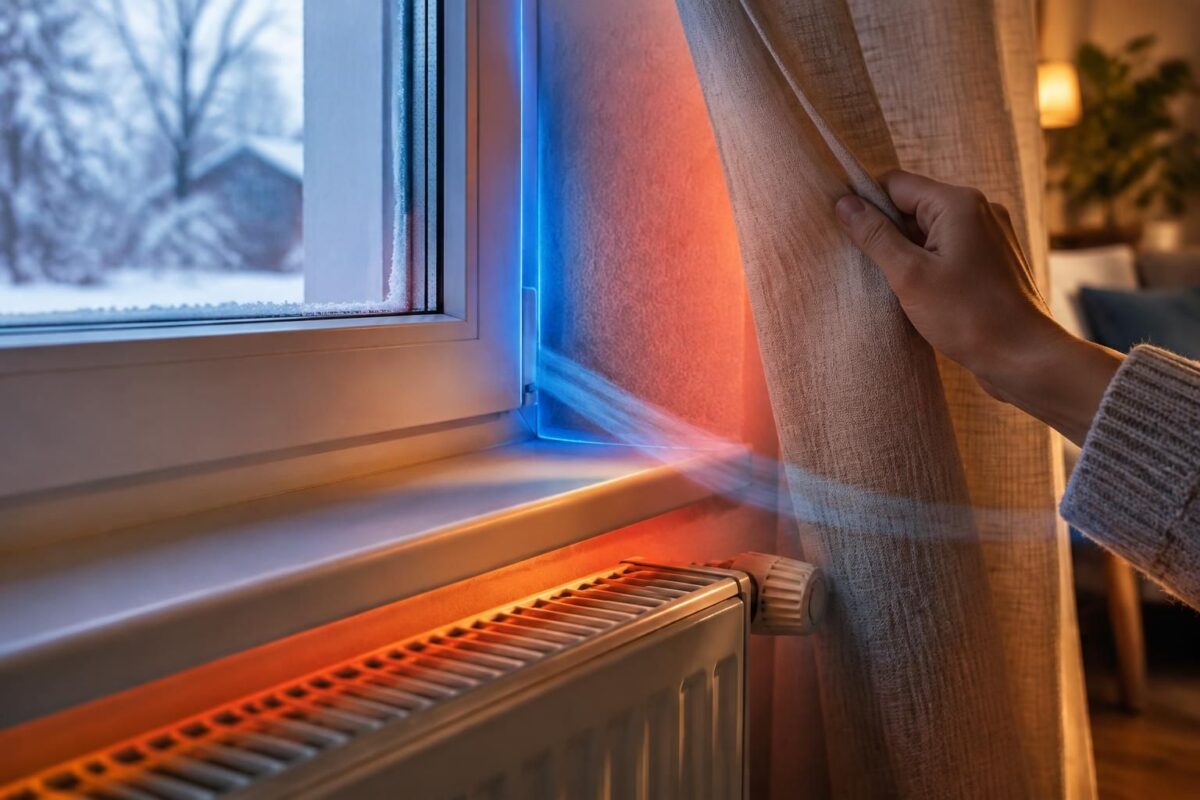
Thermal insulation: why can a small leak be so costly?
Hi, it’s Ivar. A small air leak can be costly because it lets heat escape continuously: find where it’s coming from, then fix the air sealing without blocking roof ventilation. Even thick insulation loses some of its effectiveness if air circulates behind or through it. The attic and junctions are often the first places to check. A well-protected home retains heat better and stays more comfortable.
Quick checklist:
- Check for drafts around hatches, windows, and roof connections.
- See whether the attic insulation is compressed, damp, or displaced.
- Check for signs of condensation and cold spots on the walls.
- Inspect the junctions between the roof, walls, and floors, where a thermal bridge can form.
- Get an assessment before planning major energy-efficiency upgrades.
Why an air leak increases your energy bill
An air leak lets cold air in and carries some of the heat produced by your heating system outside. The system then runs for longer to maintain the temperature, which can increase your energy bill without making the room truly comfortable.
The problem isn’t always caused by a large, visible hole. A worn seal, a poorly fitted hatch, or a gap around a cable can sometimes create a persistent air leak. In a home, several small defects can add up and accelerate heat loss.
If the attic is cold and the insulation is compressed, checking it is often a priority. If the roof and attic seem to be in good condition but drafts appear near windows or walls, look instead for air leaks and thermal bridges.
Weak points to check in the roof
Heat naturally rises. Inadequate thermal insulation beneath the roof can therefore let a significant amount of energy escape, especially if the insulation is poorly installed or air can pass around its edges.
A common mistake is to add a layer of insulation without checking the roof’s condition or air movement. Damp or compressed insulation may work less effectively and contribute to condensation problems: air sealing must be considered together with suitable ventilation.
For more information, see these tips on air leaks beneath a sloping roof and on ridge ventilation.
A small leak, major effects on comfort
A room that stays cold despite the heating being on, a draft near a hatch, or a noticeable temperature difference between floors are useful clues. Cold surfaces can also make discomfort more noticeable and, depending on the conditions in the home, contribute to condensation.
The rule is simple: find the leak before adding more insulation. An assessment can help distinguish between an installation defect, an air leak, a thermal bridge, or old insulation that needs to be checked.
In an older home, a layer of insulation may still be in place but have lost some of its effectiveness because it has compressed or shifted. Conversely, insulation that appears to be in good condition doesn’t rule out a leak at a junction or opening.
Identify the area to address first
The attic and roof are often among the first places to inspect, but the priority depends on the home’s condition. Walls, ground floors, windows, and connections between building elements can also cause heat loss: it’s better to prioritize the work than to redo everything blindly.
| Observed sign | Area to check | Useful action |
|---|---|---|
| Compressed or displaced insulation | Attic and sloping roof sections | Check the condition and continuity of the insulation |
| Draft near an opening | Window, hatch, or connection | Inspect the seals and air gaps |
| Localized cold surface | Wall or junction | Look for a thermal bridge or an insulation defect |
| Dampness or condensation | Roof and ventilation | Check the source of the moisture before adding material |
Well-designed ventilation remains essential: sealing the roof against unwanted air leaks doesn’t mean eliminating the necessary air exchange. These resources explain the balance between air sealing and airflow and the risks of insulation exposed to moisture.
How to fix a leak without compromising the insulation
The work should address the cause, not just hide the symptom. Foam or sealant applied in the wrong place can interfere with ventilation or trap moisture; the right solution therefore depends on the area and type of roof.
- Locate the defect: inspect the connections, hatches, openings, and condition of the insulation. If in doubt or if you see signs of moisture, ask a professional to assess it.
- Choose a suitable repair: repair the seals or restore the continuity of the insulation, depending on the defect identified. Keep the roof’s ventilation provisions clear.
- Check the result: see whether drafts and temperature differences decrease, then watch for any signs of condensation.
For a home, the cost of the work can vary widely depending on the area, access, materials, and condition of the roof; an on-site quote is needed to estimate the budget. A targeted repair can prevent more extensive work, but it doesn’t replace addressing damaged insulation.
For more information, compare the precautions for protecting insulation from moisture and the role of roof ventilation.
Frequently asked questions about small heat-loss leaks
Can a small air leak really increase heating costs?
Yes. A persistent leak causes uncontrolled air exchange indoors and can force the heating system to run more. Its impact depends on its location, size, and the home’s insulation.
Do you need to insulate the whole house if one room stays cold?
Not necessarily. It’s better to identify the area responsible: the attic, a wall, a floor, an opening, or a junction. An assessment can help prioritize the necessary work.
How can you tell if attic insulation needs to be checked?
Compressed, displaced, or damp insulation, rooms that are difficult to heat, and temperature differences are signs to investigate. The presence of insulation doesn’t guarantee that it’s still effective.
Can a roof be made completely airtight?
Unwanted air leaks should be limited while maintaining the ventilation intended for the roof. A suitable repair preserves the balance between insulation, air sealing, and moisture removal.
Thanks for reading this far; Ivar