Roof Ventilation: HPV Underlay or Airflow Problem?
Hello, Ivar here.
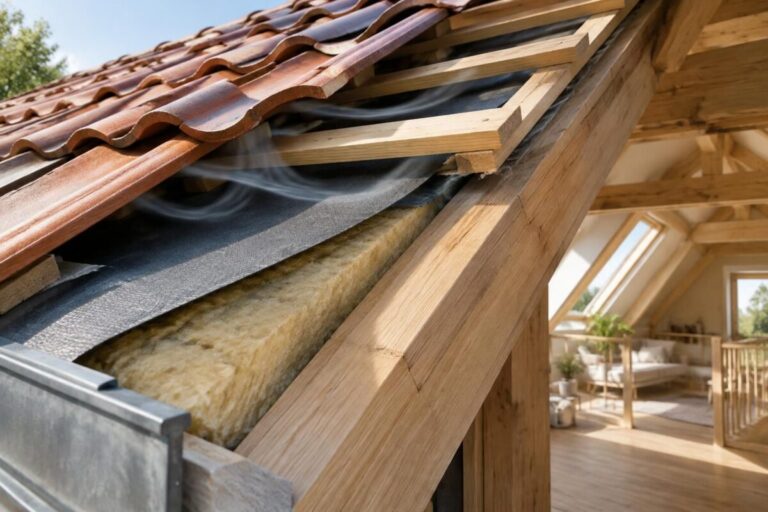
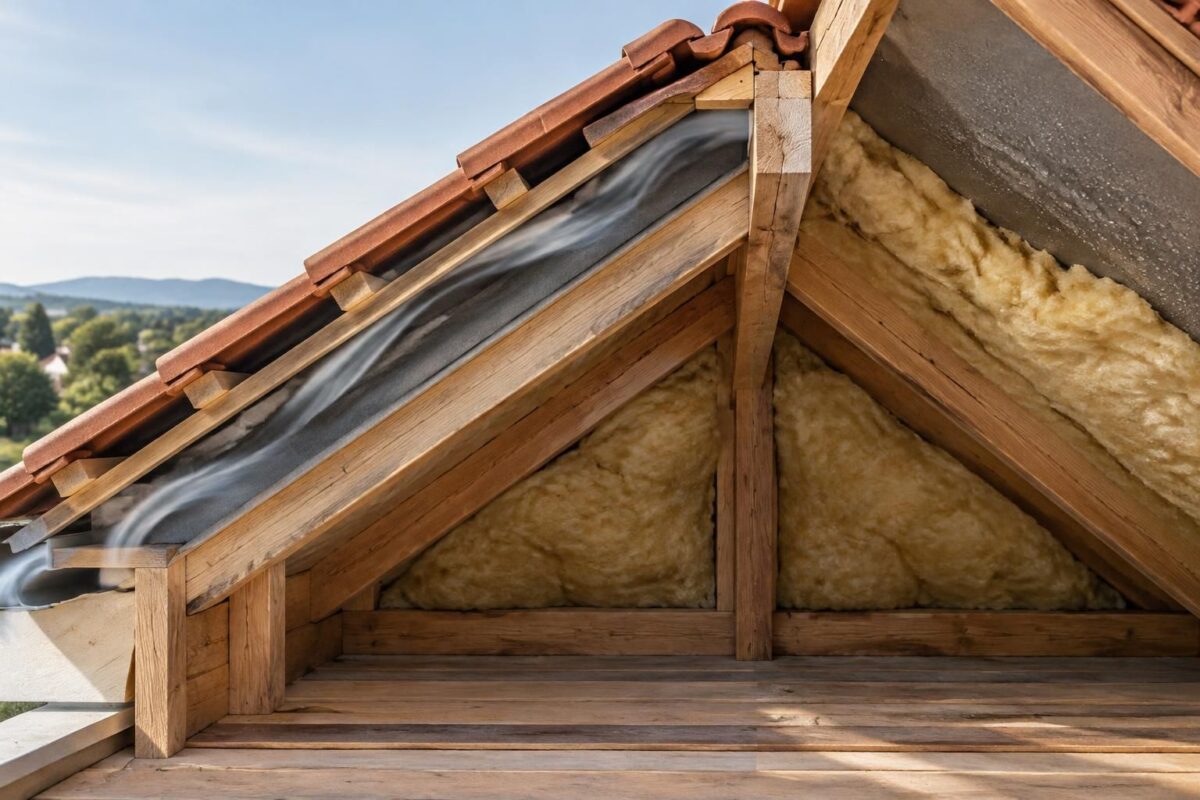
An HPV underlay can touch the insulation if the product allows it, but it does not eliminate the need for ventilation between the underlay and the roof covering. Airflow beneath the roof must remain continuous, from the inlets at the eaves to the outlets at the ridge. Confusing these two spaces can encourage condensation, mold, and damage to the roof structure.
What to do right away
- Locate the air inlets at the eaves and the outlets at the ridge; check that they are not blocked.
- Identify the underlay already installed and check its technical data sheet before allowing it to come into contact with the insulation.
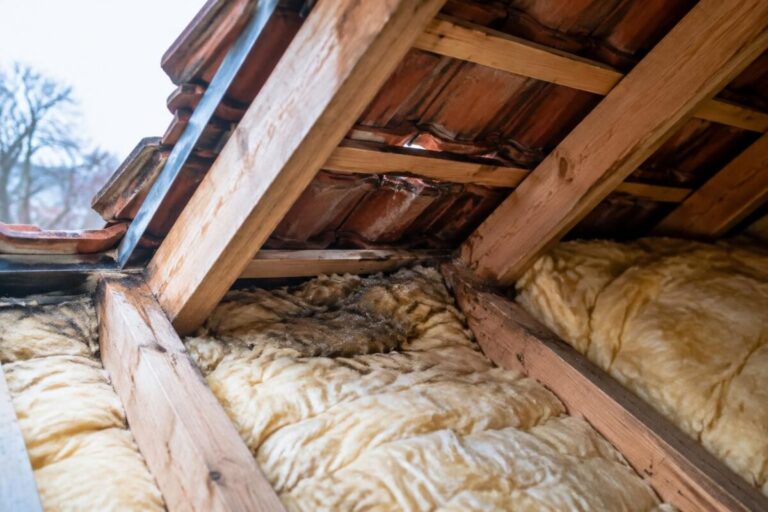
- Inspect the rafters and insulation: dark stains, a musty smell, or persistent dampness call for an assessment.
- Do not block an opening or remove the insulation before understanding the airflow path.
- When renovating, ask the roofer to specify the ventilation path and how junctions will be treated in the quote.
A properly selected HPV underlay protects the roof assembly without replacing its other components: to distinguish protection from airflow, also read this article about the underlay that protects but can also trap moisture. Before sealing an opening or suspicious mark, also check why ventilation should be checked before taking action.
A common mistake: thinking the HPV underlay replaces the air gap
HPV stands for “highly vapor-permeable.” A highly vapor-permeable underlay allows water vapor to diffuse to the outside while providing additional protection against certain water and dust ingress. It does not allow air to flow freely through the membrane.
The confusion often comes from the word “breathable.” In a roof assembly, two areas need to be distinguished: the space between the insulation and the underlay, and the ventilated air gap between the underlay and the roof covering. Some underlays can touch the insulation if their technical data sheet and installation system allow for it. Ventilation above the underlay must still be maintained, in accordance with the roof covering and applicable requirements.
What the underlay does—and what it does not do
| Component | Function | Point to watch |
|---|---|---|
| HPV underlay | Additional protection and vapor diffusion to the outside | Check the Sd value, substrate, and product specifications |
| Insulation | Reduces heat loss | Keep it dry and ensure it is installed continuously |
| Air gap beneath the roof covering | Moisture removal and airflow | Keep the path between inlets and outlets clear |
| Vapor barrier or vapor retarder | Manages vapor on the interior side, depending on the assembly | Do not confuse it with the exterior underlay |
The Sd value indicates resistance to vapor diffusion: the lower it is, the more easily vapor can diffuse. However, it is not enough on its own to choose a product. Mechanical strength, water resistance, approved substrate, spacing, and installation conditions also matter.
Roof condensation: signs to look out for
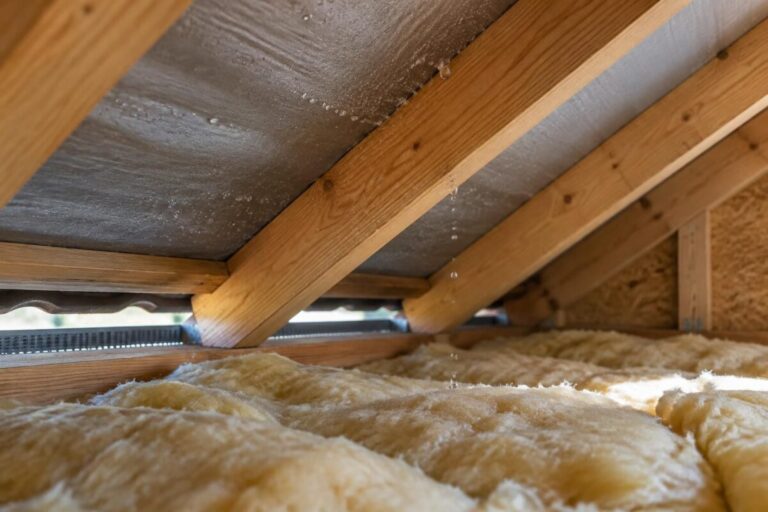
When airflow beneath the roof is interrupted, moisture can build up on cold surfaces. Roof condensation can then leave marks on the timber, dampen the insulation and, over time, encourage mold or rot. Damp insulation can lose a significant part of its thermal efficiency.
For example, after a loft conversion is insulated, droplets appear on the underside of the roof covering in the early morning. The immediate assumption is sometimes that there is a leak, when the airflow may actually be blocked by obstructed inlets, an inadequate ridge outlet, or an interior membrane that has not been properly joined.
- Droplets on the underlay or beneath the tiles, especially in cold weather.
- Stained or blackened timber, damp insulation, or a persistent musty smell.
- Blistering paint on the ceiling beneath the loft, or a lasting feeling of dampness.
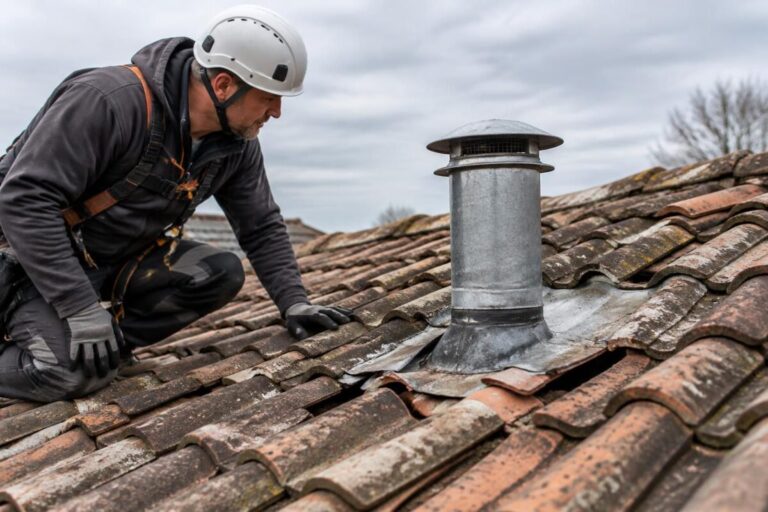
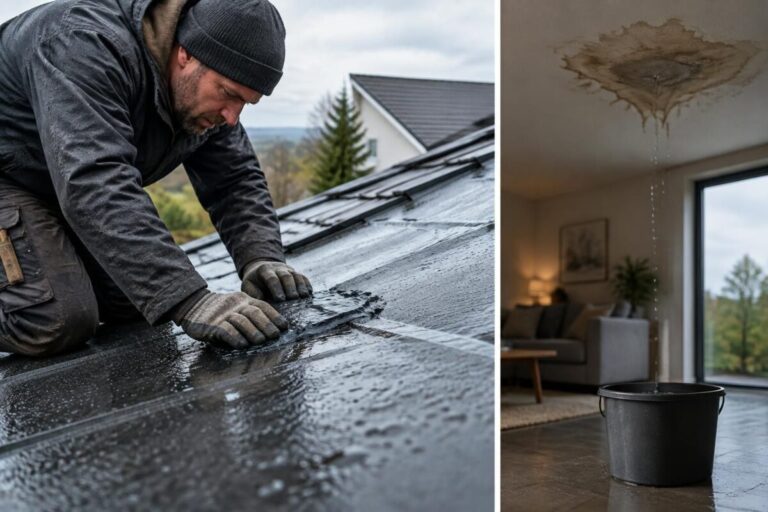
These signs alone are not enough to distinguish between water ingress and condensation. A roofer can inspect the roof covering, junctions, and openings, and measure the moisture content of the timber if necessary. Roof structure repairs can exceed €15,000, depending on the extent of the damage: it is better to get an early diagnosis than to replace things blindly.
Roof ventilation: which solutions should you choose?
The simplest principle is natural airflow: air enters at the bottom of the slope, flows beneath the roof covering, and exits near the top. A ventilated air gap must remain continuous, with no compressed insulation or debris obstructing it. Its dimensions depend in particular on the type of roof covering and the requirements applicable to the project.
Counter-battens, roof vents, and ventilated ridge rolls
Counter-battens create a space beneath the battens to allow air to flow above the underlay. Roof vents can supplement the system when the layout does not allow sufficient airflow. At the ridge, a ventilated ridge roll allows air to escape while limiting the entry of rain, windblown snow, and insects.
These components need to form a coherent system: adding a few roof vents without checking the lower inlets and upper outlets does not guarantee good ventilation. Ventilation problems are often caused by an interrupted airflow path rather than a complete lack of accessories.
| Solution | Common use | Indicative cost guide |
|---|---|---|
| Roof vents | Targeted improvement to an existing roof covering | About €15–30 per unit installed |
| Counter-battens and air gap | Continuous ventilation, often during reroofing | About €25–45/m², depending on the project |
| HPV underlay | Under-roof protection during a complete renovation | About €10–25/m², excluding variations between projects |
| Ventilated ridge roll | Air outlet at the ridge | About €40–120 per linear meter installed |
These price ranges vary according to access, the roof covering, and any repairs required. Installing an HPV underlay generally requires removing the roof covering, so it is usually planned as part of reroofing, whereas adding roof vents is often less extensive.
Installing an HPV underlay and insulating a loft: a three-step approach
A high-performance underlay cannot compensate for an inconsistent design. When insulating a loft, the roofer must consider the interior lining, vapor management, insulation, underlay, counter-battens, and roof covering as a whole.
- Check the product and substrate. Consult the technical data sheet: Sd value, approved substrates, mechanical strength, whether it can touch the insulation, and how long it can be exposed before the roof covering is installed.
- Install and join the membrane according to the specifications. Follow the direction indicated by the manufacturer, the overlaps, and the junction details at the eaves, valleys, roof windows, and penetrations.
- Check the system before closing it up. Check that ventilation above the underlay is continuous, that there are no water pockets, and that the junctions are sound; photograph details for the project records.
On the interior side, a vapor barrier or vapor retarder may be required depending on the roof assembly. The HPV underlay does not replace it: one manages vapor transfer on the interior side, while the other is installed beneath the roof covering. A qualified roofer will adapt the solution to the substrate, roof pitch, and roofing material.
Work costs and assistance to check
Targeted work on roof vents can cost a few hundred euros, while a complete overhaul with underlay, counter-battens, and ridge roll depends heavily on the roof area and condition. The guide price of €40–120 per linear meter applies to certain components installed at the ridge; it does not apply to all ventilation methods.
Ventilation work alone generally does not qualify for specific financial assistance. However, if it is carried out alongside insulation work, schemes such as MaPrimeRénov’, energy-saving certificates, the zero-interest eco-loan, or a reduced VAT rate may be available, subject to conditions. The rules change: check the current eligibility requirements and request a quote from an RGE-certified company when the scheme requires it.
Practical questions about ventilation and HPV underlay
Can an HPV underlay eliminate the air gap?
It can be allowed to touch the insulation if the product and system permit it. This does not automatically eliminate the ventilation required between the underlay and the roof covering.
Does an HPV underlay replace the vapor barrier?
No. The HPV underlay is installed beneath the roof covering and allows vapor to diffuse to the outside. The vapor barrier or vapor retarder is on the interior side, depending on the design of the assembly.
Can ventilation be improved without reroofing the entire roof?
Often, roof vents or a ventilated ridge roll can be added without removing the entire roof covering. However, installing an under-roof underlay generally requires removing the roof covering and is usually done during reroofing.
How can you tell if ventilation is inadequate?
Condensation, stains on the timber, and a musty smell are warning signs, but they do not provide a definite diagnosis. A roofer can check the airflow path, roof covering, and moisture content of the materials.
I hope you found these tips useful. See you soon! — Ivar