Roof Waterproofing: Insurance Claim or Direct Repair—What Should You Do?
Hi, it’s Ivar. If a leak appears, report the claim promptly and protect the home, but don’t start permanent repairs before checking your coverage and documenting the damage. Insurance often covers the consequences of water infiltration, while roof repairs remain the homeowner’s responsibility unless applicable coverage or a covered weather event applies. My article will help you choose the right course of action, without letting a small leak turn into a major project.
Quick checklist:
- Photograph the damage and affected area before any work is done.
- Place a container under the leak and move fragile belongings out of the way.
- Notify your home insurance provider within the time limit specified in your policy, usually within five business days.
- Contact the landlord or property manager if you’re a tenant or live in a condominium.
- Ask a professional roofer for an assessment and a quote before carrying out permanent repairs.
Roof leak: insurance claim or direct repair?
Start by reporting the claim and limiting the damage. Then have the cause investigated: if it’s due to a covered event, insurance may cover the damage and, depending on the policy, some of the roofing work. If the leak is caused by wear and tear or lack of maintenance, you’ll often have to pay for the repair yourself.
The rule of thumb is simple: insurance often covers the consequences, not the cause. A stained ceiling or damaged piece of furniture may be covered under water damage protection, while the displaced tile, cracked flashing, or roof waterproofing that needs repair may still be at your expense. Coverage and deductibles vary by policy, so check the terms before approving a quote.
If a storm, hail, or the weight of snow has damaged the roof, weather-related coverage may apply. In the event of a natural disaster, the event must be officially recognized for this specific coverage to apply.
What insurance may cover, depending on the cause
| Situation | Possible coverage | What to check |
|---|---|---|
| Sudden leak following a weather event | Damage to the home and sometimes the roof | Coverage, depreciation, deductible, and exclusions |
| Slow seepage caused by an aging roof | Often limited or denied | Previous maintenance and policy terms |
| Leak in a common area | Condominium association’s insurance for the roof | Report by the property manager and insurance for the affected home |
| Defective workmanship on recent work | Ten-year structural warranty may apply | Date of the work and severity of the defect |
Leak detection may be covered, depending on your coverage, but that doesn’t mean repairs to the cause will be covered too. Ask your insurer who should arrange the assessment, and keep the report and photos.
To better understand prices before choosing a repair, see this overview of the cost of a lasting roof repair. The amount depends in particular on the material, roof access, and extent of the damage.
Reporting a claim: what to do in the first few hours
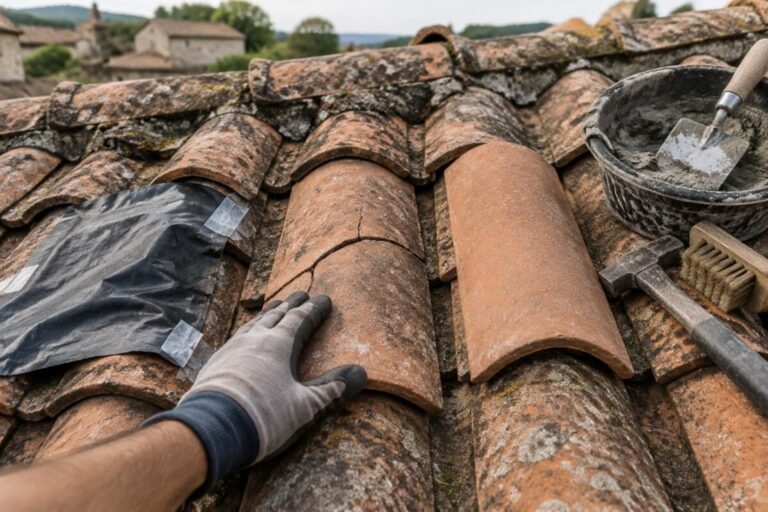
A common mistake is to repair the entire area before taking photos. The roofer may then have removed evidence that could be useful for the roof inspection. Temporary measures are different: covering the area with a tarp, protecting furniture, or collecting the water can help limit the damage, as long as you document the condition before and after.
“Protect first, document next, then repair.” This rule helps prevent further damage while preserving clear evidence for the insurer. If water is getting near an electrical installation, don’t touch wet equipment and ask a professional to make the area safe.
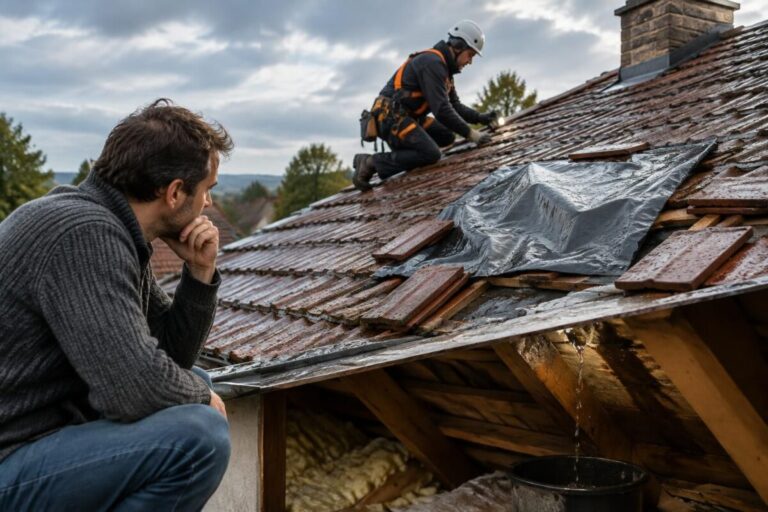
If the leak is difficult to locate, avoid climbing onto the roof: a wet surface can quickly become slippery. These steps explain why it’s best to assess the risks before accessing the roof.
A three-step process
- Step 1: Make things safe and document the damage. Place a bucket, protect the furniture, and take dated photos of water stains, affected belongings, and any visible parts of the roof. Keep receipts for emergency measures.
- Step 2: Report the claim and coordinate. Contact your insurer promptly, even if the cause is not yet known. Also notify your landlord or property manager, depending on your situation. Ask what documents to provide and whether the insurer will appoint a professional.
- Step 3: Get an assessment and compare options. Ask a professional roofer for a clear report and repair quote. If possible, wait for the adjuster to visit before starting permanent repairs, unless an emergency requires immediate work.
In a detached home, you’ll generally report the claim to your own insurer. In a condominium, if the roof is a common area, notify the property manager: the building’s insurance may be involved, alongside the policy covering your belongings or improvements to your home.
If the leak is recent and caused by a tile torn off by the wind, weather-related coverage may apply, depending on the policy. If a damp patch has been spreading slowly for months, the insurer may instead cite wear and tear or lack of maintenance: the assessment and maintenance records then become essential.
Roof repairs: who pays, depending on the home?
Who is responsible depends on the cause of the leak and each person’s status. The tenant reports the problem to the landlord and can report damage to their belongings. The homeowner or condominium association generally pays for work related to the roof, while routine maintenance may be the occupant’s responsibility, depending on the circumstances and applicable obligations.
For a shared roof, the property manager handles matters related to the building. For a privately owned part of the home—for example, a roof window installed by the homeowner—personal insurance may be involved. If recent work has resulted in a serious defect that compromises waterproofing, the contractor’s ten-year structural warranty may also be considered.
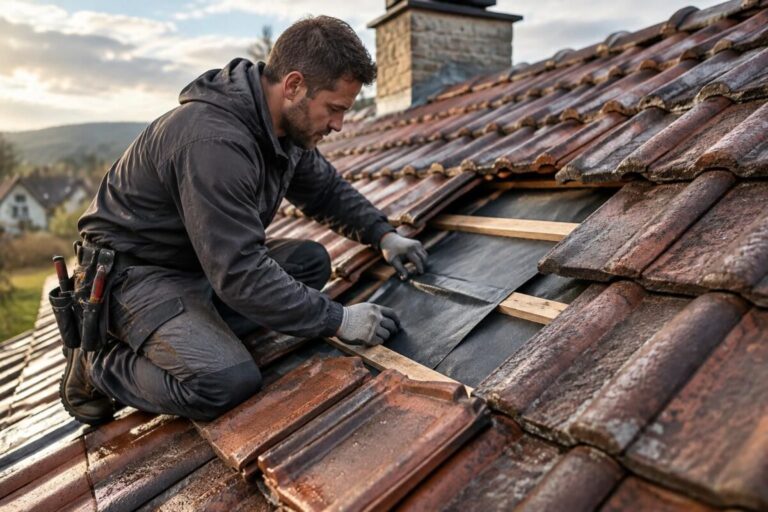
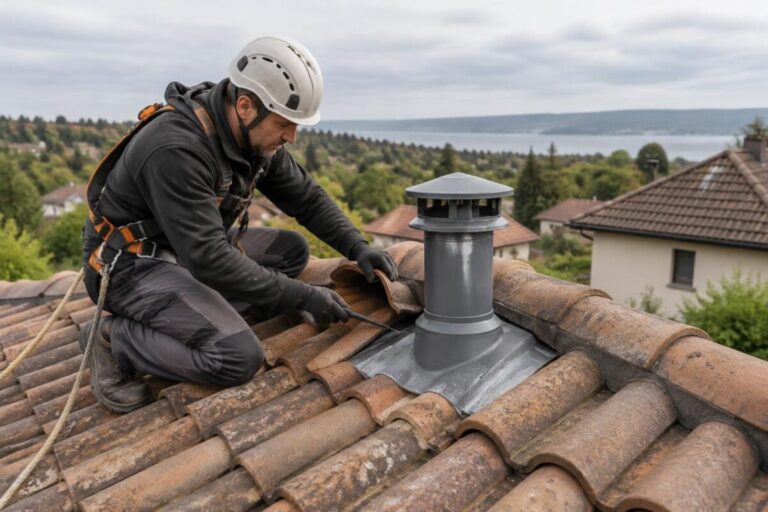
A lasting repair involves more than just sealing the spot where the water appears. The roofer should also check the flashing, ridge, valleys, gutters, and attic ventilation. A well-ventilated roof limits condensation, while suitable insulation reduces heat loss without trapping moisture in the roof structure.
To protect the building over the long term, choose materials suited to the roof pitch and local climate, and favor targeted repairs over repeated patch jobs. Regular gutter maintenance and a visual inspection after windy weather help identify defects early, before they reach the insulation or ceiling.
The report and quote: two documents not to overlook
A leak detection report describes the likely source, affected areas, and temporary measures. A quote details the proposed work, materials, and items to be repaired. These documents make it possible to compare options and clearly explain the situation to the insurer.
If the quote proposes a complete roof replacement when the defect seems localized, ask the professional to explain why. Conversely, a simple patch may not be enough if the membrane or nearby components are damaged. The right choice protects the roof without concealing a more widespread problem.
Frequently asked questions about insurance and roof leaks
Should I call the insurer before the roofer?
Notify your insurer as soon as possible and ask for instructions. You can have a roofer come out to make the area safe or locate the leak, but document the damage and keep supporting documents before permanent repairs are carried out.
Does insurance always pay for roof repairs?
No. It may cover damage inside the home and, depending on the policy and the cause of the claim, some work on the roof. Wear and tear, age-related deterioration, or lack of maintenance may remain the homeowner’s responsibility.
Who should report a leak in a condominium?
Notify your insurer if your home or belongings have been affected, and alert the property manager if the roof or another common area may be involved. The property manager contacts the building’s insurer for matters concerning the condominium association.
Can repairs be carried out before the adjuster visits?
Emergency measures to prevent further damage, such as putting up a tarp or making a temporary patch, are generally advisable. Take photos before and after. For permanent repairs, ask the insurer for guidance first, unless there is a particular emergency.
Thanks for reading this far; Ivar