Roofing materials: what sign indicates a repair has already failed?
Hi, it’s Ivar. The clearest sign of a failed repair is a leak that returns in the same place after rain. Damp marks that reappear, a faulty seal or tiles that are still moving show that the cause has not been addressed. The right thing to do: check from the attic and have the roof inspected without climbing onto it.
Quick checklist:
- Look for water stains and mold beneath the roof after a rainy spell.
- From the ground, look for cracked tiles, displaced slates and missing elements.
- Check whether the ridge or roof edges appear separated or deformed.
- From the attic, look for spots of daylight and damp or crumbly wood.
- Note whether the leak persists despite a recent repair.
Failed roof repair: the unmistakable signs
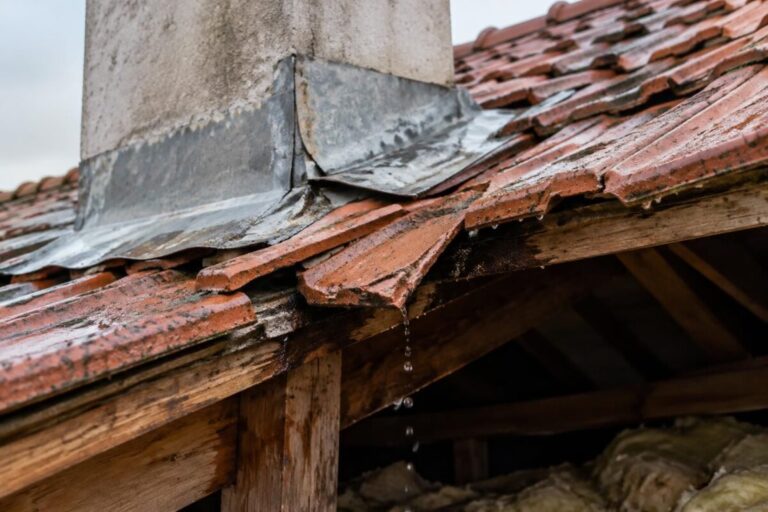
A patch that comes loose, a water stain that returns after every shower or a tarp that has become permanent: these signs often tell the same story. The defect has been covered up, but not fixed. A recurring leak therefore calls for an inspection of the roof covering, the joints and the underlying structure—not another layer of sealant applied at random.
A common mistake is to replace the tile directly above a stain. But water can travel along a rafter before appearing on the ceiling, sometimes some distance from the entry point. The rule is simple: fix the cause, not just the mark.
Which roofing materials should you check after the work?
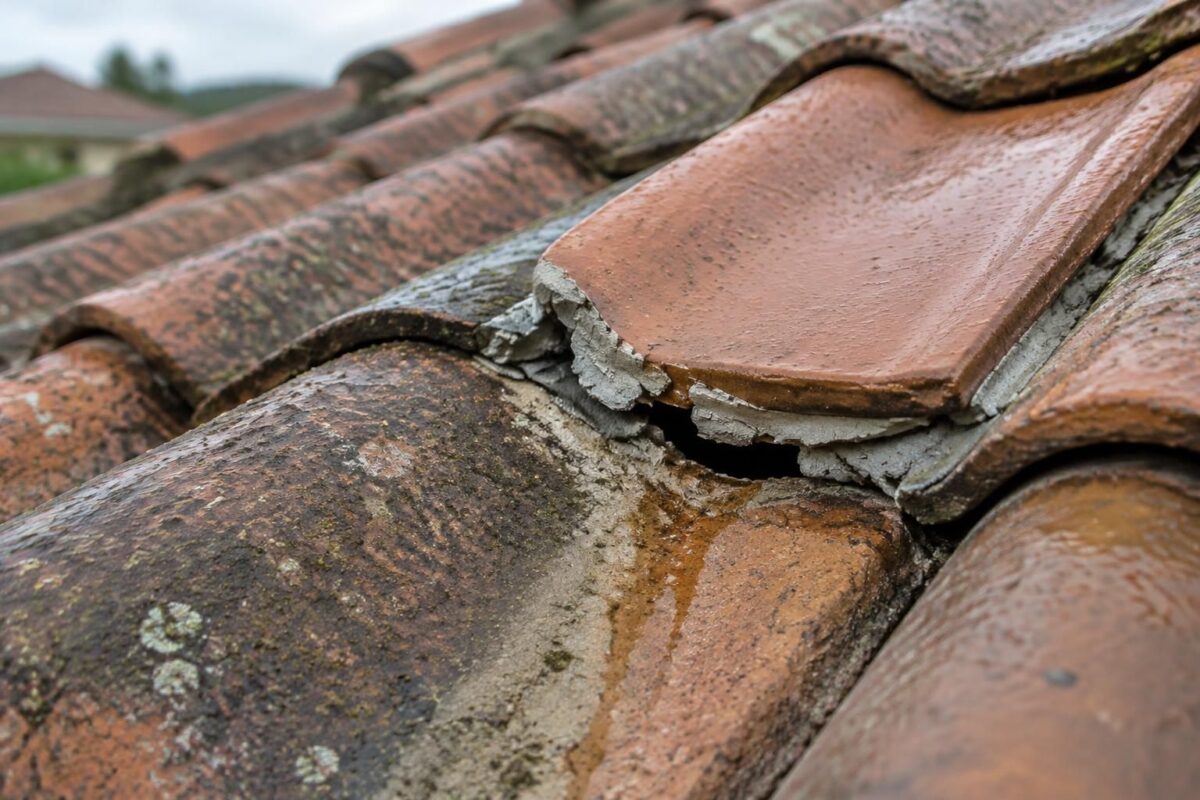
From the ground, use binoculars to look at the tiles, slates, roof edges and ridge. Damaged roofing materials, elements that are lifting or crumbling mortar may indicate inadequate fastening or an unsuitable repair.
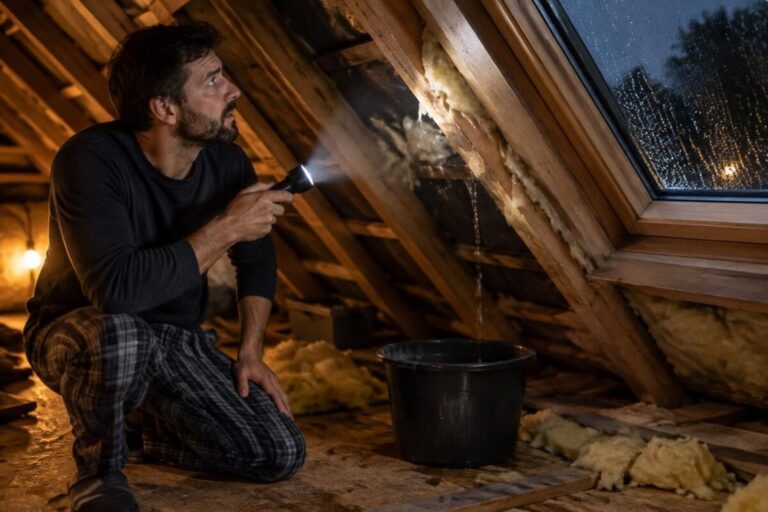
In the attic, look for signs of damp on the rafters, blackened battens and musty smells. Isolated spots of daylight can occur depending on the type of roof covering; however, an area of light accompanied by wet wood or mold beneath the roof calls for a prompt inspection.
| Sign observed | What it may indicate | Recommended action |
|---|---|---|
| The stain returns after rain | Ongoing water ingress or an improperly repaired joint | Have the entry point identified |
| A tile or slate has come loose again | Fastening or underlying structure needs checking | Avoid any work at height and request an inspection |
| The sealant is peeling around a joint | Faulty seal or unsuitable material | Repair the joint using a compatible solution |
| The wood is damp or crumbly | Persistent damp, sometimes affecting the roof structure | Have the roof covering and underlying structure checked |
Temporary repair or lasting fix: how to tell the difference
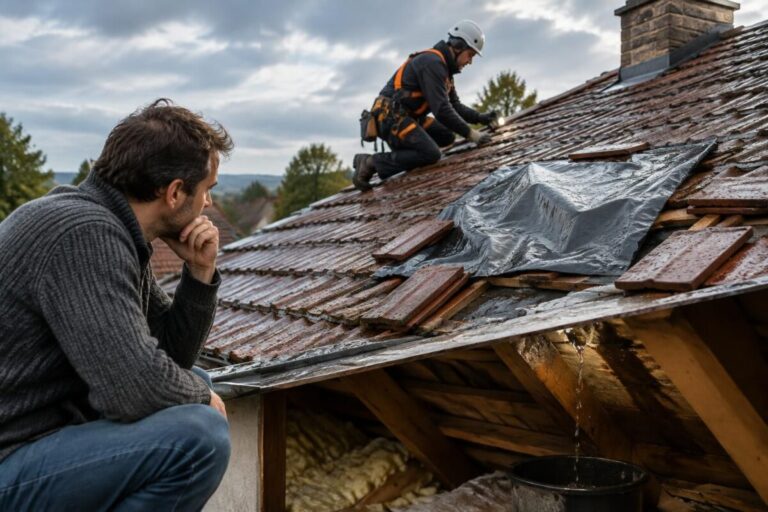
A temporary repair can limit the damage while you wait for the work to be done, but it is no substitute for a lasting fix. A tarp, for example, must be installed and secured by a professional; it does not fix a failure in the roof’s waterproofing or inadequate ventilation.
If only one tile is broken on an otherwise sound roof slope and the roof structure remains dry, a targeted repair is often enough. If problems reappear in several places, or if the ridge is becoming deformed, the underlying structure and roof covering should be assessed together before choosing between repair and replacement.
Three-step process for checking a repair
- Step 1 — Check after rain. Note where the marks appear and whether they spread, without touching electrical installations near a damp area.
- Step 2 — Check from the attic. Keeping clear of fragile areas, look for water marks, damaged wood and unusual drafts. Do not climb onto the roof.
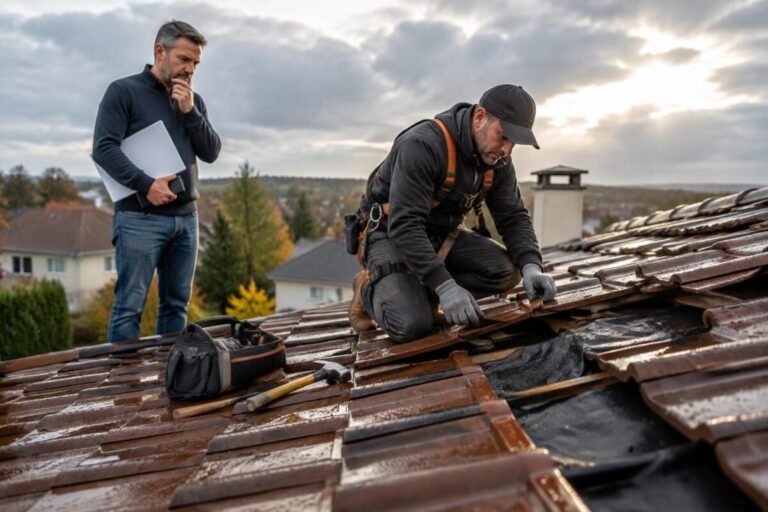
- Step 3 — Request a documented assessment. The roofer should inspect the roof covering, critical junctions, underlying structure and roof frame, then distinguish urgent work from work that can wait.
For a roof to last, it must also allow moisture to escape from the attic and maintain adequate ventilation. Properly installed thermal insulation should not block this airflow; otherwise, condensation can weaken the wood even when the roof covering appears intact.
“A reliable repair stops water from entering and protects the underlying structure.” If damp returns, that’s a sign the diagnosis needs to be revisited, not that the mark should simply be covered up.
When should you have a roof inspected after a repair?
An active leak, a sagging roofline or elements that repeatedly shift call for a prompt inspection. Even if no leak is visible, crumbling wood or spreading marks should not be left until the next maintenance visit.
What is the clearest sign of a failed roof repair?
A leak or water stain that returns in the same place after rain often indicates that the cause of the water ingress has not been eliminated.
Is a dry stain on the ceiling necessarily harmless?
No. It may indicate that water has passed through in the past. Check whether the roof covering, joints or wood are still damp and whether the stain reappears.
Can you inspect roofing materials yourself?
Yes, from the ground with binoculars and from an attic that can be accessed safely. Do not climb onto the roof: an inspection at height should be carried out by an equipped professional.
When is a spot repair no longer enough?
When problems are widespread, return after the work or are accompanied by a damp or deformed roof frame, a full assessment is preferable to another localized repair.
Thanks for reading this far; Ivar