Roof Waterproofing: Patching a Leak in the Rain—Real Help or a Mistake?
Hi, it’s Ivar. When a roof leaks in the rain, don’t climb onto the roof: protect the inside, then apply an exterior patch only when the surface is dry and conditions are safe. A tarp can help after a lull in the rain, but no sealant applied in the rain can replace a lasting repair. In an emergency, the goal is to limit the damage without causing an accident.
Do this now:
- Move furniture and electrical appliances away from the leak.
- If water is near an outlet or light fixture, turn off the power to that area if you can do so safely.
- Put buckets under the drips and mop up any water that reaches the floor.
- Photograph the damage and keep receipts for any materials you buy.
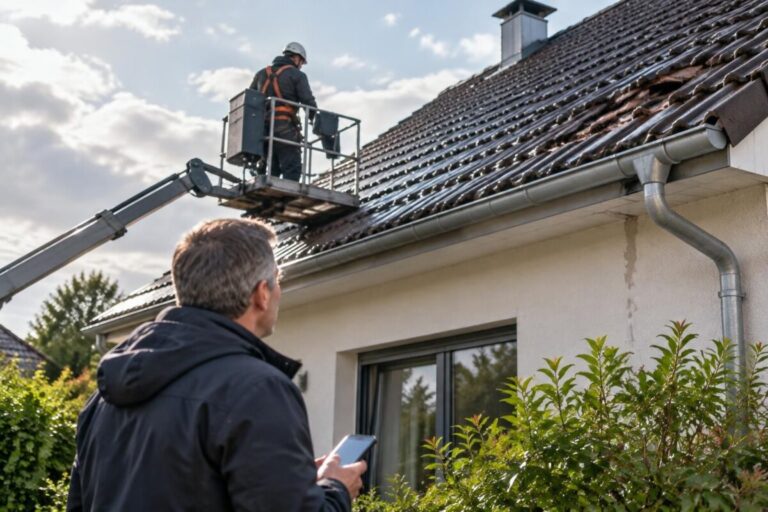
- Call a roofer if the leak is spreading, the roof structure is affected, or the roof is difficult to access.
Patching a roof leak in the rain: what really helps
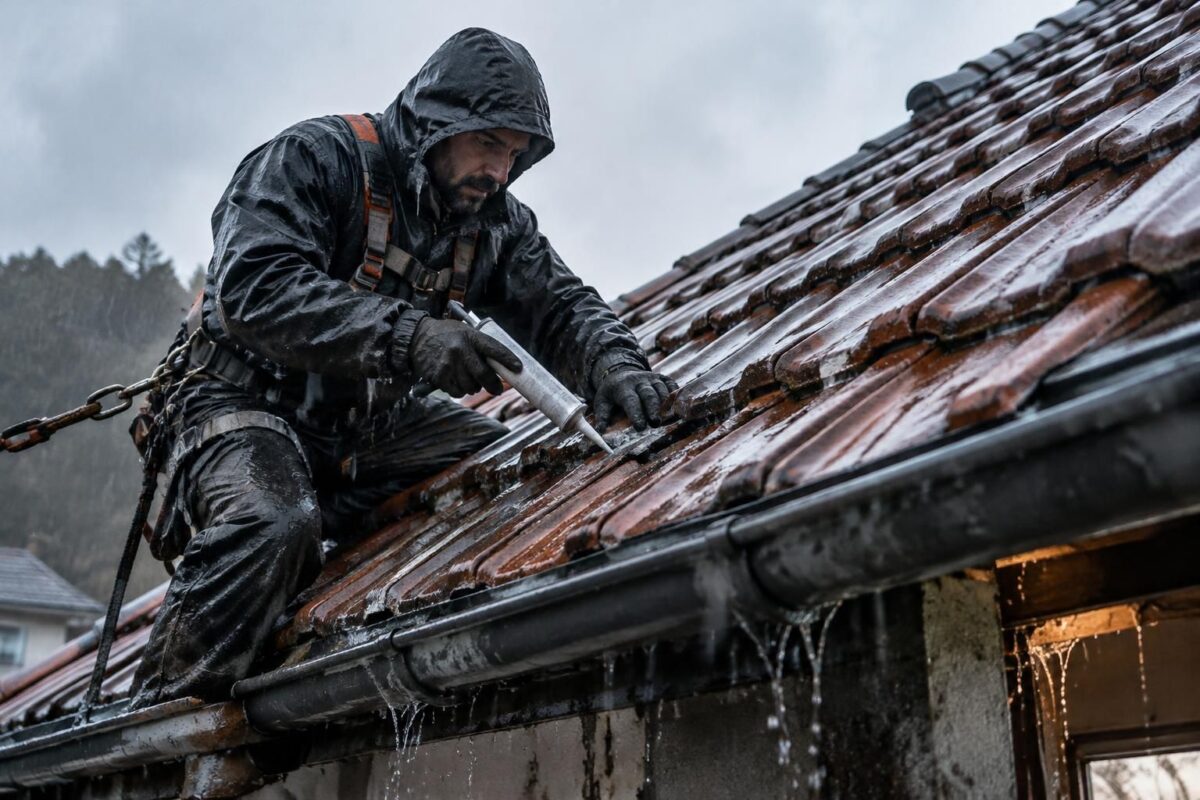
The answer is simple: sealant or tape applied to a wet tile won’t adhere well and may come loose. Rain also makes roof tiles slippery; the risks of repairing a roof in the rain far outweigh the benefits of a rushed DIY fix. The rule to remember: never climb onto a wet, windy, or icy roof.
An active leak can soak the insulation, stain the ceiling, and cause hardwood flooring to swell. This water infiltration through the roof should first be dealt with from indoors; exterior patching can wait until there is a safe weather window. If water has reached the thermal insulation, its condition will need to be checked, and it should be left to dry or replaced if it remains waterlogged. Proper attic ventilation then helps remove moisture and protect the roof structure.
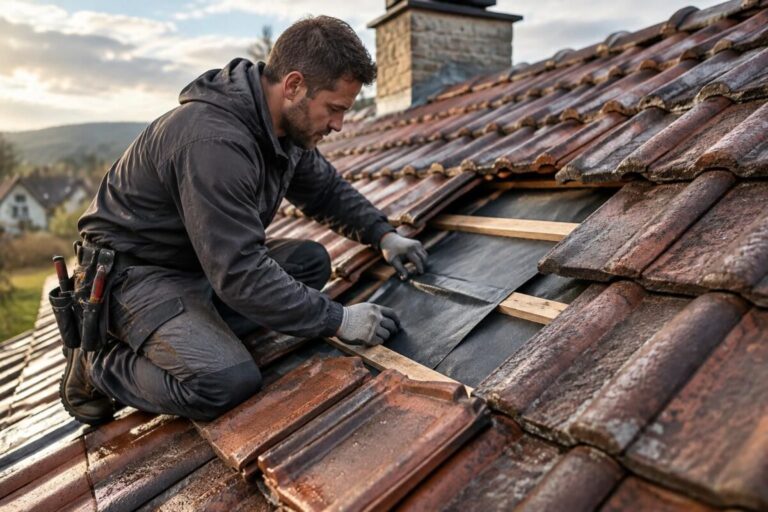
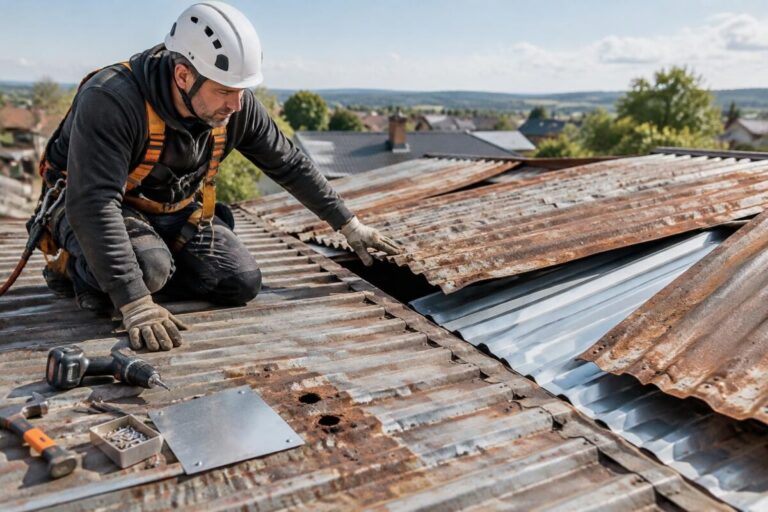
If a tile is missing, a roof protection tarp can help keep water out after the rain lets up, provided it is securely fastened and you don’t climb up in dangerous conditions. If the leak is coming from a joint or crack, sealant or tape should only be applied to a clean, dry surface; these tips on roof waterproofing sealant can help you avoid a temporary fix that won’t hold.
Two situations, two decisions
If water is dripping near a light fixture, turn off the power from a dry location and call a professional rather than touching the ceiling. If a tile has fallen but the roof is still inaccessible or slippery, protect the room and wait for the rain to let up or for a roofer to arrive.
Which product should you choose for a temporary roof repair?
The material depends on the type of damage: a large opening needs a different fix from a hairline crack. The prices below are for materials only and vary depending on the area, brand, and situation. These solutions are temporary measures; they do not provide a thorough repair of the roof covering.
| Solution | Suitable for | Indicative durability | Indicative price |
|---|---|---|---|
| Reinforced polyethylene tarp | Missing tile or large opening | About 2 to 4 weeks | €15 to €40 |
| Bituminous sealant | Localized crack, flashing, or joint | About 6 to 12 months, depending on the surface and exposure | €8 to €20 |
| Butyl or aluminum tape | Small hole or linear crack | About 3 to 6 months, depending on how it is applied | €10 to €25 |
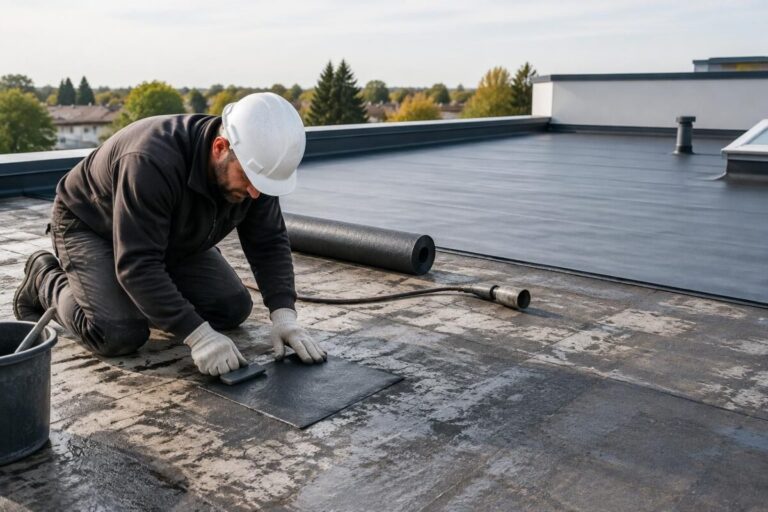
| Liquid waterproofing coating | Hairline cracks on a dry flat roof | About 1 to 3 years, depending on the product and surface | €25 to €60 per liter |
Overall, budget about €8 to €60 for materials, depending on the solution. Sealant and tape must not be applied in the rain: the surface must be dry, and you must follow the drying time specified by the manufacturer. To compare products for different surfaces, see this guide to choosing the right product to patch a roof.
A common mistake is smearing silicone on a damp tile, thinking the rain will “bond” it in place. Water can become trapped against the material and speed up its deterioration; the wrong temporary fix can also make the next repair more difficult. The rule is clear: the product must match the material, and the surface must be dry.
Three-step process to limit the damage
When a roof leak emergency occurs, don’t start by trying to repair the roof from the outside. This approach reduces damage indoors and prepares for a safer repair.
- Make the room safe. Turn off the power near the water if it is safe to reach the circuit breaker, move belongings, and catch the dripping water in buckets. If the ceiling is badly sagging or at risk of collapsing, move away and call emergency services or a professional.
- Investigate without climbing. Check the attic only if access is safe and there is no danger from the electrical system. Water can travel beneath the roof covering, so the indoor stain does not always line up with the point where the water entered.
- Have the right temporary fix installed. Choose a tarp, tape, or sealant based on the damage, but wait for dry weather and a safe opportunity before doing exterior work. If you can’t work safely, call an emergency roofer.
Once the water has stopped, don’t leave damp insulation trapped under the roof. Have the attic ventilation, materials, and connection points checked; a recurring leak may indicate a bigger problem than a cracked tile. To understand the difference between a temporary fix and a lasting repair, this article on the risks of patching or replacing offers useful guidance.
When patching is no longer enough
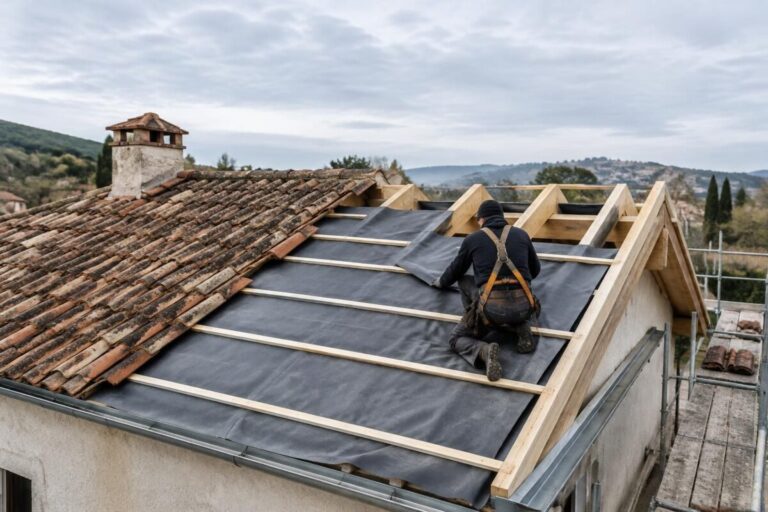
A temporary roof repair buys time; it doesn’t guarantee peace of mind. If several areas are leaking, the wood is damp, or the leak involves a chimney or skylight, the problem calls for a professional assessment. An old roof or one damaged by a storm may need more extensive repairs; patching each crack separately could delay the real fix.
After a leak, keep an eye on the insulation too: waterlogged insulation loses some of its thermal efficiency and can encourage mold growth. A roofer can inspect the roof covering, joints, ventilation, and roof structure, then recommend materials that are compatible with the roof. To better understand the effects of a leak on insulation, see this article on insulation after water infiltration.
If there is damage, photograph it and keep the receipts for materials. Report the problem to your insurer within the time limit specified in your policy; for many claims, the usual deadline is five working days after you discover the damage. An emergency patch can limit the damage, but coverage for the repairs depends on your policy and the circumstances.
Frequently asked questions about roof waterproofing in the rain
Can you patch a roof leak in the rain?
No, not with sealant or tape: they do not adhere well to a wet surface. Never climb onto a slippery roof. Protect the inside and wait for a safe break in the weather or for a professional.
How much does it cost to patch a roof?
Materials generally cost €8 to €60, depending on the solution and the situation. The cost of professional work depends in particular on the area, access, and urgency.
How long does a temporary repair last?
A tarp often lasts 2 to 4 weeks, butyl tape 3 to 6 months, and sealant about 6 to 12 months, depending on the surface. These timeframes vary depending on application and exposure; none of these fixes replaces a permanent repair.
What should you do if water reaches the insulation or ceiling?
Move away if the ceiling is sagging, protect your belongings, and turn off the power to the area if you can do so safely. Have the insulation and roof structure checked, as moisture can reduce thermal efficiency and cause damage.
Thanks for reading this far; Ivar