5 Roof Waterproofing Methods to Stop Water Immediately
Hi, it’s Ivar. A roof leak calls for two immediate steps: limit the water coming in without putting yourself at risk, then have the cause repaired. To stop the water quickly, there are five options: a protective tarp, roofing sealant, bitumen tape, waterproofing resin, and a waterproofing membrane. The right choice depends on the roof, the point of entry, and the weather.
Roof waterproofing: what to do right away
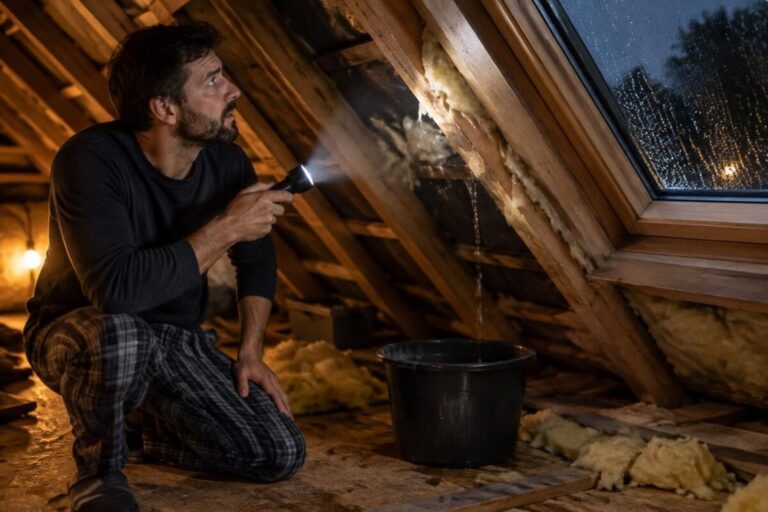
- Move furniture away and protect the floor beneath the leak.
- Place a bucket underneath and mop up the water to limit the damage.
- If the water is touching an outlet or light fixture, turn off the power to that area if you can do so safely.
- Find where the water is getting in, without assuming that the stain on the ceiling is directly below it.
- Don’t climb onto a wet or windy roof: ask a roofing contractor for help.
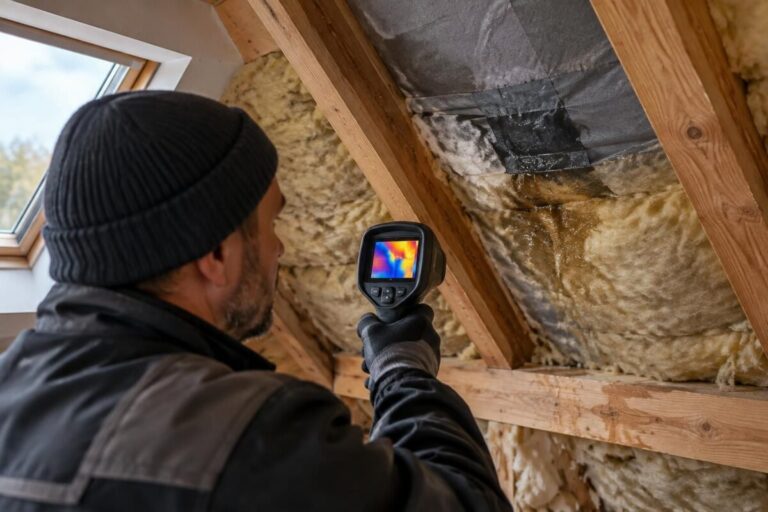
A leak visible indoors may come from a defect elsewhere on the roof. Finding the leak is therefore just as important as sealing it: water can travel along a beam or pipe before it becomes visible.
1. A protective tarp to cover a damaged area
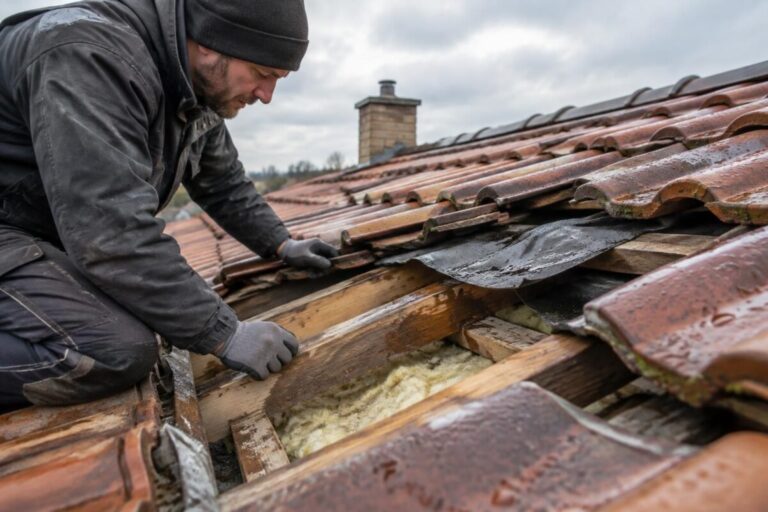
After a tile has shifted or a small area has been damaged, a protective tarp placed from a safe location can limit water entry. It should extend well beyond the affected area and be secured without piercing or further damaging the roof covering.
Working at height on a steep roof is dangerous. If access isn’t safe, stay indoors, protect your belongings, and call in a professional.
2. Roofing sealant for a localized defect
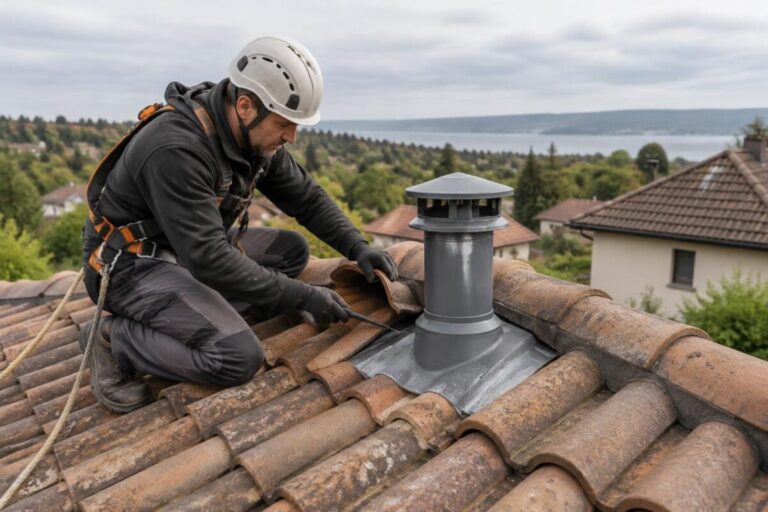
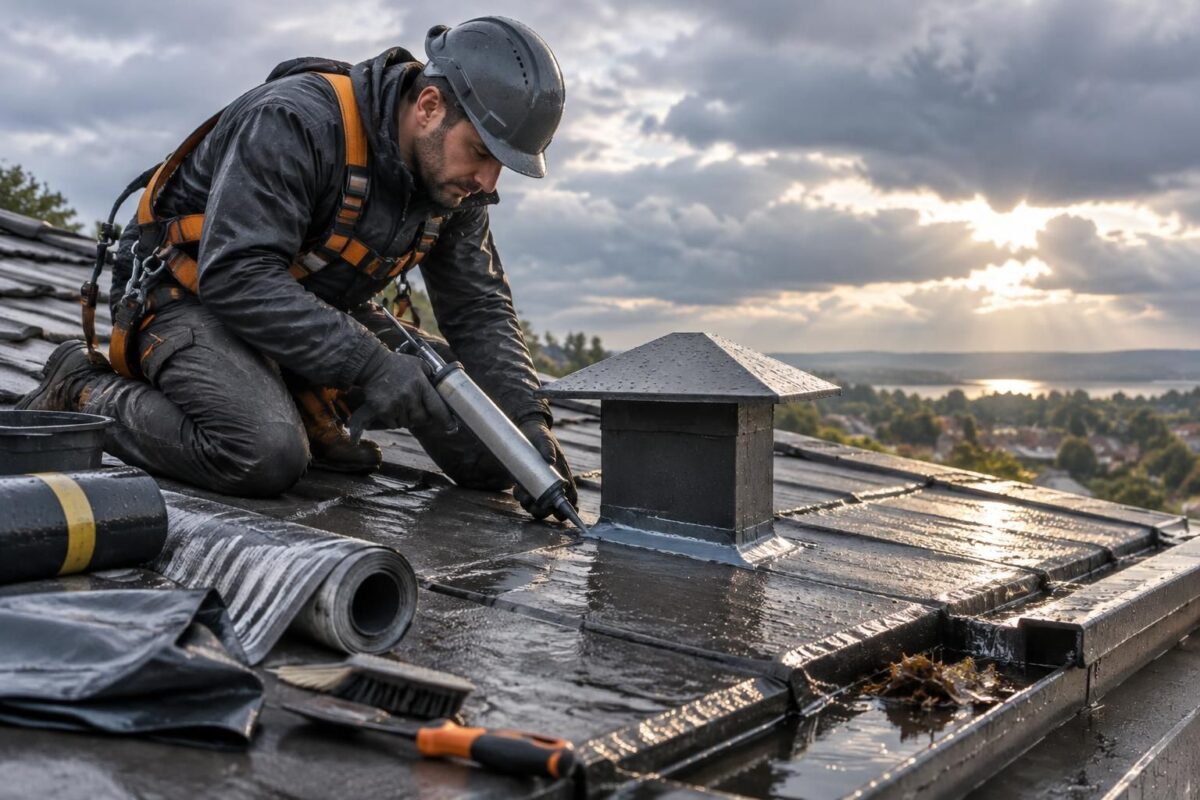
Around a roof outlet, a joint, or a roof window, roofing sealant compatible with the surface can be used as an emergency sealant. Check the manufacturer’s instructions: some products adhere to damp surfaces, while others require a clean, dry surface.
Sealant is no substitute for checking the flashings, joints, or roofing materials. A lasting roof leak repair addresses the cause, not just the water stain indoors.
3. Bitumen tape for a small crack or joint
Bitumen tape can be used as a temporary fix for a crack or an accessible joint, provided the material and application conditions match the product instructions. Clean the surface as well as possible and press the tape down along its entire length, leaving no pockets where water could collect.
If the leak spreads or returns after rain, don’t apply strips on top of one another at random. Also see these things to check before calling a roofing contractor.
4. Waterproofing resin for certain joints
Waterproofing resin may be suitable for roof junctions or small areas, depending on the roofing material and the manufacturer’s recommendations. It must be applied to a compatible surface; the wrong product may peel off or prevent a proper repair later on.
If the roof is a terrace roof, choosing between a local patch and a complete renovation depends, in particular, on the extent of the damage. This comparison of terrace roofs helps explain the difference.
5. A waterproofing membrane for a lasting repair
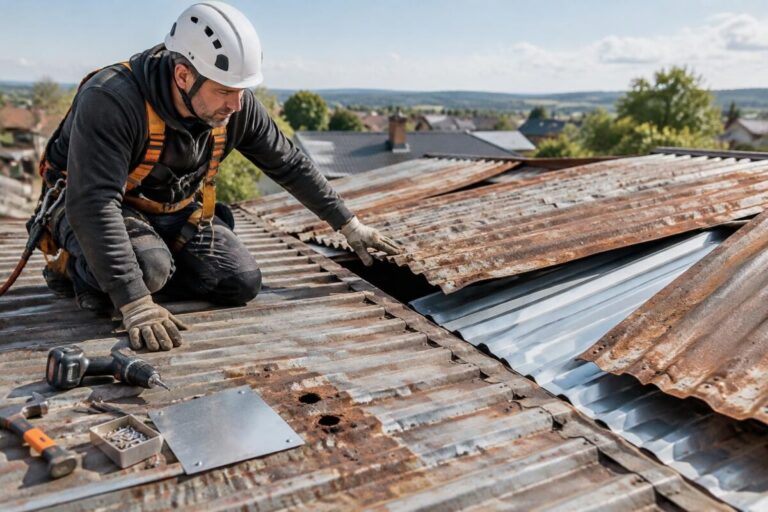
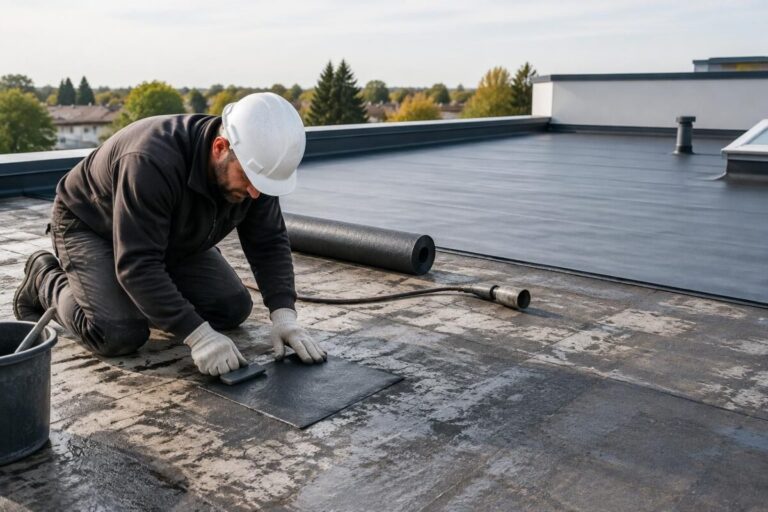
For a flat roof or terrace roof, a bituminous, synthetic, or liquid waterproofing membrane can provide lasting protection, provided it is chosen for the surface and installed correctly. Bituminous membranes often last around 20 years, and some elastomeric membranes can last up to about 35 years, depending on the model, installation, and maintenance.
Roof underlayment and a well-ventilated roof covering also help protect the roof structure. A high-performing roof must manage water, as well as moisture and airflow beneath the materials.
Which waterproofing solution should you choose for the problem?
| Situation | Possible temporary solution | What to do next |
|---|---|---|
| Damaged roof covering | Tarp secured without damaging the roof | Replace or reposition the affected materials |
| Small leaking joint | Roofing sealant or suitable tape | Check the joint and flashings |
| Crack in a terrace roof | Resin compatible with the surface | Assess the overall condition of the waterproofing |
| Aging flat roof | Local sealing if the area is accessible | Consider installing a suitable membrane |
If water is entering at a specific point and the roof can be accessed safely, a compatible product may slow the leak. If several areas are affected, the ceiling is bulging, or water is near an electrical installation, move away and call a professional.
Emergency sealing: a three-step approach
- Protect: move people away from the area, collect the water, and turn off the electricity if necessary and safe to do so.
- Locate: take photos, note when the leak appears, and inspect the roof from the ground or a secure window.
- Arrange a repair: use a suitable temporary solution only if it can be applied safely, then arrange a lasting repair.
A common mistake is to apply sealant to a dirty or incompatible surface and then assume the leak is fixed. A simple rule: a patch slows the water; it doesn’t replace a proper diagnosis.
To better understand why a stain can appear far from its source, see this guide to locating a hidden leak.
Protecting your roof over the long term
Regularly inspecting tiles, joints, valleys, and gutters can often reveal signs of wear before heavy rain. After repairs, also check the insulation and ventilation: a watertight but poorly ventilated roof can encourage condensation and weaken the wood.
My article highlights an essential point: protection against water infiltration depends on suitable materials, careful installation, and regular maintenance. For extensive damage or work at height, a roofing contractor or waterproofing specialist can assess the problem and choose the appropriate repair.
How can I stop a roof leak while waiting for the roofing contractor?
Protect your belongings, collect the water, and, if it can be done safely, cover the area from a safe access point. A tarp or suitable product may limit water infiltration, but don’t climb onto a wet roof.
Is roofing sealant enough to repair a leak?
It can be a temporary fix for a localized defect that is compatible with the product. It doesn’t replace checking the joints, roof covering, and actual source of the leak.
When should I call a roofing contractor urgently?
Call a professional if the leak is significant, the ceiling is bulging, several areas are affected, or water is near an electrical circuit. Any work at height that involves a risk should be left to them.
Thanks for reading this far; Ivar