Roof waterproofing: flat roof, patch repair, or complete renovation?
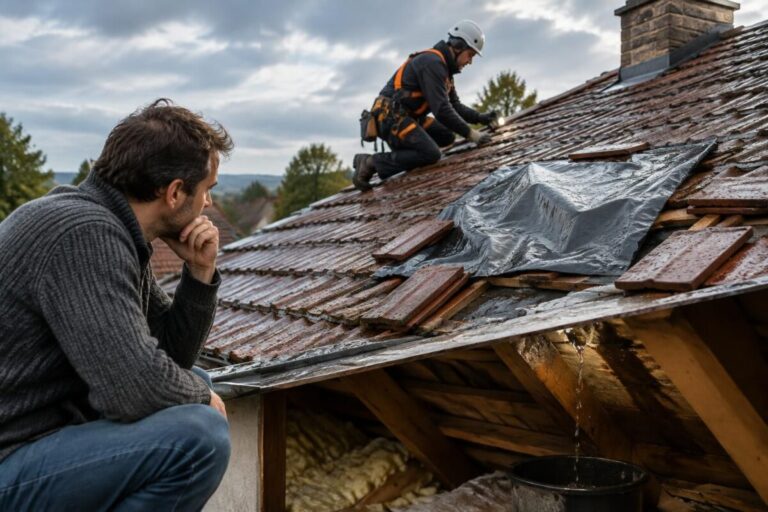
Hi, it’s Ivar. On a flat roof, a leak may be only the visible tip of a problem hidden beneath the covering. A patch is enough if the defect is localized and the surrounding waterproofing is still sound; if the insulation is damp or the damage is extensive, a complete replacement is needed. The right choice starts with an assessment, not a tub of sealant.
Quick checklist:
- Look for stains on the ceiling and areas where water is pooling.
- Check the upstands, joints, and drains without walking on a fragile membrane.
- Have the insulation checked for moisture if water infiltration is suspected.
- Request a waterproofing assessment before choosing a roof repair.
- Compare quotes that specify the substrate, materials, and insulation work.
Flat roof: when should you choose a patch or a complete replacement?
A spot repair may be suitable when the damage is isolated, the covering is firmly bonded, and the insulation is still dry. Conversely, multiple blisters, open joints in several places, or moisture trapped beneath the membrane point to the need for a complete replacement.
A flat roof is never perfectly level: a slope directs water toward the drains, while the waterproofing membrane protects the roof system from the elements. If water remains pooled after rain, the slope and drainage outlets should also be checked. A patch will not fix a drainage problem.
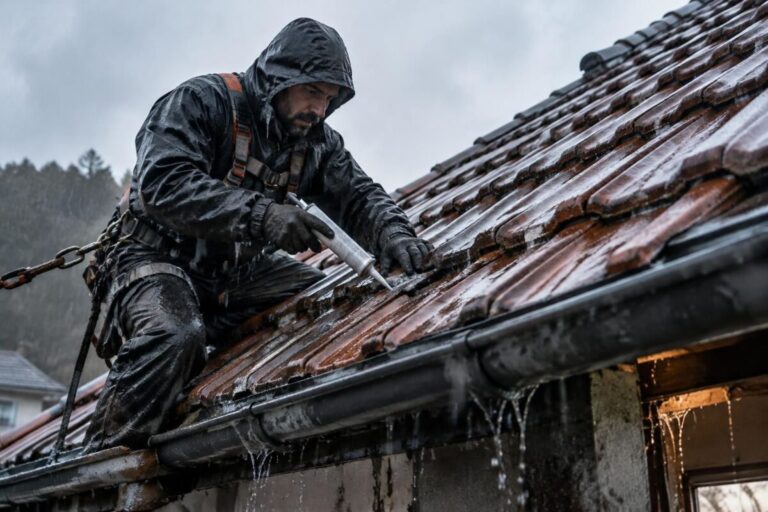
Finding the leak may require inspecting the upstands, penetrations, and rainwater outlets. To understand what to do when heavy rain reveals a defect, see these tips for dealing with water infiltration after heavy rain.
Roof repair: signs that distinguish a local leak from a widespread problem
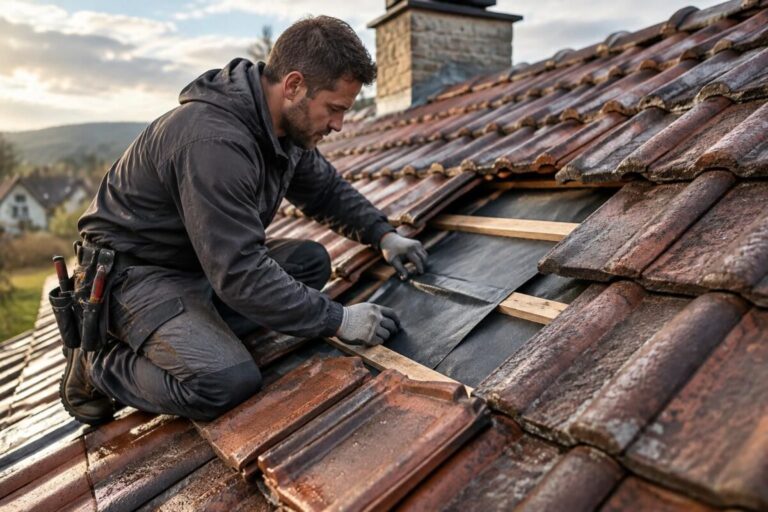
A specific crack or detached joint on a covering that is still flexible and firmly attached can be repaired without removing everything. However, the roof patch must be compatible with the existing material and applied to a clean, dry substrate.
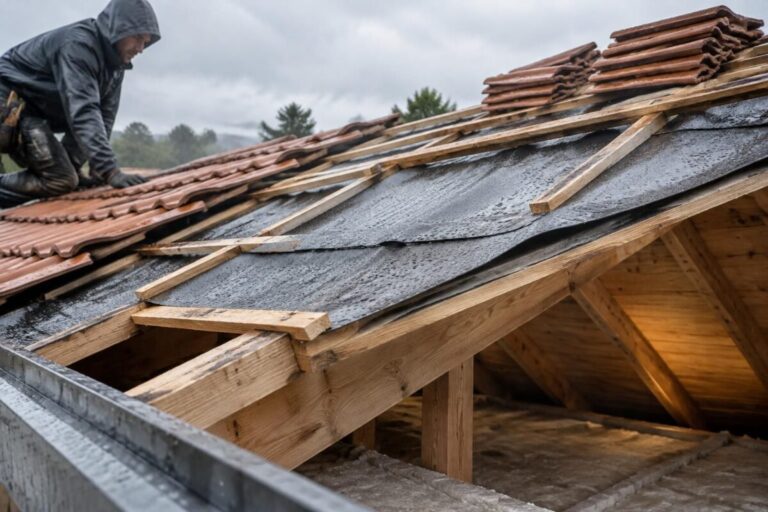
A common mistake is to cover a blister without checking what is inside it. If water has already seeped beneath the waterproofing, sealing it may hide the problem without protecting the insulation or the structure.
“A durable repair starts with a sound substrate.” The wrong product or poor preparation can fail quickly; here’s why an unsuitable seal rarely lasts.
Two situations, two decisions
If a small area is damaged, but the covering around it is sound and the insulation is dry, a localized repair is often a sensible option. When blisters multiply or an inspection reveals damp insulation, a complete replacement prevents water from being trapped beneath a new layer.
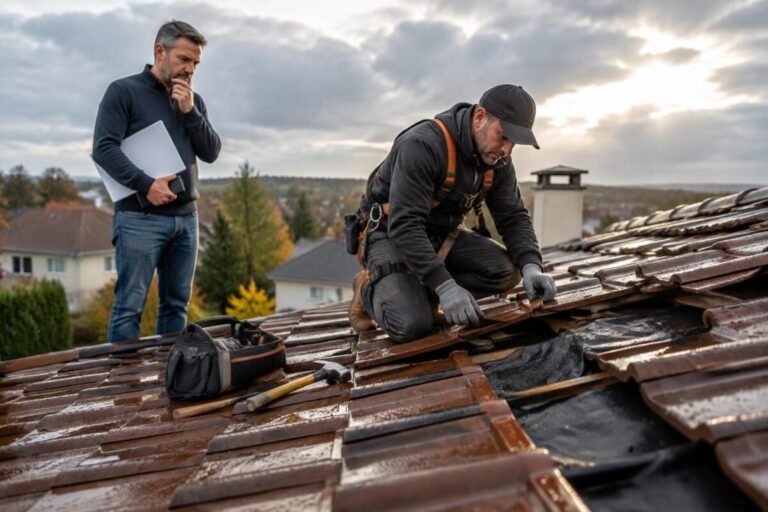
A professional can carry out a probe or core sample to check the hidden layers. The roof renovation can then be decided based on the extent of the damage, the condition of the substrate, and whether the existing materials can be retained.
EPDM, bitumen, or resin: choosing the right membrane
EPDM is a flexible membrane, often installed without heat and sometimes in a single piece on a small roof. Its indicative lifespan is around 40 to 50 years, depending on the system and installation. It works well on timber substrates, but should be protected against punctures on an accessible terrace.
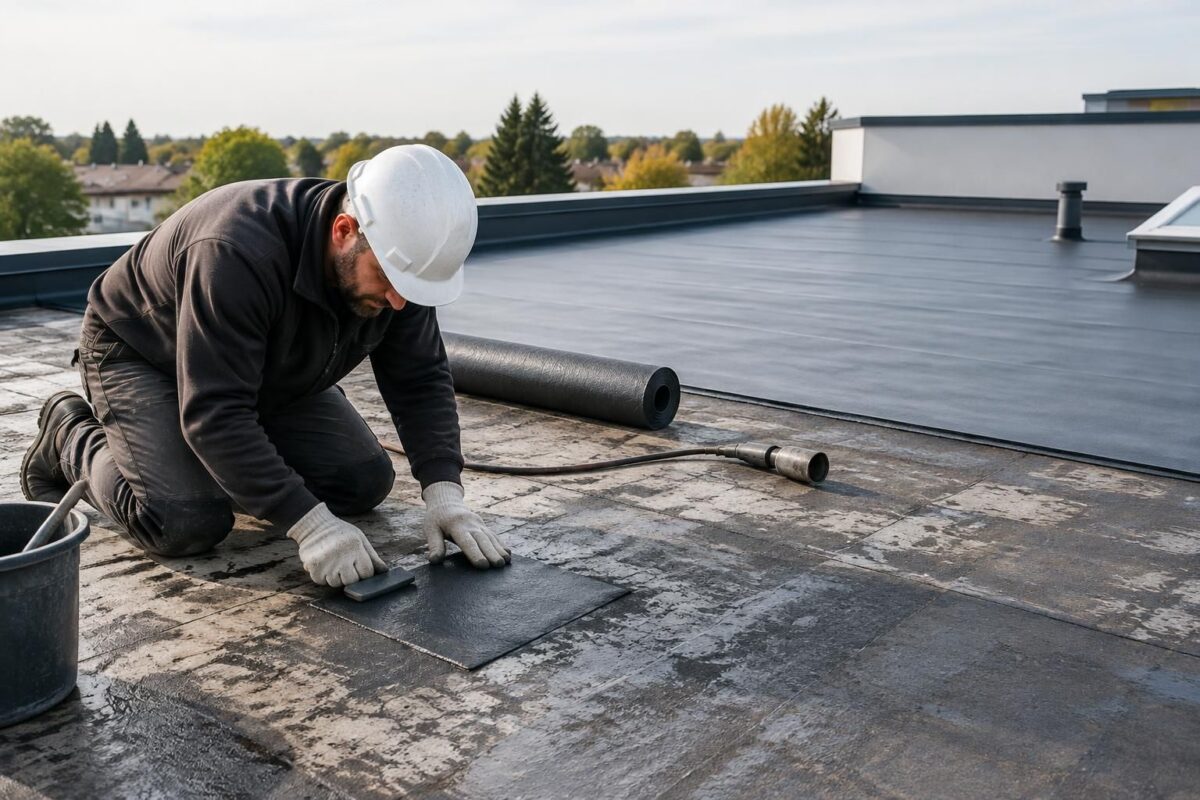
Two-layer bitumen remains a robust, widely used option on concrete slabs. Installation often costs less than some longer-lasting systems, but its seams and upstands require careful workmanship. Torch application also requires specific precautions, particularly on substrates that are sensitive to fire.
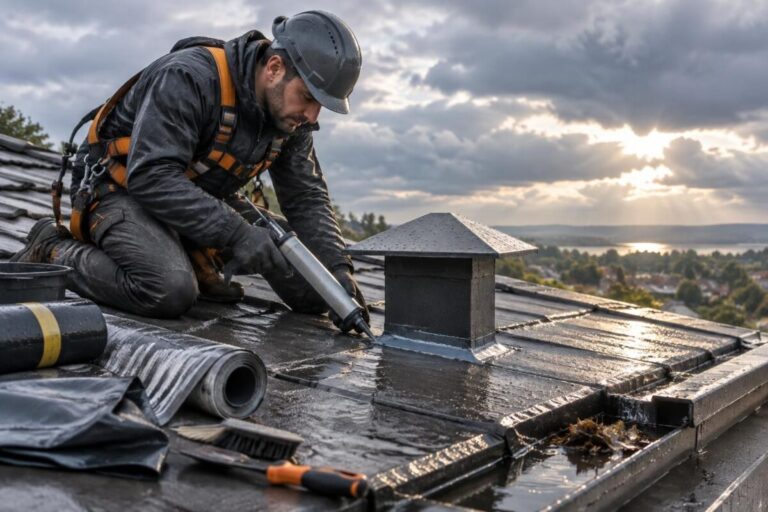
Resin forms a continuous, joint-free coating and is well suited to balconies or roofs with numerous outlets, thresholds, and guardrails. It generally costs more and requires a dry, clean substrate that has been precisely prepared. For a repair using bituminous tape, check that the product matches the existing covering: an unsuitable tape can peel away at the joint.
Indicative prices and lifespan
The amounts below are rough estimates for supply and installation, excluding removal and insulation. The actual price varies depending on the area, access, upstands, and condition of the substrate.
| Solution | Indicative installed price | Indicative lifespan | Key points |
|---|---|---|---|
| EPDM | €50 to €90/m² | 40 to 50 years | Durable, installed without heat, susceptible to punctures |
| Two-layer bitumen | €45 to €80/m² | 20 to 30 years | Robust on concrete slabs, installed with heat-welded seams |
| Polyurethane resin | €60 to €100/m² | 15 to 25 years | Practical for complex shapes, requires a carefully prepared substrate |
| PMMA resin | €90 to €140/m² | 25 to 30 years | Fast curing, higher cost |
Removing the old roof system, adding insulation, and restoring the drains can add several thousand euros to the project. To estimate the cost of the work, also see the information on the cost of a durable roof repair.
Three-step process to protect the roof
- Step 1 — Inspect: identify visible defects, check the drains, and have any suspect areas examined. If in doubt, a professional will find the source of the leak before applying any covering.
- Step 2 — Decide: keep the waterproofing if it is sound and the insulation is dry; plan to remove it if moisture has spread or the damage is widespread.
- Step 3 — Renovate and maintain: choose a method that is compatible with the substrate, improve the insulation if necessary, and have the joints checked after the work.
Suitable insulation improves thermal comfort, but it must be combined with proper moisture management and ventilation. A poorly connected outlet can let water in; precautions around ducts are explained in this guide to roof ventilation outlets.
Two inspections a year, in spring and autumn, can often help identify leaves, blocked drains, and detached upstands. Avoid using a high-pressure washer, which can damage the surface protection or membrane.
For insulation work, request a detailed quote and check the contractor’s qualifications and ten-year liability insurance. Grants are generally tied to insulation work and the applicable conditions, not to waterproofing alone.
Useful questions to ask before starting the work
Can a patch be enough for a flat roof?
Yes, if the defect is localized, the surrounding covering is sound, and the insulation is dry. The repair must be compatible with the membrane and carried out on a properly prepared substrate.
When should the entire waterproofing system be replaced?
A complete replacement is often necessary if there are numerous blisters and areas of peeling, if the insulation is damp, or if several previous repairs have failed. An assessment can confirm the extent of the damage.
Which material is best for a flat roof?
EPDM offers a long lifespan and is particularly suitable for timber substrates. Bitumen remains common on concrete slabs, while resin works well on complex surfaces. The substrate and intended use matter more than the price per square metre alone.
Can new waterproofing be installed over the old layer?
This is sometimes possible if the old covering is dry, firmly bonded, and free of significant defects. If the insulation is damp or there are pockets of water, removal is generally preferable.
Thanks for reading this far; Ivar