10 Roofing Material Tips for Quickly Spotting a Leak
Hi, it’s Ivar. To quickly spot a roof leak, look for signs indoors, then check the roofing materials and connections from a safe place. Cracked tiles, open joints, blistered membrane, or standing water: each sign can help trace the leak. Here are ten simple checks to take action before moisture damages the insulation and roof structure.
Quick checklist for spotting a roof leak
- Photograph the signs of damp and note when they appear.
- Inspect the attic without walking on the insulation or ceiling.
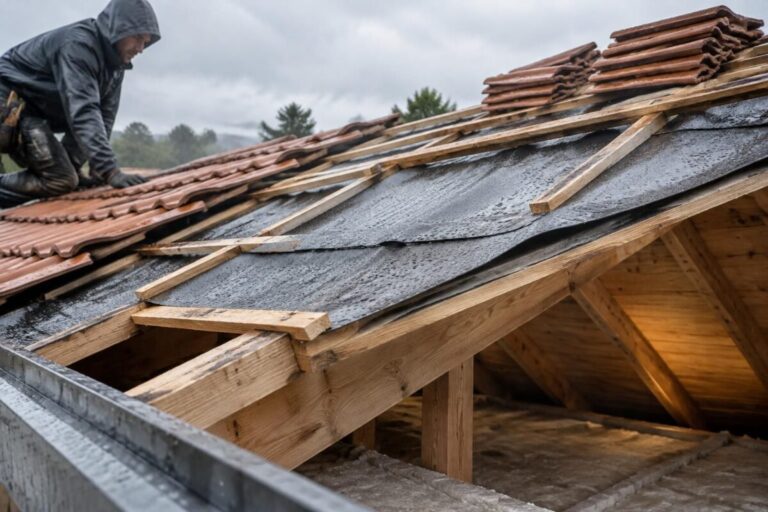
- Look for damaged tiles, displaced slate, and damaged flashing.
- Check the joints, upstands, and visible water outlets.
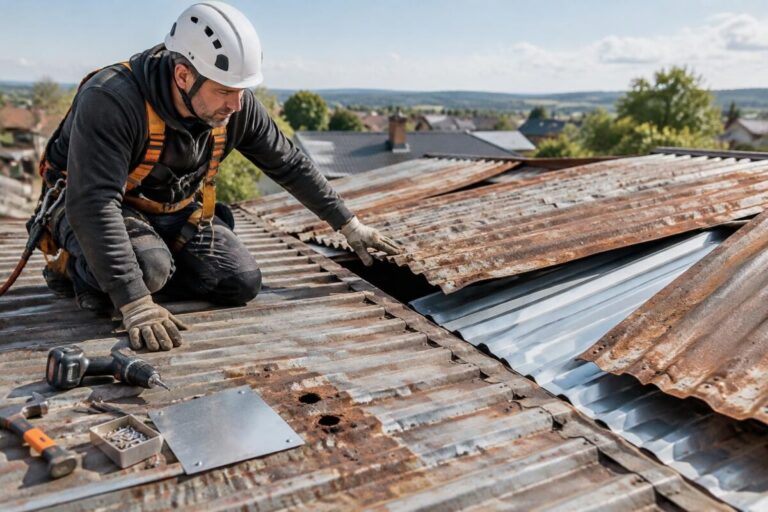
- Avoid climbing onto the roof if it is wet, steep, or difficult to access.
10 tips for spotting a leak based on roofing materials
Water can travel beneath the roof covering before emerging far from where it entered. A ceiling stain therefore indicates an area to investigate, not necessarily the exact location of the leak.
1. Follow the signs of damp without jumping to conclusions
Look at their shape and how they change after rain: a fresh stain, blistering paint, or a persistent drip. A dark line near a wall may be coming from a joint rather than the middle of the roof.
2. Inspect the attic
Using a flashlight, look for darkened wood, drops on the rafters, and wet or compressed insulation. A musty smell and mold beneath the roof often indicate persistent damp, even if the ceiling seems dry.
3. Check the tiles and slate
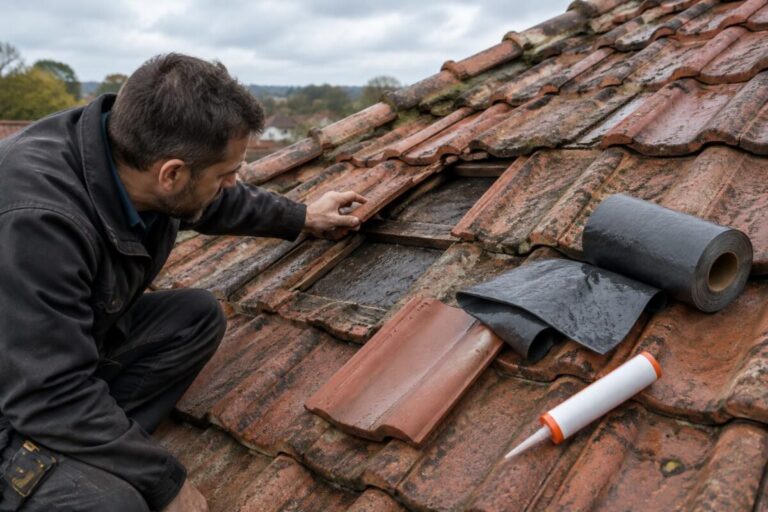
From the ground, use binoculars to look for cracked tiles, missing or slipped tiles, and displaced slate. After a freeze, a fine crack can widen: it’s better to have it checked than to cover it with a random product.
4. Examine the joints and flashing
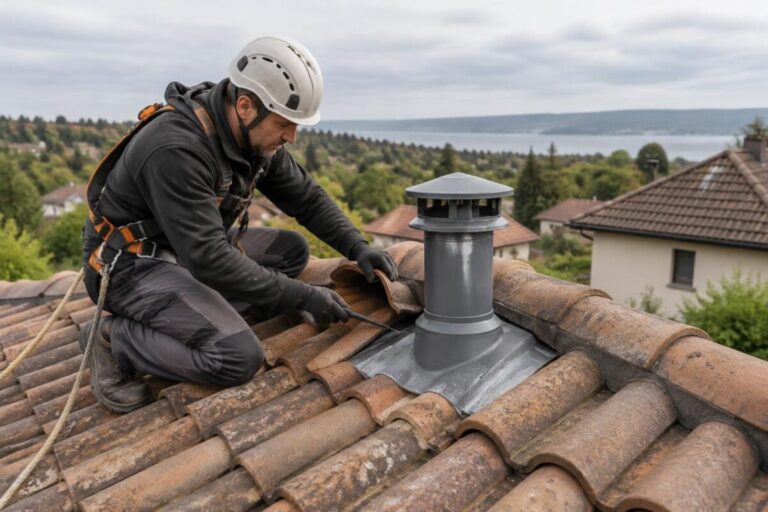
Around a chimney, wall, or roof window, look for faulty joints, peeling sealant, and damaged flashing. These connections shift with temperature changes and are often where water gets in.
5. Check gutters and drains
Blocked gutters cause water to overflow onto the roof edges and walls. On a flat roof, leaves blocking the drain can create a persistent puddle: after rain, check whether the water is draining normally.
6. Look for defects in a bituminous membrane
On a flat roof, visually inspect the waterproofing membrane for blisters, cracks, open seams, and areas that have come unstuck. A pool of water or a bulge warrants attention, but don’t puncture it: water may be trapped beneath the membrane.
7. Inspect EPDM membranes and resin coatings
On EPDM, look for a cut, an unusual fold, or an edge that is peeling away. On a resin roof, note any cracks and areas where the coating is flaking; each material requires a compatible repair.
8. Don’t confuse a leak with condensation
Diffuse damp, especially in winter, may also be caused by poor ventilation. Compare the signs with the weather and consult this guide to roof ventilation and misleading signs before replacing sound material.
9. Look for the leak after rain, without spraying water randomly
If the problem only appears after heavy rain, note the areas exposed to the wind and the places where water pools. A water test may help, but it’s best to do it in small sections and with two people, without taking risks on the roof.
10. Check previous repairs
A patch that is peeling away, sealant applied to a damp surface, or incompatible materials can allow water to return. To recognize the signs of a poorly executed repair, consult this guide to a failed roof repair.
A common mistake is repainting a stain before finding where the water is getting in. The mark may disappear, but moisture continues to spread through the hidden layers.
Simple rule: fix the source of the water first, then dry and restore the affected surfaces.
A three-step method for taking action without making the damage worse
- Step 1 — Identify: photograph the signs, note the date and weather, then inspect the attic from a stable area.
- Step 2 — Compare: visually inspect the roof covering from the ground and connect possible defects with the signs indoors, without assuming they are directly above one another.
- Step 3 — Protect: move furniture away, place a container beneath any drips, and contact a roofer if the leak persists, multiple areas are affected, or access is dangerous.
If a small tear is clearly visible on an accessible membrane and the substrate is still sound, a repair suitable for the coating may be enough. If the substrate is sagging, soaked, or inaccessible, get a professional assessment: a patch applied blindly may conceal the problem without fixing it.
Roofing materials: what signs should you monitor over time?
Service life depends on installation quality, climate, and maintenance. These approximate ranges are guidelines, not automatic replacement dates.
| Material | Signs to look for | Useful maintenance |
|---|---|---|
| Bituminous membrane | Open seams, blisters, cracks | Annual visual inspection and clear drains |
| EPDM or resin | Cuts, folds, peeling, cracks | Gentle cleaning and checking the joints |
| Tiles or slate | Broken, missing, or displaced pieces | Inspection from the ground, especially after a storm |
| Gutters and flashing | Overflow, open joint, detached piece | Remove leaves and inspect the joints |
A visual inspection in spring and autumn helps identify debris and obvious damage. To protect the roof over the long term, also keep the drains clear and check that the attic ventilation is not obstructed.
When should you call a roofer?
Call a professional if water returns despite a repair, if multiple cracks appear, or if the wood and insulation are damp. A roofer can determine whether the leak is coming from the roof covering, a joint, a drain, or a more general waterproofing problem.
If water is dripping near a light fixture or electrical equipment, avoid touching the area and have the installation made safe. If the stain is old and dry, monitor it and request an inspection if it spreads or a musty smell appears.
Hidden damage can spread behind the ceiling without any dramatic signs. To understand how this happens, read these tips on a leak spreading behind the plasterboard.
Frequently asked questions about roof leaks
Does a ceiling stain always indicate a roof leak?
No. It may also come from a pipe or condensation. Compare how it changes with rainfall and inspect the attic for matching signs.
Can you repair a leak on a flat roof yourself?
A small, clearly identified defect can sometimes be repaired with a product compatible with the membrane. If the substrate is damp, multiple areas are affected, or access is risky, call a professional.
How can you tell if the insulation is affected?
In the attic, look for insulation that is compressed, damp, or smells musty, as well as water marks on the wood. Don’t handle it if it is very wet or if there is an electrical hazard.
How often should you inspect a roof?
A visual inspection twice a year and after a severe storm can help identify visible damage. If access is difficult or the roof is flat, arrange for a professional inspection.
Thanks for reading this far; Ivar