Roof ventilation: roof vent or ridge vent, which should you choose?
Hi, it’s Ivar. A roof vent tile and a ventilated ridge closure can complement each other: the first creates a point opening in the roof covering, while the second provides continuous ventilation at the ridge. The choice depends on the low-level air inlets, high-level outlets, underlay and type of roof tiles. The complete airflow path must be checked before adding an accessory.
Quick action plan:
- Identify the spaces to be ventilated and the dimensions specified for your setup.
- Have the low-level inlets and any distribution of roof vent tiles checked.
- Check the high-level outlet solution and the compatibility of the ridge closure being considered.
- Never block the inlets or outlets under the roof, even as a precaution.
- Carry out regular checks to prevent dust or bird nests from obstructing the openings.
The roof covering must have the airflow paths specified by its installation system. A high-level outlet does not make up for a blocked low-level inlet. Do not confuse ventilation beneath the roof covering with air exchange in the home: a roof vent tile is not a mechanical ventilation outlet.
Choosing between roof vent tiles and a ridge closure for effective roof ventilation
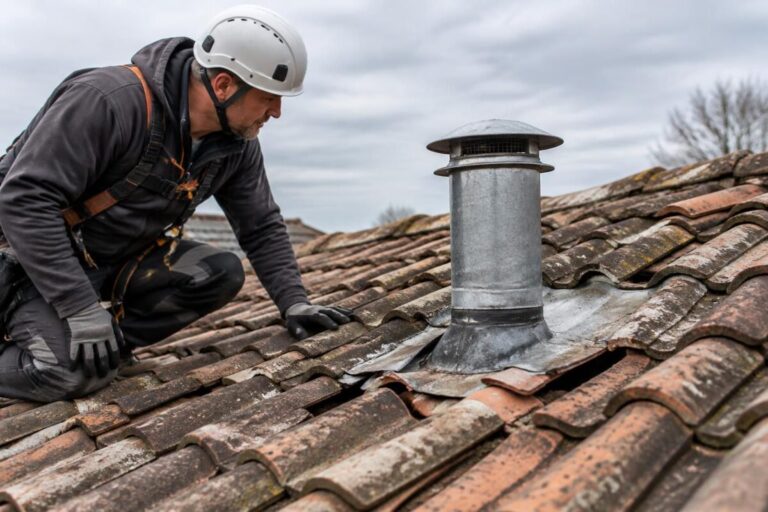
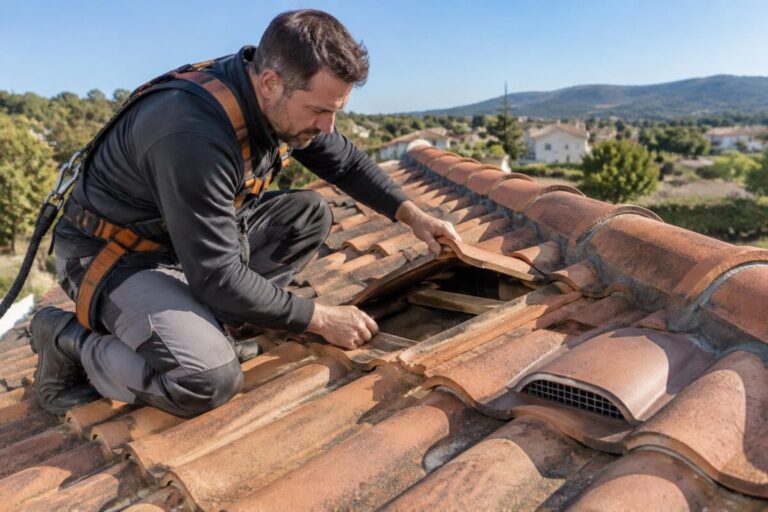
Roof vent tiles are not used only at the bottom of the slope: depending on the setup, they can contribute to both low-level and high-level ventilation lines. The Edilians installation guide describes these arrangements, including linear ventilation at the eaves and ridge. The number depends on the effective free area of the openings and the roof’s requirements, not on a universal rule of one roof vent tile per 10 to 15 m².
With a roof underlay, it is important to identify which space is being ventilated. The type of underlay, roof slope and roof covering can affect the requirements. A highly vapour-permeable (HPV) underlay does not eliminate the need to ventilate the underside of the tiles; nor does it make a particular ridge closure model mandatory for every renovation.
Technical essentials: the air gap and its components
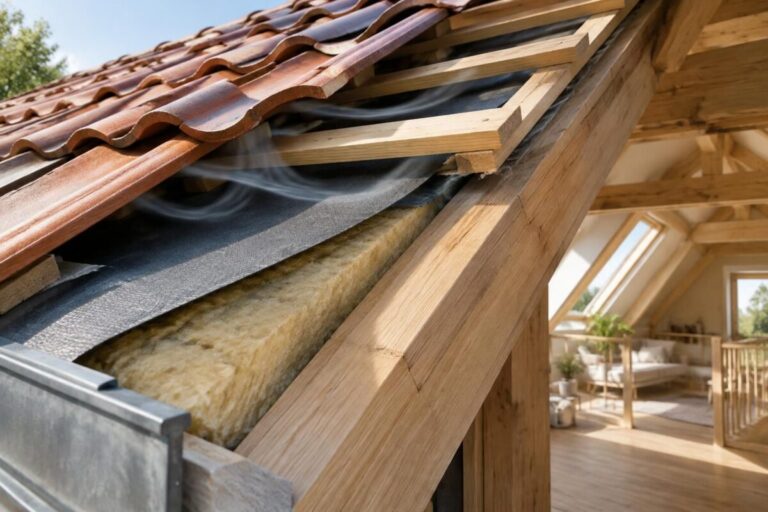
Ask for the ventilation free area specified by the manufacturer, in cm² per accessory or per metre of linear system. Then check the distribution and continuity of the airflow path. The dimensions of the air gap must be determined for the system in question; do not apply “2 cm minimum” to every configuration.
A common mistake is to crush this air gap by pushing the insulation up against the tiles. This error blocks airflow and eventually damages the timber and insulation—a classic blunder that drives up repair costs. As the basic principle of roof ventilation reminds us, “air must flow freely from bottom to top to prevent moisture”.
Budget and lifespan: investing in your ventilated roof
Ask for a quote that itemizes accessories, safe access, any removal work and ridge reinstatement. The cost depends on the length, model, roof and work required around it. Service life also depends on the product and its exposure; accessories do not all have the same longevity as roof tiles.
Example of a question to ask the roofer: “Where does the air enter, where does it exit, and what effective free area have you allowed for?” Ask for the accessory reference numbers to be included in the quote. A promise of retaining 40% of performance or receiving financial assistance is no substitute for this verifiable information.
Comparison table of roof ventilation systems
| System | Location | Function | What to check |
|---|---|---|---|
| Roof vent tile | In the roof covering, according to the layout | Point ventilation opening | Effective free area and compatible model |
| Ventilated ridge closure | Ridge, depending on the system | Linear high-level outlet | Free area per metre and continuity |
| Ventilated eaves system | Bottom of the roof slope | Air inlet provided by the system | Clear airflow path and suitable protection |
Mistakes to avoid for long-lasting roof ventilation
Never block roof vent tiles or the ridge outlet with mortar or expanding foam, even to stop minor leaks. This completely stops the airflow. Also check for debris or bird nests blocking the passages. Many people overlook the importance of the vapour barrier on the inside: without it, moisture passes through the ceiling and accumulates in the air gap, overwhelming the ventilation.
For a complete overview of the pitfalls to avoid, I recommend this guide to common mistakes that could silently ruin your roof.
How can you check that your roof is breathing properly?
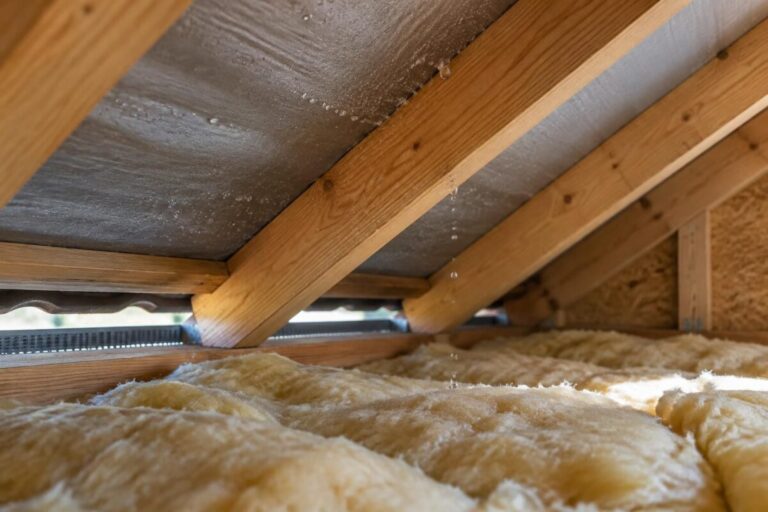
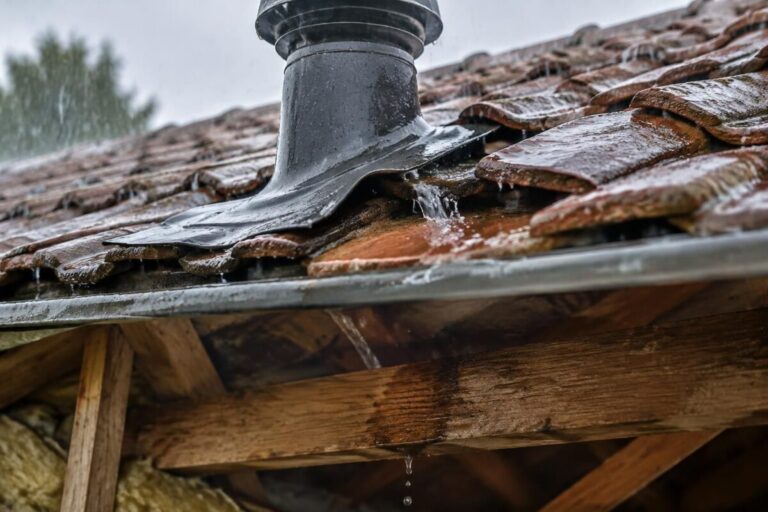
From a safe access point, look for droplets, marks and odours, and note when they appear. These signs may be caused by condensation, a leak or another problem; on their own, they do not prove that roof vent tiles are missing. To prepare for an assessment, keep photos and the reference details for the underlay and insulation, if you know them.
Can roof vent tiles be added without replacing the entire roof?
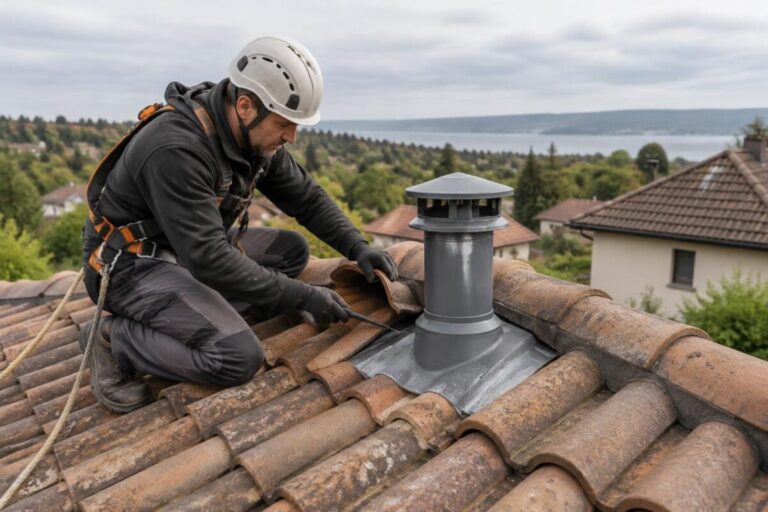
Yes, roof vent tiles can often be installed by replacing or lifting a few roof tiles, avoiding a complete reroof. It’s a quick way to improve ventilation.
Is a ventilated ridge closure sufficient on its own?
No, it must always be combined with a low-level air inlet, often provided by roof vent tiles or an eaves grille, to create an effective airflow path.
What is the difference between a roof vent tile and a ventilation grille?
A roof vent tile is integrated directly into the roof covering and is visible, while a grille can be installed at the bottom of the slope; it may be less attractive, but it is just as functional.
What maintenance is needed to keep a roof ventilated?
Have the airflow paths and condition of the accessories checked according to the roof and the manufacturer’s specifications. An interior membrane does not always need to be replaced during roof covering maintenance.
Does under-roof ventilation increase heating bills?
The air gap beneath the roof covering and the heated volume are two separate spaces in a properly designed setup. If outside air passes through the insulation or ceiling, the airtightness should be checked; blocking the roof-covering ventilation is not the solution.
Thanks for reading this far; Ivar