Roofing materials: Is an anti-condensation membrane useful or just a gimmick?
Hi, it’s Ivar. Under a steel roof sheet, an anti-condensation fleece temporarily holds droplets and must then be able to dry thanks to adequate ventilation. It does not eliminate condensation or repair a leak. Before choosing an “anti-condensation roof film,” identify the product: absorbent fleece, underlay and vapor barrier do not serve the same purpose.
- Determine whether it is condensation or a leak before taking any action.
- Choose an appropriate anti-condensation film for how your roof is used.
- Have the complete roof build-up specified according to the intended use and system requirements.
- Provide effective ventilation with an air gap beneath the steel roof sheet.
- Check regularly the condition of the film and the ventilation.
Understanding condensation beneath steel roof sheets: a roofing materials challenge
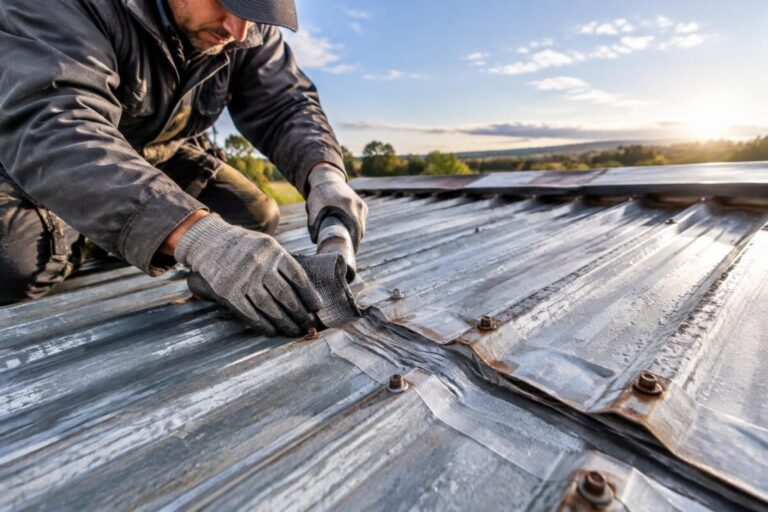
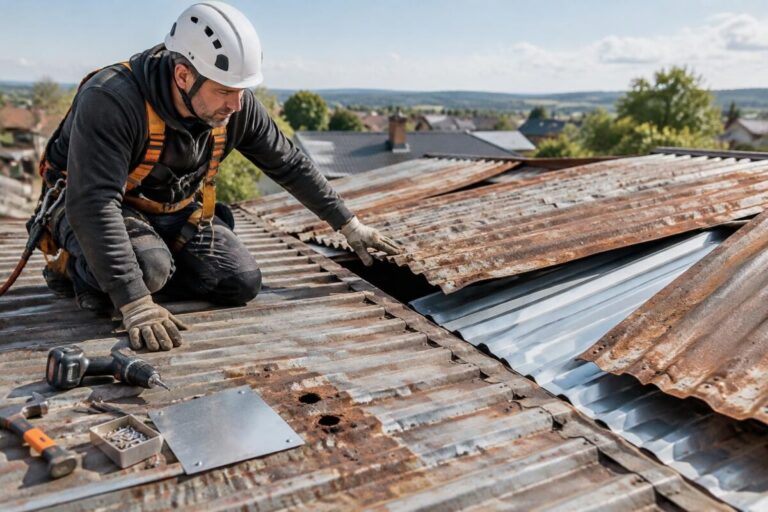
Steel roof sheets are popular for their strength and price, but thermally, they act as a cold bridge. When warm indoor air meets the cooled sheet metal, vapor turns into droplets. This phenomenon causes droplets, corrosion, mold and deterioration of the insulation, compromising the durability of roofing materials.
An open shelter and a heated, enclosed space do not have the same moisture loads or the same roof build-up. Don’t choose a fleece based solely on the words “anti-condensation.” Have the system’s compatibility checked against the building’s use, drying potential and the presence of insulation.
Anti-condensation film: how does it work and what is it really for?
The manufacturer Bacacier distinguishes between absorbent and draining solutions. An absorbent fleece stores a limited amount of water before it evaporates; if it remains saturated, it can no longer manage additional moisture in the same way. High humidity or a dusty environment call for a specific choice, not the addition of just any fabric beneath the sheet metal.
But be careful: this system only manages roof condensation. It does not make up for inadequate roof insulation or insufficient ventilation, nor does it eliminate thermal bridges in the steel roof sheet. It is one tool in a roof-protection toolkit.
Choosing the right anti-condensation film for the situation and intended use
| Product | Function | Typical location | Limitation | What to check |
|---|---|---|---|---|
| Condensation-regulating fleece | Temporarily hold droplets | Underside of the steel sheet, depending on the system | Limited capacity and drying required | Intended use, ventilation and sheet specifications |
| Roof underlay | Additional protection beneath the roof covering | On the exterior side of the insulation, depending on the assembly | Does not replace the roof covering | Type of underlay and system requirements |
| Vapor barrier membrane | Limit vapor transfer | On the interior side, depending on the design | Does not address rainwater leaks | Vapor resistance and continuity |
To buy the right product, note the sheet reference, whether it has factory-applied fleece, and the intended use of the space. Ask whether retrofitting is approved by the manufacturer. Gluing an improvised membrane beneath an existing roof covering is not an approved system.
Three checks to make before installing an anti-condensation system
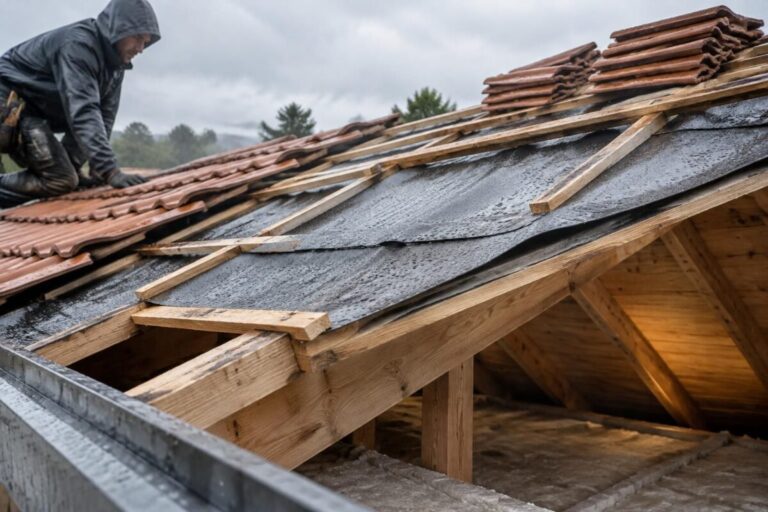
Phase 1: identify the existing roof build-up and the source of the water. Note the roof covering, insulation, membranes and airflow before choosing an intervention.
Phase 2: consult the specifications for the steel sheet and the selected condensation regulator. Treatments at the eaves, overlaps and penetrations depend on the system; this fleece is not necessarily a film that is unrolled in strips.
Phase 3: have the air inlets and outlets, insulation and vapor control specified for this building. There is no 20 to 40 mm air gap or R-value of ≥ 7 that applies to every steel sheet and every use.
These details, which ensure the durability of roofing materials and the effectiveness of the film, are too often overlooked.
Roof ventilation: the secret to long-lasting performance
The absorbent regulator must be able to dry between condensation events. Check with a professional that the planned airflow paths are not obstructed and that the building does not generate more moisture than the system can manage. Hypothetical example: enclosing an old open-sided shelter can alter this balance, even if the roof covering remains unchanged.
- Check your ventilation immediately if you see droplets.
- Check that the regulator is suitable for the intended use before adding it to an enclosed or heated building.
- Don’t overlook thermal insulation to prevent thermal bridges.
- Install a continuous interior vapor barrier to limit moisture.
- Check your system regularly to anticipate problems.
Can anti-condensation film replace good insulation?
No. Anti-condensation fleece is not thermal insulation. Insulation and the treatment of thermal bridges are designed separately, according to the roof and the building’s intended use.
How can you tell the difference between condensation and water ingress?
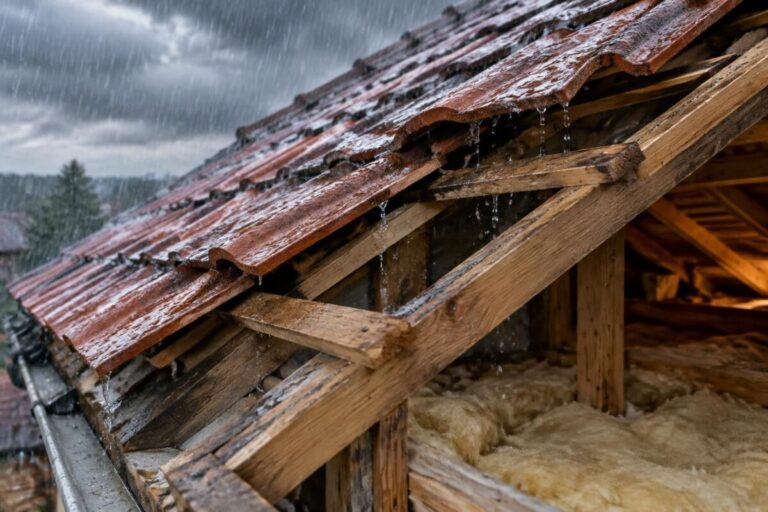
Condensation appears in cold, damp weather and is spread uniformly beneath the sheet metal. Water ingress comes from defects, is localized and can occur in mild weather.
How long does anti-condensation film last?
Its lifespan depends on the product, its exposure and system maintenance. Check the manufacturer’s documentation; a promise of several decades does not apply to every fleece or every type of space.
Is a roof underlay always required?
It is not always mandatory but is strongly recommended, especially in renovation projects or in areas exposed to the elements, to protect the insulation and improve durability.
Where should the vapor barrier be positioned?
A vapor-control membrane is generally placed on the interior side as part of the specified assembly. Its position and resistance are determined in relation to all the layers; don’t confuse it with the fleece beneath the steel sheet.
Thanks for reading this far; Ivar