Missing underlay: roof waterproofing or a future problem?
Hi, it’s Ivar. The absence of a roof underlayment does not automatically mean the roof will leak, but it does mean one less layer of protection against wind-driven rain, snow and dust. The solution: have the roof covering, pitch and applicable requirements checked, then add a suitable underlayment during a renovation if the configuration calls for it. Inside, the vapor barrier goes on the warm side; outside, the underlayment protects beneath the roof covering. These two layers are not interchangeable.
Quick checklist:
- Look for displaced tiles, signs of water ingress and stained areas of wood.
- Ask the roofer to check the roof pitch and type of roof covering.
- Ask for the quote to specify the underlayment model, HPV or non-HPV, and its compatibility with the insulation.
- Check how air circulates beneath the roof covering and in the attic.
- Keep the product references, invoices and proof of ten-year insurance coverage.
No roof underlayment: should you worry about water ingress?
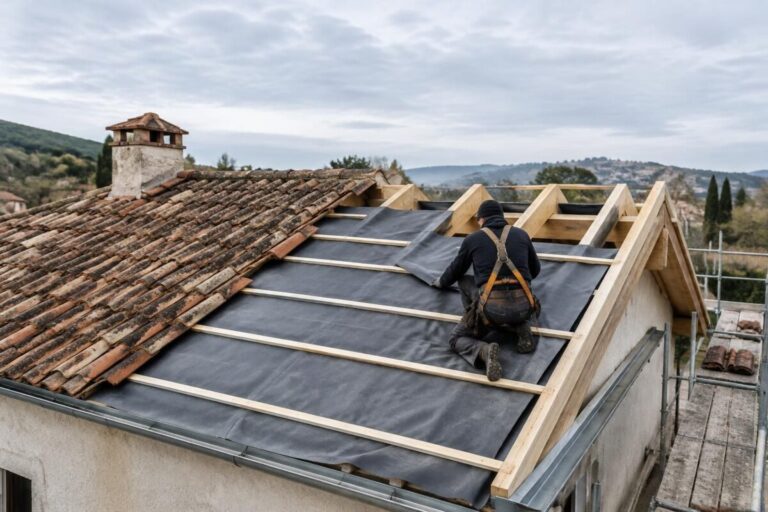
A roof underlayment forms a second line of defense beneath the tiles or slates. It can help keep out wind-driven rain, snow and dust when a little water gets past the roof covering; however, it does not replace a roof covering in good condition.
Without this membrane, the risk depends mainly on the roof pitch, the material, exposure to wind and the quality of the roof installation. Roofing regulations and the technical requirements for the roof covering may specify different measures, so the absence of an underlayment is not, by itself, proof of non-compliance.
If you see water stains, damp insulation or wood turning black, have the roof inspected promptly. If the roof covering is sound and the attic stays dry, a professional inspection can help determine whether work is needed, without reflexively stripping the roof.
Exterior underlayment and interior vapor barrier: two different functions
The underlayment is on the exterior side, beneath the roof covering. The vapor barrier, on the other hand, is installed on the interior side, on the warm side, to limit the passage of water vapor produced by showering, cooking or breathing.
The Sd value indicates a material’s resistance to water vapor diffusion: the lower it is, the more easily vapor passes through. An HPV underlayment often has a very low Sd value, while a vapor barrier has much higher resistance; the exact values depend on the product and installation.
Reversing these layers or choosing an unsuitable membrane can trap moisture in the insulation. Moisture protection therefore relies on a coherent assembly, with continuous joints and attic ventilation designed for the roof in question.
| Component | Location | Main function |
|---|---|---|
| HPV roof underlayment | Beneath the roof covering, on the exterior side | Keep liquid water out while allowing vapor to diffuse |
| Non-HPV underlayment | Beneath the roof covering, on the exterior side | Protect the roof covering as part of a suitable ventilated assembly |
| Vapor barrier | On the interior side, on the warm side | Limit vapor migration into the insulation |
Depending on the product and installation requirements, an HPV underlayment can be installed in contact with the insulation. This does not automatically eliminate the ventilated air gap required beneath the roof covering: follow the system specifications and the requirements for the type of roof. To learn more, see the advice on ventilation beneath an HPV underlayment.
Two situations not to confuse
If the roof covering is damaged or highly exposed to wind, the lack of an underlayment increases the risk of water ingress and warrants a prompt inspection. When the tiles are intact and the attic stays dry, adding an underlayment may be an improvement to plan for during a roof replacement rather than an immediate emergency.
Risks to the roof structure and warning signs
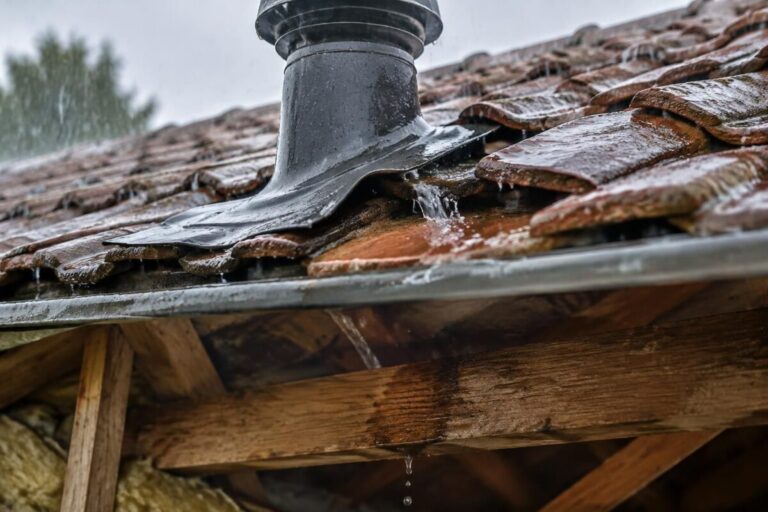
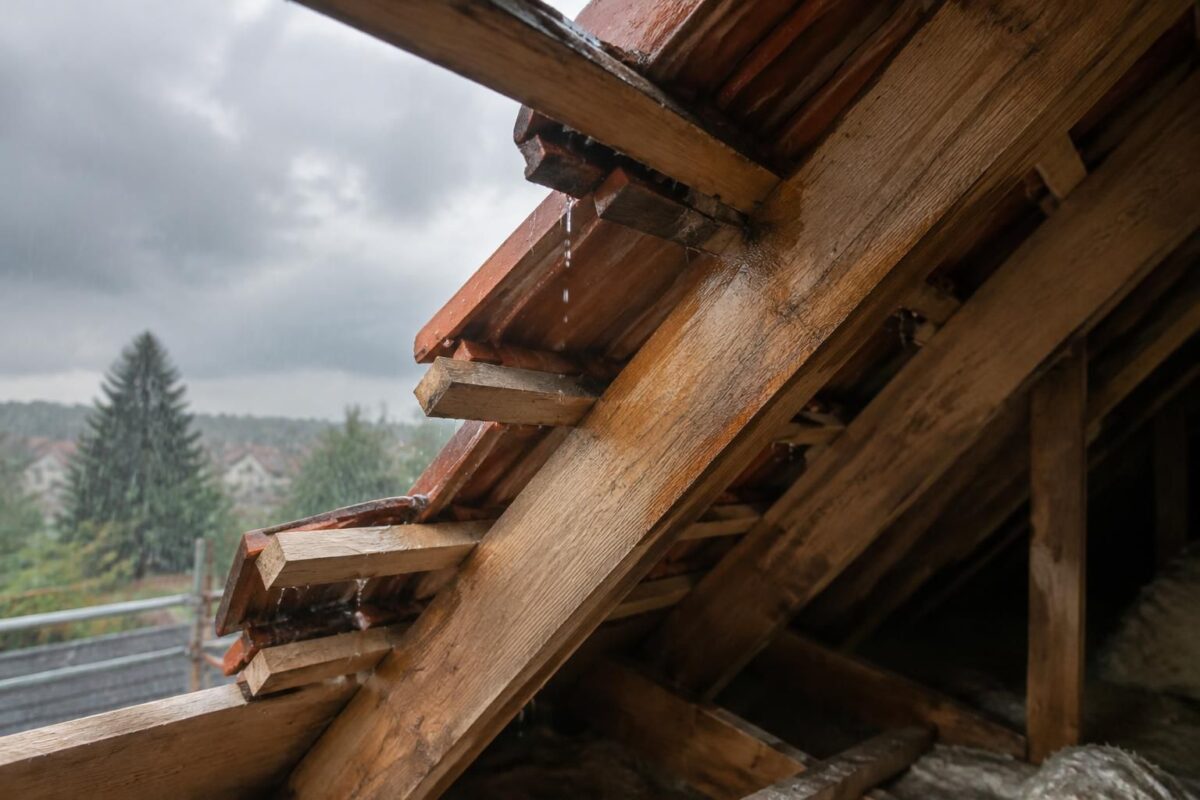
Repeated water ingress can soak the insulation, reduce its effectiveness and encourage mold growth. If the moisture persists, the risks to the roof structure increase: the wood can deteriorate, especially when water remains trapped and drying is inadequate.
A common mistake is to add a waterproof membrane without checking the existing layers. A roofer may then discover a membrane that prevents drying to the outside; the insulation and rafters remain damp, even if no leak is visible from inside the room.
A simple rule: keep water out on the outside and manage vapor on the inside. An incorrectly installed membrane can make the problem worse; joints around roof windows, chimneys and ducts require particular attention. Here are some useful pointers on the consequences of an incorrectly installed underlayment.
- Brown stains or mold on the rafters.
- A persistent musty smell in the attic.
- Compressed or damp insulation, or insulation marked by water run-off.
- Warped interior panels or blistering paint.
- An unexplained increase in heating needs.
Checking a roof without underlayment: a three-step method
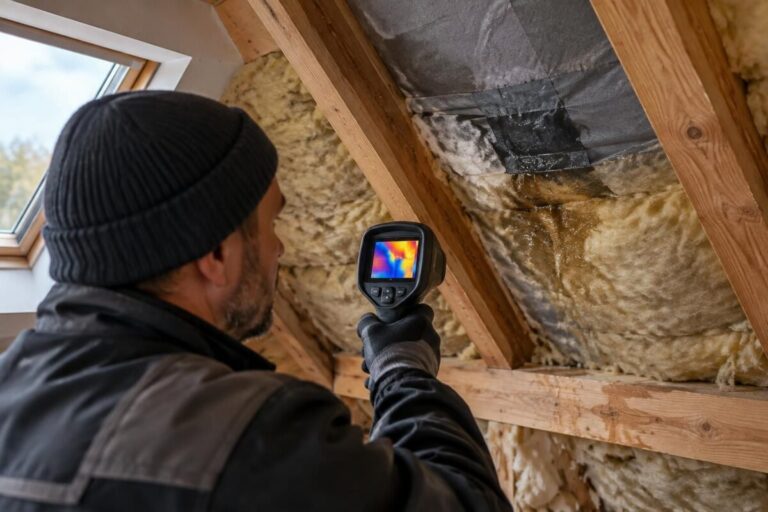
- Inspect without dismantling anything. From the attic, look for water marks, check the visible condition of the wood and note any suspicious areas. Do not climb onto the roof without suitable equipment.
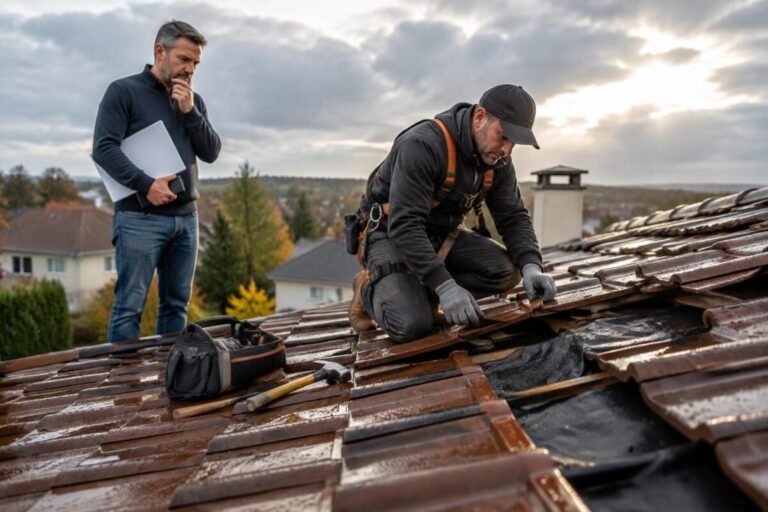
- Get an assessment. Ask the roofer to record the roof pitch, type of roof covering, condition of the battens and applicable technical requirements. When renovating a roof, these details help determine whether to use an HPV underlayment, a non-HPV underlayment or another suitable solution.
- Require detailed installation specifications. The quote should identify the product, its characteristics, the joints and the planned ventilation. Also check compatibility with the insulation and the manufacturer’s requirements; overlap and air-gap requirements vary depending on the system and situation.
Junctions matter just as much as the membrane: compatible joints around a chimney or window help prevent hidden paths for water. For installation details and specific roofing situations, you can consult the recommendations on underlayment, waterproofing and airflow.
When an underlayment is a worthwhile choice
A low roof pitch, a roof covering susceptible to snow ingress or a complete renovation may make additional protection necessary under the applicable requirements. Ask the professional to cite the technical rules that apply to the roof covering and explain their choice; the rules differ for tiles, slate and steel roofing sheets.
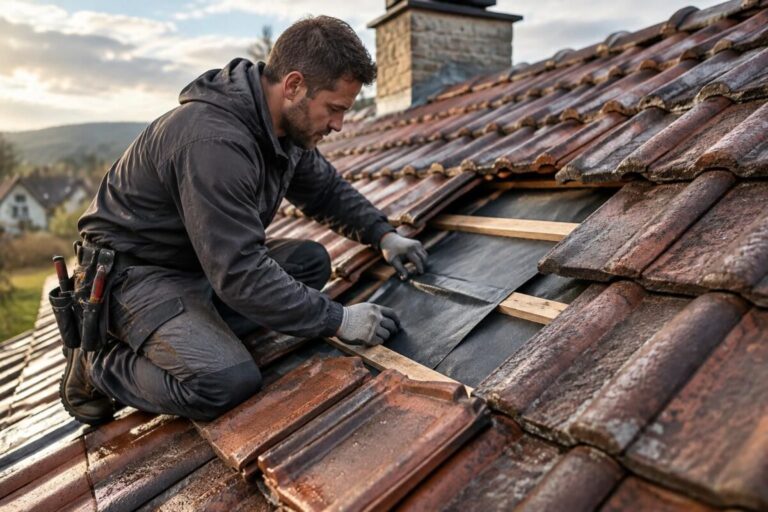
During a renovation, the underlayment can be installed when the roof covering is removed, but it must be integrated into the complete system. Simply unrolling a membrane is not enough: the direction of installation, overlaps, fixings and vapor removal must all work together.
Frequently asked questions about the absence of roof underlayment
Does a roof without underlayment always leak?
No. A roof covering in good condition can remain watertight without underlayment, but it does not benefit from this secondary protection. The risk depends in particular on the roof pitch, the material, exposure and applicable requirements.
Can underlayment be added without replacing the entire roof?
It depends on the configuration and access to the underside of the roof covering. When a renovation requires the roof covering to be removed, adding underlayment is often easier to integrate; a roofer should confirm feasibility on site.
Does HPV underlayment eliminate the need to ventilate the roof?
Not necessarily. Depending on the system, it may allow contact with the insulation, but ventilation beneath the roof covering is often still provided to remove moisture. Follow the product and roof covering specifications.
What sign means the attic should be checked promptly?
Visible water ingress, wet insulation, a persistent smell or signs of mold warrant a prompt inspection. These signs may indicate a fault in the roof covering or inadequate moisture management.
Thanks for reading this far; Ivar