Roof waterproofing: repair it yourself or pay twice?
Hi, it’s Ivar. A stain on the ceiling can hide a leak that has already spread beneath the roof. Only repair it yourself if the fault is localized, the membrane is sound, and access is safe; otherwise, get it assessed before starting work. My article will help you avoid a repair that lasts one season, followed by the cost of a complete replacement.
Roof waterproofing: repair it yourself or replace the membrane?
A targeted repair often costs anywhere from a few dozen to a few hundred euros, depending on the product, access, and surface area. A complete replacement generally costs between €40 and €120/m², including installation, depending on the method and circumstances, excluding major insulation work.
So the real question is not just the cost of the sealant. You need to find out whether the water is coming from an isolated defect or whether the membrane, insulation, and joints are reaching the end of their service life. That is where the risk of having to pay for repairs twice comes in.
Quick checklist:
- Check the age and type of membrane without climbing onto a slippery or inadequately protected roof.
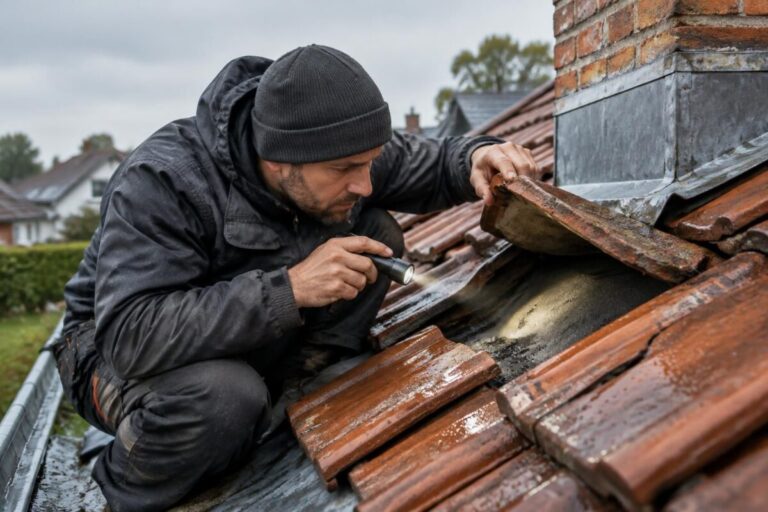
- Look for blisters, cracks, creases, and detached joints, especially near drains and upstands.
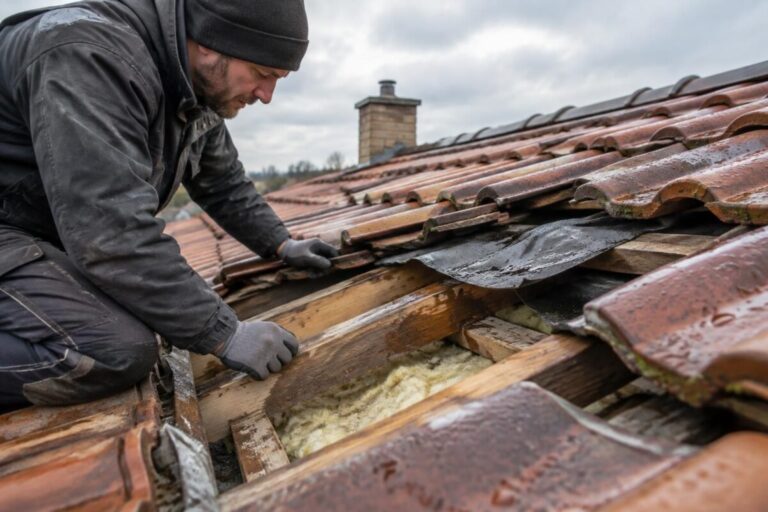
- Check whether the insulation seems damp or the surface feels spongy.
- Photograph the damage and keep maintenance records for the insurance claim.
- If the roof is less than 10 years old, contact the builder or original contractor before doing any work.
Find the water leak before choosing a repair
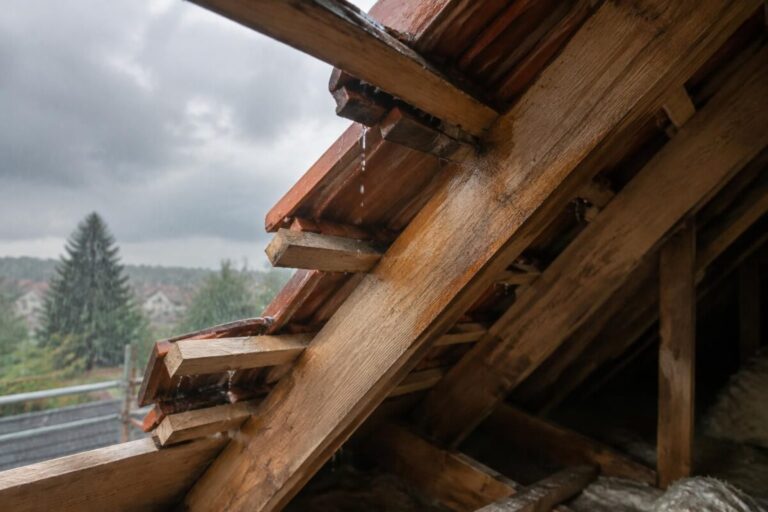
A stain on the ceiling rarely shows the exact point of entry. Water can travel between the layers of a flat roof, follow a slope or a piece of the roof frame, and then emerge several metres from the roof leak.
Start by checking the junctions: the drain, the upstand against a wall, a ventilation outlet, a rooflight, or a chimney. A blocked gutter can also cause water to pool and overflow in the wrong place. To investigate without guessing, see these tips on locating an invisible roof leak.
A common mistake is to apply a product directly above the stain inside. But the water has often already taken another route. The rule is simple: treat the cause, not the stain.
Two situations, two decisions
If the membrane is recent, there is only one leak, and the insulation remains dry, a targeted repair may be enough. If leaks keep recurring, blisters are multiplying, or the insulation is wet, it is better to consider a complete replacement.
To compare a local repair with a full replacement, this guide to patching or fully replacing a flat roof will help you identify the right criteria.
Roof repair: a simple three-step method
- Assess the area. In dry weather, visually inspect the roof from a safe access point. Look for defects and check the interior. A dull sound, a soft spot, or a persistent smell may indicate trapped moisture.
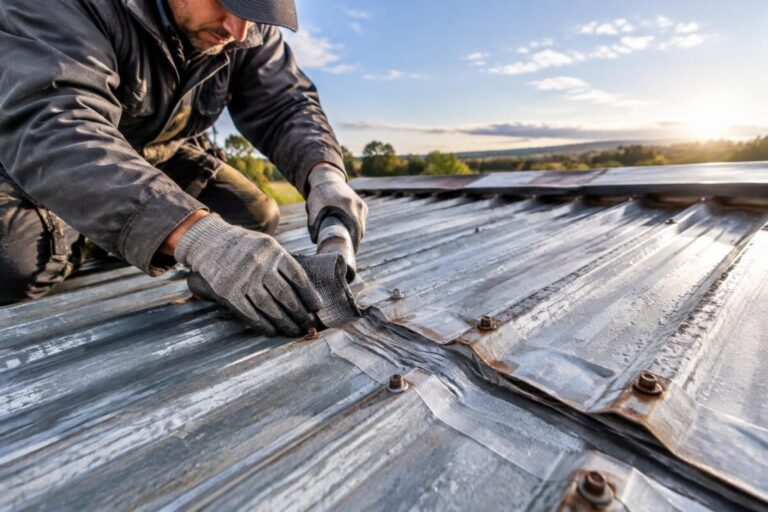
- Choose a compatible product. On a bituminous membrane, a self-adhesive patch or suitable sealant can be a temporary fix for a small crack. On EPDM, use a kit designed for this membrane, cleaning and preparing it according to the instructions. A waterproofing resin with reinforcement may be suitable for some junctions, provided the substrate is compatible and dry.
- Monitor it after installation. Follow the manufacturer’s instructions, then check the repair after heavy rain and twice a year. If the water comes back or appears elsewhere, stop applying repeated patches and request an assessment.
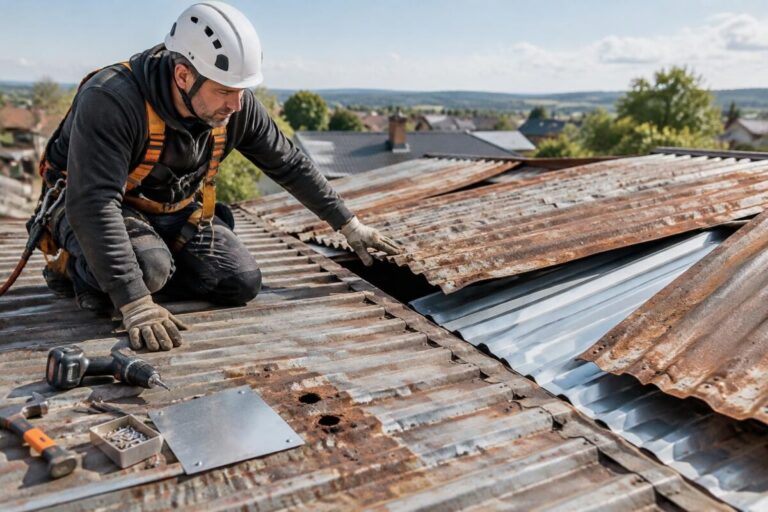
Do not use a blowtorch to weld a membrane unless you have the appropriate training and equipment. A fall or a fire can quickly turn a small repair into a major disaster. If access is steep, high, or slippery, call a professional roofer.
How much should you budget for a repair?
The cost depends on the material, access, the affected area, and damage beneath the roof covering. Products alone may cost a few dozen euros; a one-off repair by a professional often costs €100 to €600, depending on the circumstances. Instrument-based leak detection, when the leak cannot be found, can cost several hundred euros.
| Work | Typical price range | What to know |
|---|---|---|
| Sealant or self-adhesive patch applied yourself | €20 to €60 | Local temporary fix; durability varies depending on the substrate |
| Resin kit with reinforcement | €60 to €150 | Suitable for some junctions and complex details |
| Spot repair by a contractor | €100 to €600 | Price varies depending on access and the extent of the defect |
| Complete waterproofing replacement | €40 to €120/m² | Excludes major insulation work |
| Replacement with insulation | €130 to €250/m² | Depending on the system and the performance required |
These prices are estimates, not a quote. A repair carried out by a contractor may also be limited by the overall condition of the structure and applicable warranties: ask exactly what is covered, and for how long.
When to replace the waterproofing and protect the insulation
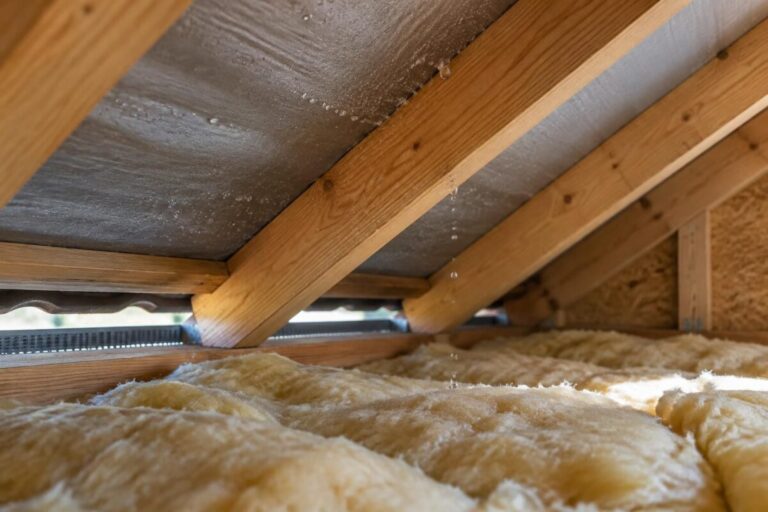
As a membrane ages, it gradually loses flexibility and its joints become more vulnerable. If leaks keep recurring, moisture can damage the insulation, reduce its thermal performance, and weaken nearby components. A surface patch will not fix insulation that is already saturated.
In some cases, the replacement can be installed over the old covering after preparation, if the substrate remains sound and the insulation is dry. Otherwise, removing and replacing the affected components becomes necessary. Use the project as an opportunity to check ventilation and moisture management: a high-performance roof must limit water ingress while preventing moisture from becoming trapped.
The choice of material also affects durability. Two-layer bitumen is often economical and repairable; EPDM can last a long time if properly installed and detailed; resins are practical for complex shapes, but their application depends heavily on preparation and weather conditions.
Roofing warranties, insurance, and defective work
For a recently installed roof, do not carry out repairs before contacting the original contractor and, if necessary, your structural damage insurer. Doing the work yourself could complicate the investigation into the cause or a claim relating to defective roofing work. The rules depend on the work, the contracts, and the circumstances, so keep written correspondence and photographs.
If there is damage inside your home, report the claim to your insurer promptly and check the deadline in your policy, which is often five working days. Interior damage may be covered depending on the circumstances, while repairs to the roof covering itself are not always covered. To find out what to do before deciding whether to file a claim or arrange a repair, see this information on insurance and repairing a leak.
While you wait for the roofer, limit the damage without making the problem worse
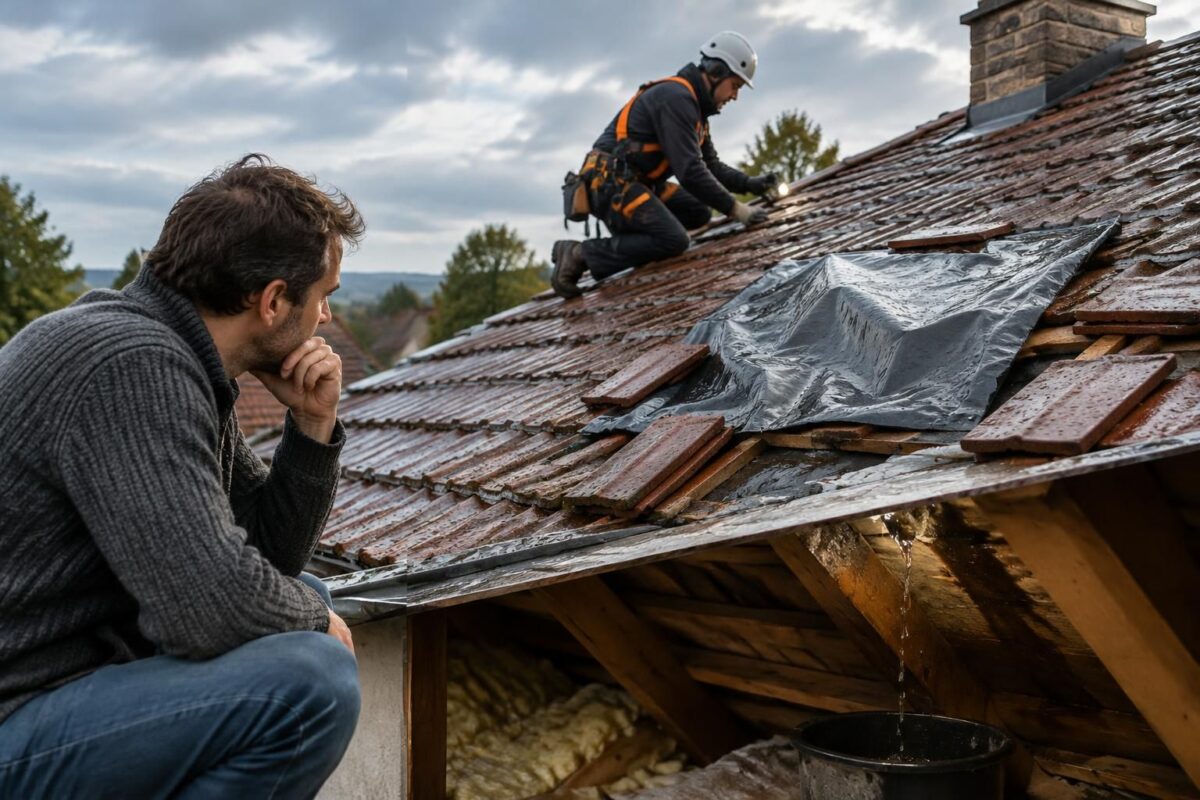
A securely fastened tarp, installed from a safe location, can temporarily protect your belongings and direct the water into a container. Do not nail it into the membrane, and do not climb onto the roof in the rain. Indoors, move furniture out of the way, take dated photographs, and place a container beneath the drips.
Once the weather is dry again, clear any accessible drains without walking on a fragile area. For other ways to make the area safe and provide temporary protection, read these steps to limit damage after heavy rain.
After a repair, monitor the area during rainy periods. If a second leak appears, do not keep applying patches: have the whole roof inspected, as the water may already have reached the insulation or substrate.
Frequently asked questions about roof waterproofing repairs
Can you repair a flat roof leak yourself?
Yes, a small repair may be an option if the leak is clearly located, the surrounding membrane is sound, and access is safe. Choose a product compatible with the roof covering and avoid using a blowtorch unless you are trained.
Why does a roofer sometimes suggest replacing the whole roof?
An aging membrane or multiple defects make a local repair uncertain. The professional should also specify the warranties that apply to their work and the existing structure.
Can a new waterproofing layer be installed over the old one?
Sometimes, if the substrate is sound, the insulation is dry, and the structure can support the planned system. If moisture is trapped or the substrate is deteriorated, removal may be necessary.
Does insurance cover roof repairs?
Home insurance may cover interior damage depending on the cause and the policy, but it may not cover restoring the waterproofing. Report the claim promptly and keep the evidence.
Thanks for reading this far; Ivar