Roof Waterproofing: Should a Roofing Underlay Be Installed During Renovation?
Hello, this is Ivar.
Yes, installing a roofing underlay during a renovation is often a good idea, especially if the roof covering is being removed, but it is not always necessary.
The right choice depends on the condition of the roof, the layout of the attic and the requirements that apply to the planned materials. A well-integrated underlay improves protection against water ingress, provided roof ventilation is maintained.
What to do right away
- Look for signs of damp, damaged timber and leaks visible from the attic.
- Check whether the renovation involves removing the entire roof covering or replacing only a few components.
- Ask the contractor whether the chosen underlay is suitable for the roof pitch and roof covering.
- Ask them to explain how air will circulate beneath the roof covering.
- Plan to replace any deteriorated sections rather than making an improvised connection to an old underlay.
Before deciding, compare the consequences of a poorly installed underlay with those of a roof that has none: the risks of a poorly installed underlay and what a roof without an underlay protects.
Installing an underlay during renovation: it all depends on the scope of the work
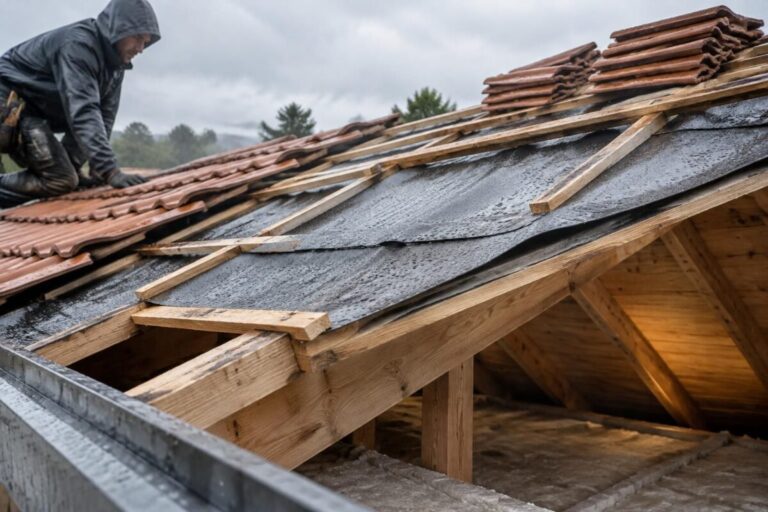
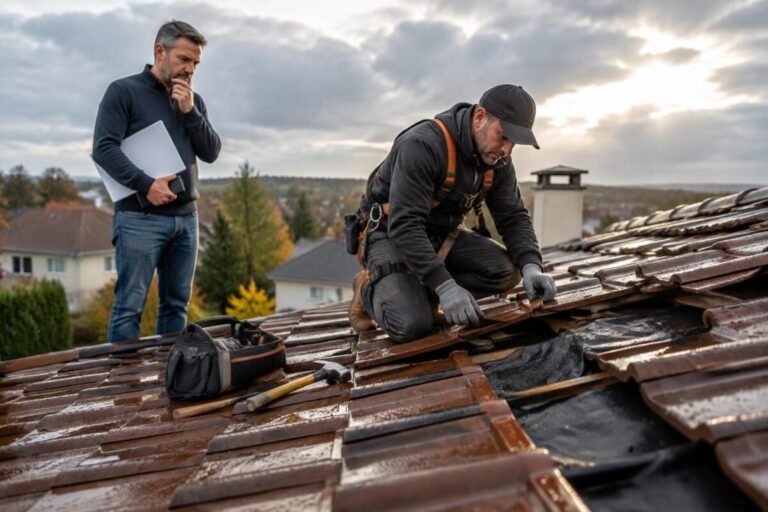
If the roof covering is completely removed, installing a roofing underlay is often a good opportunity to improve the roof’s weatherproofing. It provides a second line of defence against wind-driven snow, dust and water that could get beneath the tiles or slates.
If you are replacing only a few components, installing an underlay over the entire area without removing the roof covering is generally impossible. A local repair may be useful in some cases, but it must be designed to drain water outward without creating a pocket or obstructing the flow.
Roof renovation also offers an opportunity to review the insulation beneath the roof. But the underlay, insulation and roof covering work together: a poorly connected waterproofing membrane or a blocked air gap can shift the problem rather than solve it.
Roofing underlay and ventilation: a combination to preserve
The underlay does not replace the roof covering and does not make the roof waterproof on its own. It collects and carries small amounts of water that get past the roof covering down to the eaves, while limiting the insulation and roof structure’s exposure.
Roof ventilation remains essential for removing moisture. Depending on the product, roof pitch and roofing system, an air gap may be needed below the underlay, above it or on both sides: always follow the manufacturer’s instructions and installation requirements.
Which option is right for your roof’s condition?
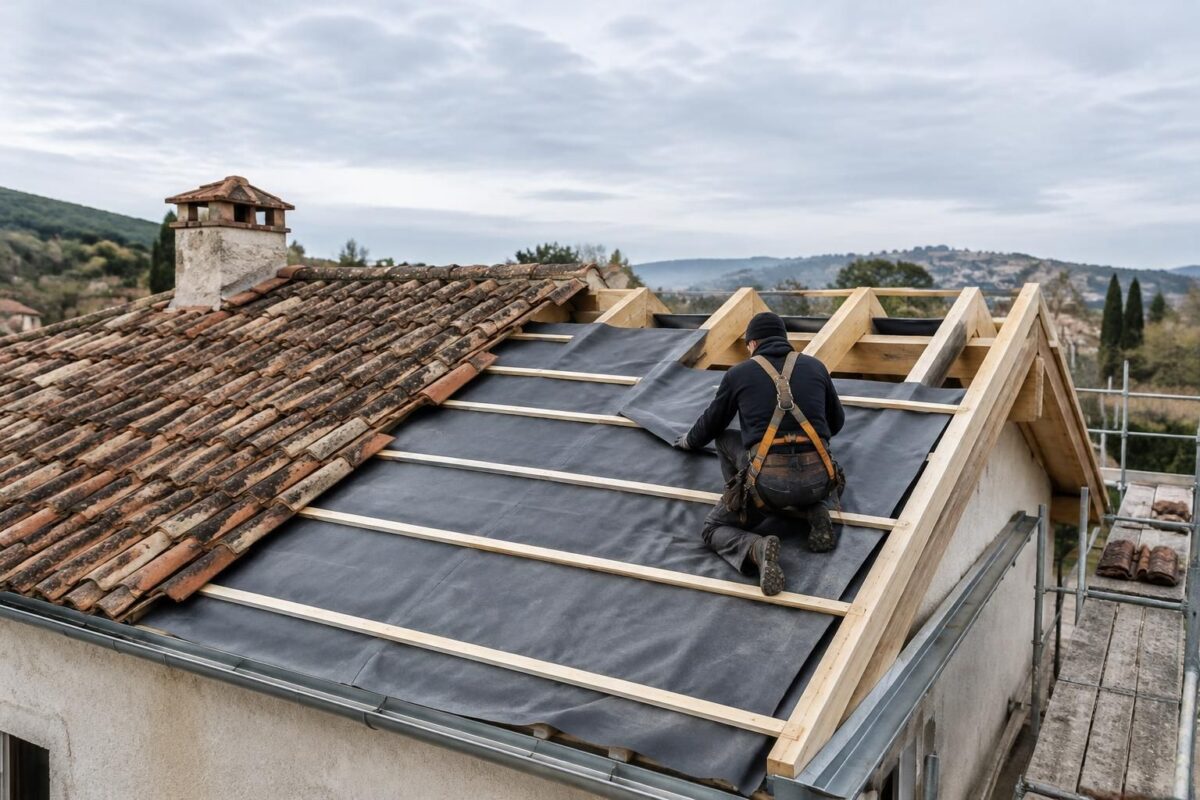
Picture Nadia’s house, where the roof tiles are nearing the end of their service life. Since the roof covering needs to be removed, the crew can inspect the roof structure, install a continuous underlay and redo the connections around the chimneys before putting the tiles back. By contrast, if a few tiles have slipped on a sound roof, the priority is to repair the roof covering and check the existing underlay.
| Situation | Generally suitable option | What to check |
|---|---|---|
| Complete removal of the roof covering | Consider installing a new underlay | Compatibility with the roof pitch, roof covering and ventilation |
| Replacing a few roof tiles | Repair the roof covering and inspect the existing underlay | Condition of the underlay, accessible from the attic |
| Finished attic with insulation | Coordinate the underlay, insulation and ventilation | Moisture vapour management and continuity of the connections |
| Existing underlay torn or poorly connected | Assess whether a repair or more extensive remedial work is needed | Path of the water down to the eaves |
An underlay described as HPV, or highly permeable to water vapour, may allow certain configurations without an air gap beneath the underlay, but only if the complete system and the manufacturer’s instructions allow for it. The acronym never removes the need to check ventilation above the underlay.
The pitfalls that compromise roof weatherproofing
A common mistake is to install an underlay thinking it will fix a defective roof covering. But a broken tile, worn flashing or blocked gutter requires a specific repair; the underlay provides additional protection, not a substitute for maintenance.
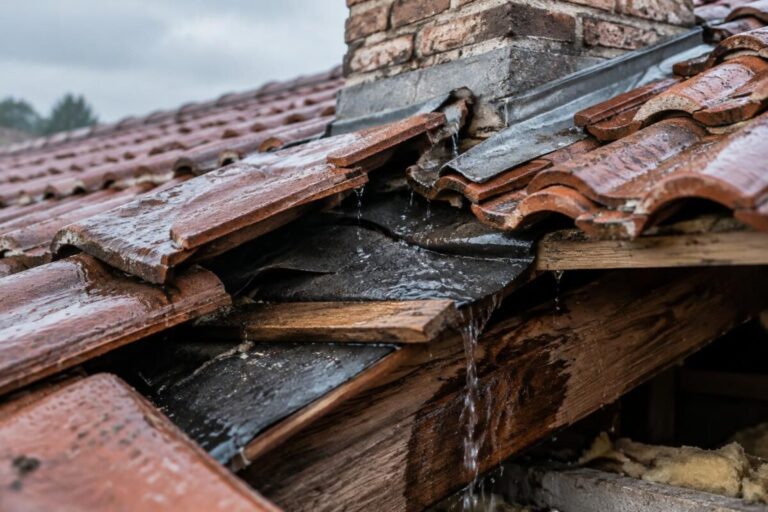
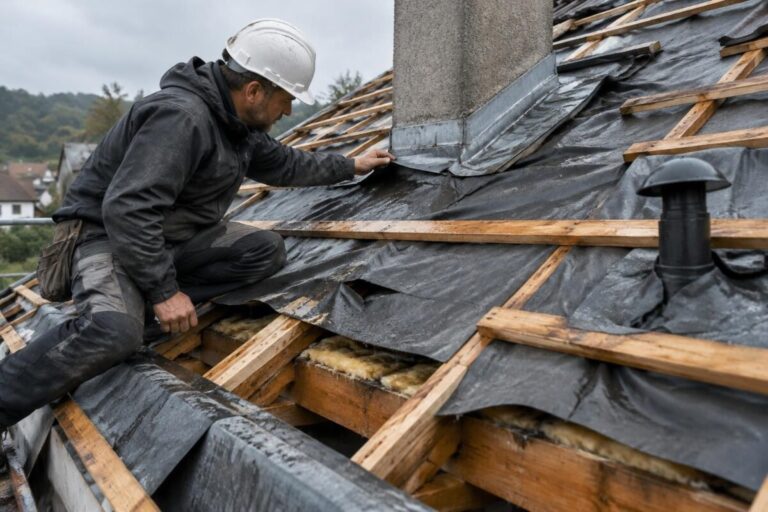
Another pitfall is cutting off the underlay around a roof window, chimney or flue without properly addressing the connections. Water can sometimes follow an inconspicuous path along the timber before appearing far from where it entered. An inspection after heavy rain may reveal these defects, but it is no substitute for a professional inspection.
Plan the installation of a roofing underlay during renovation in 3 steps
- Assess the roof. Have the roof covering, roof structure, insulation and signs of damp inspected. Ask whether the planned removal will allow for continuous installation or whether a localized repair makes more sense.
- Choose the system. Check that the underlay is compatible with the roof pitch, materials and ventilation requirements. Ask for details on overlaps, connections and drainage down to the eaves.
- Inspect before closing it up. Make sure the underlay is neither punctured nor slack, that the connections have been properly finished and that the air inlets and outlets remain unobstructed. Taking photos of the details before the roof covering is installed makes it easier to track the work.
The right underlay is one that is integrated into the roof system as a whole: the roof covering, ventilation, drainage and insulation must work together to protect the house for the long term.
Practical questions about roofing underlay during renovation
Is a roofing underlay mandatory during renovation?
It is not always mandatory for every renovation. Requirements depend in particular on the type of roof covering, the pitch, applicable regulations and the manufacturer’s instructions.
Can an underlay be installed without removing the roof tiles?
Continuous installation generally requires access to the roof structure, which means removing the roof covering. Localized work can sometimes be carried out, but it must ensure proper water drainage.
Does a roofing underlay replace ventilation?
No. The underlay does not replace roof ventilation. The ventilation system depends on the type of underlay, the roof covering and the roof layout.
Should an old underlay be replaced during renovation?
Not always. Its condition, continuity and connections should be inspected. If the underlay is torn, poorly installed or incompatible with the planned work, remedial work may be necessary.
I hope you found these tips helpful. See you soon! — Ivar