Roofing materials: slipped tile or punctured underlay—what needs repairing?
Hi, it’s Ivar. A slipped or broken tile should be replaced after checking the surrounding tiles, the batten and the roofing underlay. If the underlay is punctured, that layer must also be repaired: replacing the tile alone is not enough to restore the roof’s watertightness. The priority is to look for any water ingress, then protect the interior without climbing onto the roof.
Slipped tile or punctured roofing underlay: what to do
- Look at the roof from the ground, using binoculars or your phone’s zoom.
- Look for signs of damp in the loft and on the ceiling, without touching wet areas near electrical equipment.
- Take photos of the tile, visible damage and water marks to help diagnose the leak.
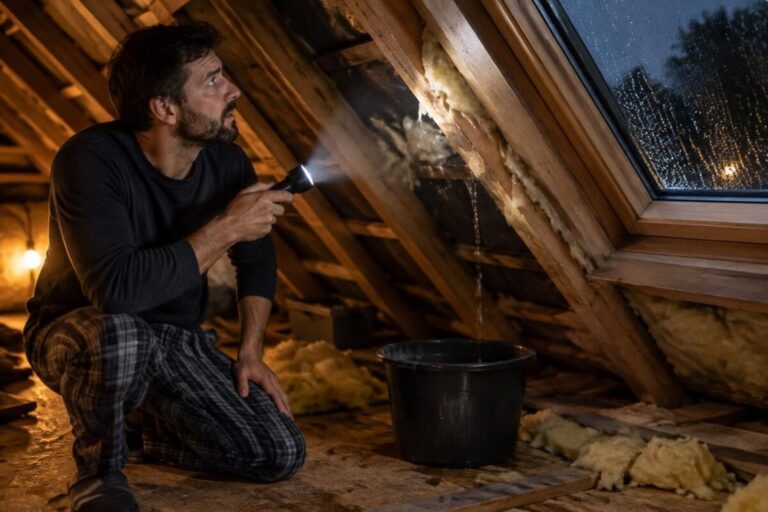
- Protect furniture and the floor indoors with a tarpaulin; place a container under any active drip.
- Contact a roofer to inspect the roof covering and arrange a safe repair.
How can you tell what is actually damaged?
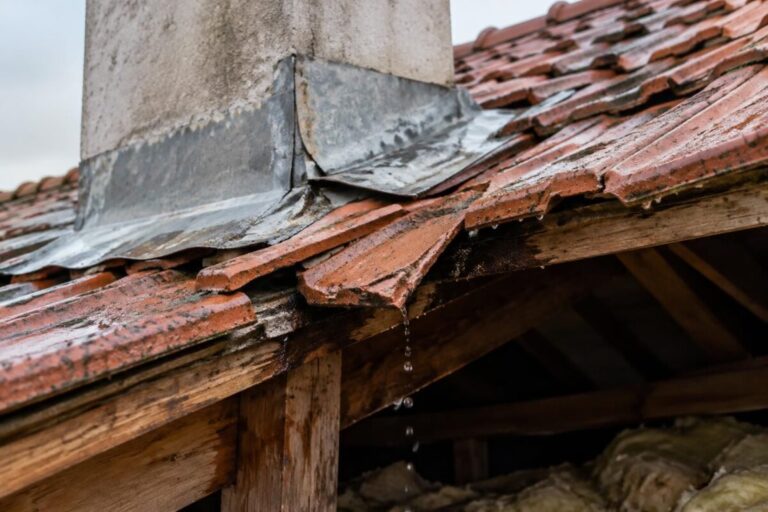
A roof covering works by overlapping: each tile protects part of the one below it. So even a single missing or cracked tile can let water reach the roof deck, insulation or timber. An intact roofing underlay can temporarily hold back this water and channel it towards the eaves, but it is not designed to remain exposed to the weather.
From the garden, look for a crooked tile, an uneven line or a dark hole. In the loft, a shaft of daylight, a damp patch after rain or a persistent musty smell should be checked. Pieces of terracotta near the wall or in the gutter are also a clue.
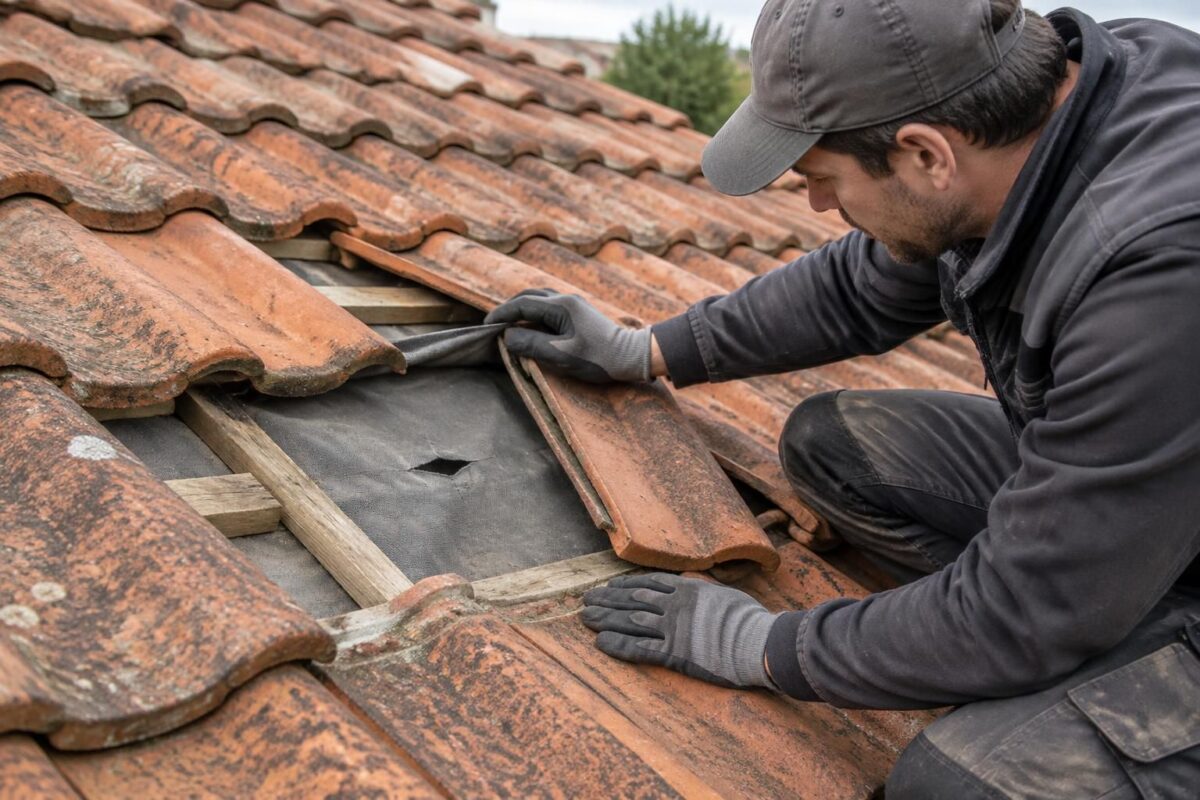
If just one tile is broken and the underlay is intact, a roofer can often carry out a one-off tile replacement. If the underlay is punctured, torn or sagging, the roofing underlay repair should be considered along with the roof covering: access may require lifting several tiles.
Two situations, two repairs
If a tile has slipped but still properly covers the row below, have its fixing and the surrounding components checked without waiting months. If the underlay is torn or water has already reached the insulation, the leak must be dealt with, the affected materials dried and the extent of the damage checked before closing everything up again.
Roof repair: tile, underlay and roof deck
The roofer carefully lifts the neighbouring tiles, removes the fragments and checks the batten and underlay. They then install a tile compatible with the existing model and secure it if its position or exposure to the wind calls for it. An impact may have weakened the surrounding components, so the inspection does not stop at the visible tile.
It can sometimes be difficult to find the exact model, as there are many profiles of interlocking tiles and some are no longer manufactured. An old tile may have a reference number on the back; a roofer can look for a new or reclaimed equivalent. If you have kept original tiles in the garage, hold on to them: they may avoid a difference in profile or colour.
For a punctured underlay, the method depends on the location, the size of the tear and the overall condition of the membrane. A small, accessible opening can sometimes be patched with a compatible piece installed according to the manufacturer’s instructions; a weakened or extensively torn membrane may require more extensive work. A bituminous strip chosen at random is no substitute for a repair suited to the roofing materials and the underlay in place.
Three steps to take action without making the leak worse
- Identify: look from the ground, inspect the loft without taking risks and photograph any signs of damp.
- Protect: move belongings out of the way, collect water indoors and have an external cover installed only by someone with the proper equipment.
- Repair and check: have the tile, underlay, battens and insulation inspected, then ask for the ventilation to be checked after the work.
A common mistake is trying to put the tile back in place by walking on the roof. A tile can break under your weight, and a fall from height can be serious; the repair should be entrusted to a properly equipped professional.
When a slipped tile points to a bigger problem
Wind can lift a poorly secured tile, especially at the verge or near the ridge. Frost can cause a tile that has become porous to crack; a hook, a worn batten, a branch or someone walking on the roof can also cause breakage.
A few damaged tiles after a gust of wind often call for a localised repair. However, if tiles are crumbling regularly, red sand is building up in the gutters or the roof is wavy, the roof covering and its supporting structure need a more thorough inspection: roof renovation may be worth considering.
Insulation that stays damp can become compressed and lose some of its thermal efficiency. Timber that remains damp over time can also encourage mould and insect infestations. After the repair, loft ventilation is therefore just as important as watertightness: condensation caused by poor airflow can look like a leak. To tell the difference, read this article on roof ventilation and false leaks.
“A visible tile is not always the only component at fault.” If water appears far from the damaged area, or if no tile seems to have slipped, a diagnosis of a hard-to-locate leak can help trace it back to its source.
| What you observe | What it may indicate | Recommended action |
|---|---|---|
| Cracked or missing tile, with no interior stain | Localised damage, with a risk of water ingress at the next rainfall | Have the tile inspected and replaced promptly |
| Slipped tile and visible or punctured underlay | The secondary protection may be compromised | Check the membrane, batten and underlying materials |
| A damp patch that is spreading or a drip from the ceiling | Active water ingress or existing damp | Protect the interior and arrange a prompt repair |
| Several uneven rows or a sagging roof | The roof deck or structure may be affected | Request a full assessment, not just a tile repositioning |
Protecting the insulation and watertightness after the repair
A lasting repair involves more than simply putting a tile back in place. You also need to check that water drains properly, that the insulation has not remained wet and that the loft ventilation is not blocked. If the leak happens at night, these steps to protect the insulation after a leak can help limit the damage while you wait for the roofer.
If the leak was caused by an event such as a storm or hail, photograph the damage and contact your insurer promptly. Cover depends on the policy, the cause and the excess; normal wear and tear is generally considered maintenance for the homeowner to pay for. Keep the photos and the quote.
To prevent the situation from getting worse, the rule is simple: make things safe first, diagnose next, and repair the cause before finishing work. Choosing the right materials and installing them appropriately for the roof helps ensure a longer service life.
Frequently asked questions about a broken tile or punctured underlay
Is a cracked tile that is still in place urgent?
It can let small amounts of water through and may crack further in freezing weather. Have it replaced without waiting too long, especially before a period of heavy rain.
Can you repair a slipped tile yourself?
Avoid climbing onto the roof: a tile can give way under your weight, and a fall can be serious. Have a properly equipped roofer carry out the work, even for a minor repair.
Does the roofing underlay need to be replaced if it is punctured?
Not necessarily. The solution depends on the size of the damage, the condition of the membrane and how accessible it is; a professional will check whether a localised patch is sufficient or more extensive work is needed.
Does insurance cover replacing a tile?
It depends on the cause and the cover provided by the policy. Damage caused by a storm or hail may be covered subject to certain conditions, while normal wear and tear generally falls under maintenance.
Thanks for reading this far; Ivar