Repair a roof tile: Roofing materials or a fragile patch?
Hi, it’s Ivar. For a broken or cracked roof tile, replacement with a compatible model is the preferred solution after an assessment. Sealing does not restore a tile’s strength and may only serve as a suitable temporary fix in some cases. Start by inspecting it from the ground or from a safe indoor access point; working on the roof requires appropriate access and safety measures.
Quick checklist:
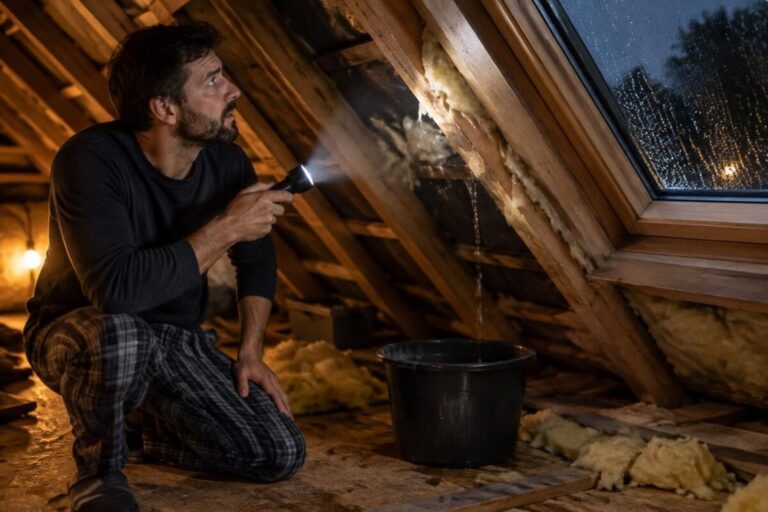
- Locate the crack from the ground or the attic before doing any work.
- Check whether the tile is loose, split in two, or missing a piece.
- Identify the model and material of the roof tile.
- Choose a product compatible with the roof covering and wait for dry weather.
- If access is risky, call a roofer rather than climbing onto the roof.
Roof tile repair: patch or replacement?
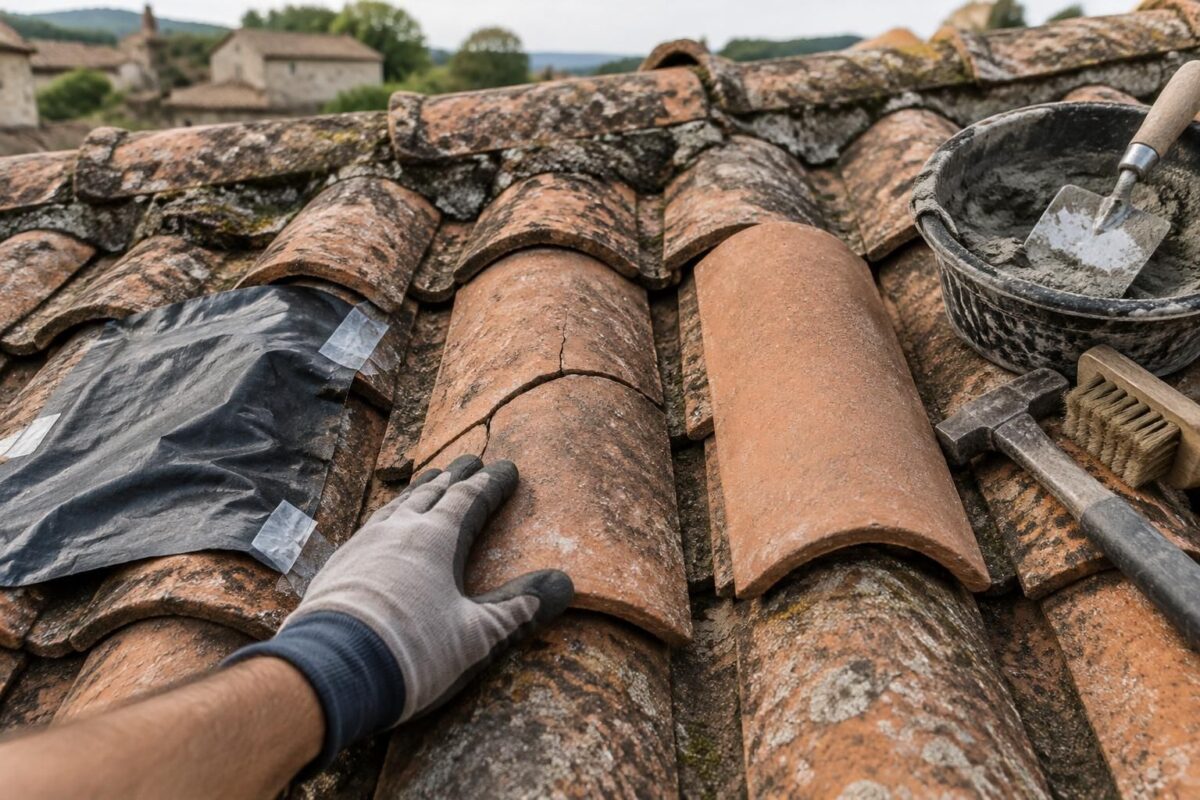
A split, deformed, or incomplete tile should be assessed for replacement. The manufacturer Edilians recommends replacing broken tiles to restore the roof covering. Resin, mastic, or spray should not be presented as a universally durable repair.
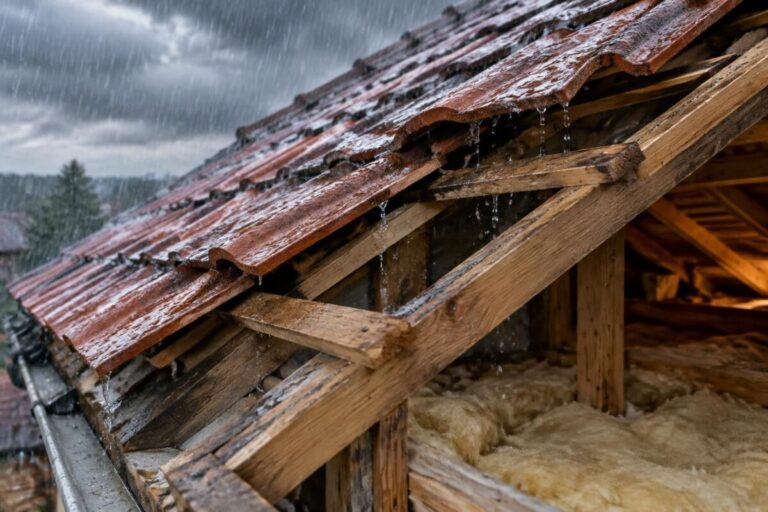
Diagnosis matters just as much as the product. A roof leak may come from a damaged tile, but it can also be caused by a flashing, ridge, or blocked drain. Water can travel beneath the roof covering before appearing on the ceiling, so replacing the tile directly above the stain is not always enough.
When a temporary repair may be enough
A professional may arrange temporary weatherproofing while waiting for the right part or for favorable weather. The choice depends on the material, the pitch, and the product instructions. A seemingly fine crack is not enough to conclude that the tile is still strong; also check the condition of nearby components and the cause of the damage.
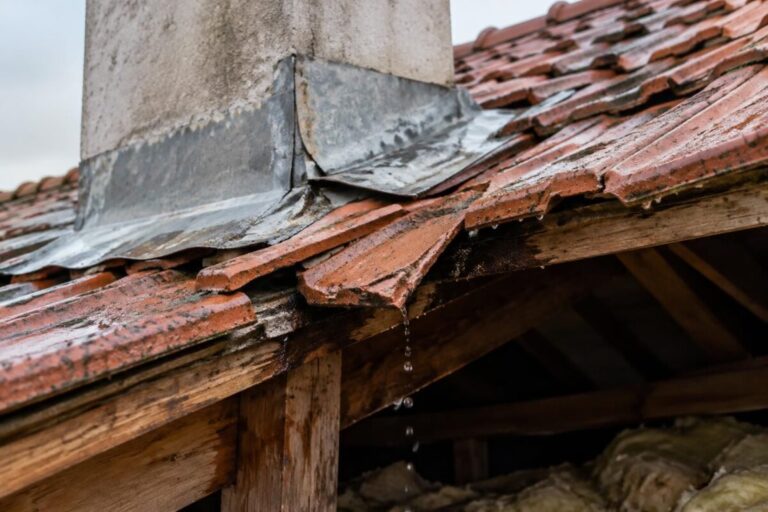
If the tile is split in two, a piece is missing, or it is shifting, prioritize roof tile replacement. A temporary repair may limit water entry in the meantime, but it cannot turn a weakened component into a durable roof covering.
Choosing the right roofing materials
The product must be suitable for the tile and its exposure. For a crack on a dry, sloping surface, some resin or liquid membrane systems may be suitable; in areas where water pools, follow the manufacturer’s specific recommendations. Repair mortar is not a universal solution: it is suitable for some joints, but does not automatically replace a broken tile.
Here is a simple guide to help compare the options. Material compatibility and water drainage matter more than the thickness of the product applied.
| Condition of the tile | Solution to consider | Limit to be aware of |
|---|---|---|
| Fine crack, tile stable | Assessment and possible replacement | Repair is often only a temporary fix |
| Small chip, no movement | Check integrity and water drainage | Check adhesion after drying |
| Broken or deformed tile | Replace with a compatible model | Handling may be tricky |
| Leak near flashing or ridge | Diagnose the roof junction | The tile may not be the cause |
Repairing a cracked roof tile in three steps
Prepare before applying any product to repair a roof tile. A clean, dry surface helps with adhesion, while calm weather reduces risks during the work.
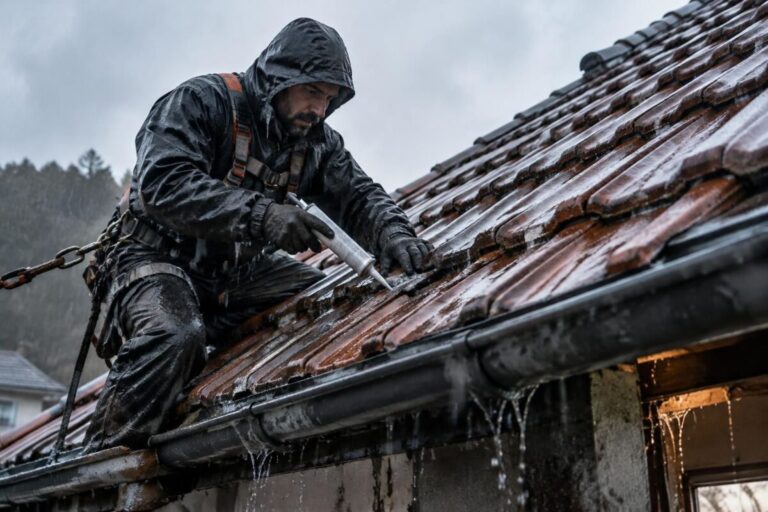
- Inspect and make the area safe. Locate the tile and nearby components from a safe place. Do not work on a roof that is wet, icy, very steep, or exposed to wind.
- Prepare the surface. Gently remove dust and debris, then allow it to dry. Protect nearby tiles and apply the product according to its instructions, using a reinforcing strip if the system calls for one.
- Allow it to dry and check the repair. Follow the drying time indicated on the packaging. After the first rain, check from the attic that no new signs of damp have appeared.
A common mistake is applying a thick layer to a wet tile and assuming the problem is fixed. The product may not adhere properly, and the leak could return the next time it rains.
Simple rule: a waterproofing product supplements a properly installed roof covering; it does not replace a component that has lost its strength.
Hypothetical example: a stain appears after rain near a broken tile. The roofer also checks the nearby flashing and the underlay before replacing the tile. Whether the stain disappears after the repair must be monitored over time; a single photo does not prove where the water came from.
Roof waterproofing, insulation, and ventilation
A damaged tile can let water in, but persistent damp can also indicate a condensation problem. If the insulation is wet or a musty smell develops, identify the cause before closing or covering the area: replacing a tile will not fix inadequate ventilation.
After a leak, monitor the condition of the insulation and roof framing. A roof covering must keep out rain while allowing the roof assembly to manage moisture and airflow properly. For more information, see these tips on a leak after rain and thermal insulation, as well as the guidance on ventilation beneath old roof tiles.
The durability of repairs also depends on the original cause: frost, impact, a tile displaced by wind, worn flashing, or a blocked drain. If the leak returns, have the entire area inspected rather than layering on more patches. To compare sealing and replacement, this information on the risks of sealing or replacing may help.
When should you call a roofer?
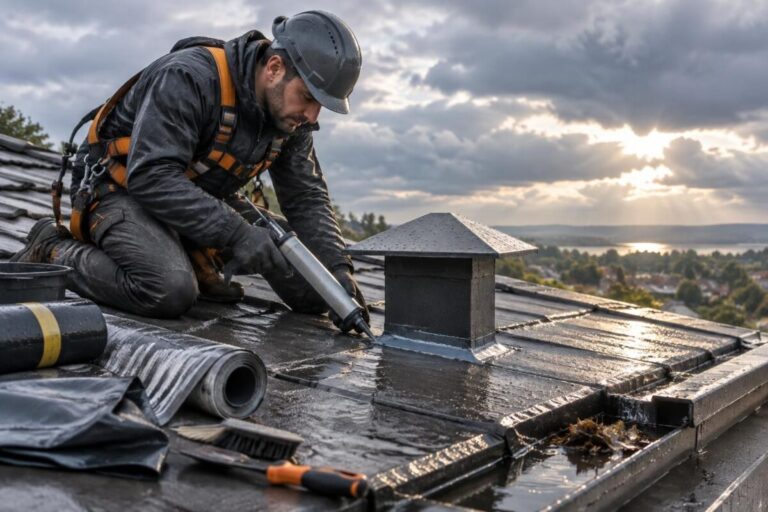
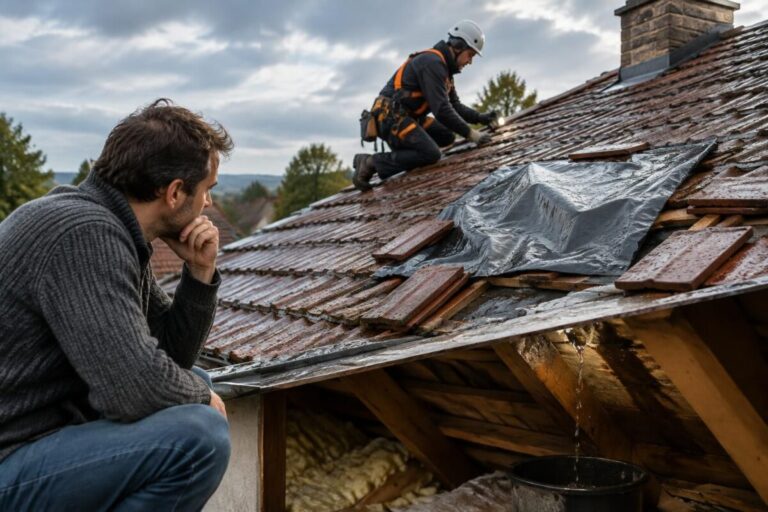
Working at height involves real risks, even for a short job. If the tile is near the ridge, beneath a sealed component, or if several tiles are affected, a professional can assess the damage without weakening the surrounding roof covering.
The INRS highlights the risks of working on roofs. A ladder or dry weather alone is not enough to make the work area safe. Arrange the assessment and repair with a properly equipped professional rather than climbing up to check whether the tile is loose.
Prepare the equipment on the ground
Gather photos, any available product references, and the supplies requested by the roofer before they arrive. For storing and checking small tools used on the ground, these tips on choosing and maintaining tools may be useful. Standard tools do not replace the safety equipment required for working at height.
A quick repair should not conceal wider damage to the roof underlay, insulation, or flashing. An annual inspection by a professional may be useful when the roof is difficult to access; after a storm, hail, or heavy rain, a targeted check can also identify any recent movement.
Can a roof tile be repaired without removing it?
A temporary fix can sometimes be carried out without removing the tile, but that does not prove the tile has retained its strength. For a broken or cracked tile, have the replacement and model compatibility checked.
How long does a small repair take?
The time depends on access, how the tiles are secured, nearby components, and the diagnosis. Any product used will also require drying time. Ask the roofer for a schedule rather than relying on a standard estimate.
Is a roof patch durable?
It may hold on a small crack if the surface is clean, dry, and compatible with the product. It remains a temporary repair and does not replace a tile that has lost its strength.
What should I do if the leak returns after a repair?
Do not simply add another layer. Check nearby tiles, the ridge, the flashing, and the ventilation, then request an assessment if the cause is still unclear.
Thanks for reading this far; Ivar