Roofing materials: in a windy roof, does the underlay prevent the worst?
Hello, it’s Ivar.
Yes, a well-chosen and correctly installed roofing underlay limits wind damage, but it does not replace either the roof covering or secure fastening.
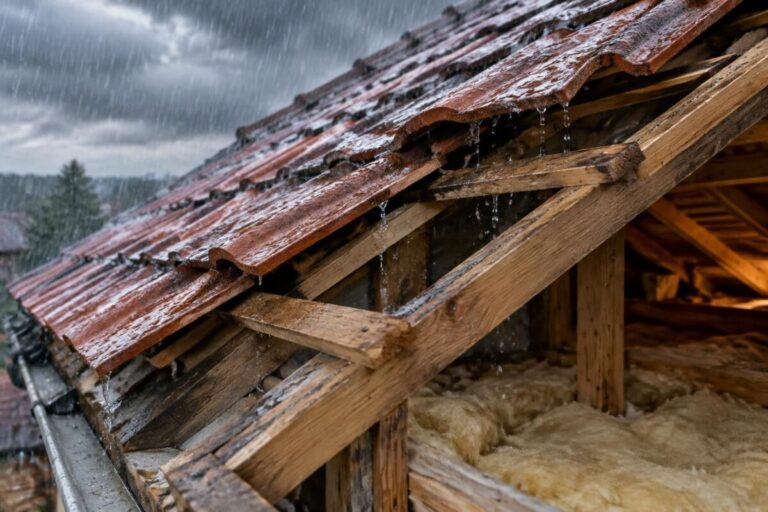
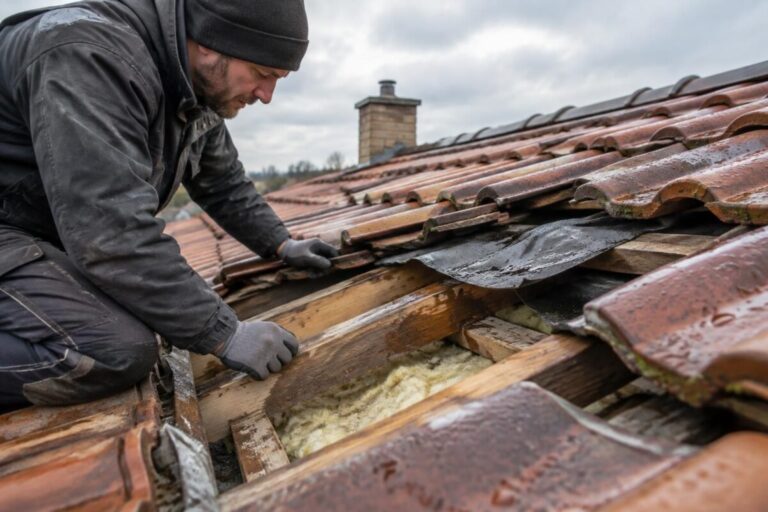
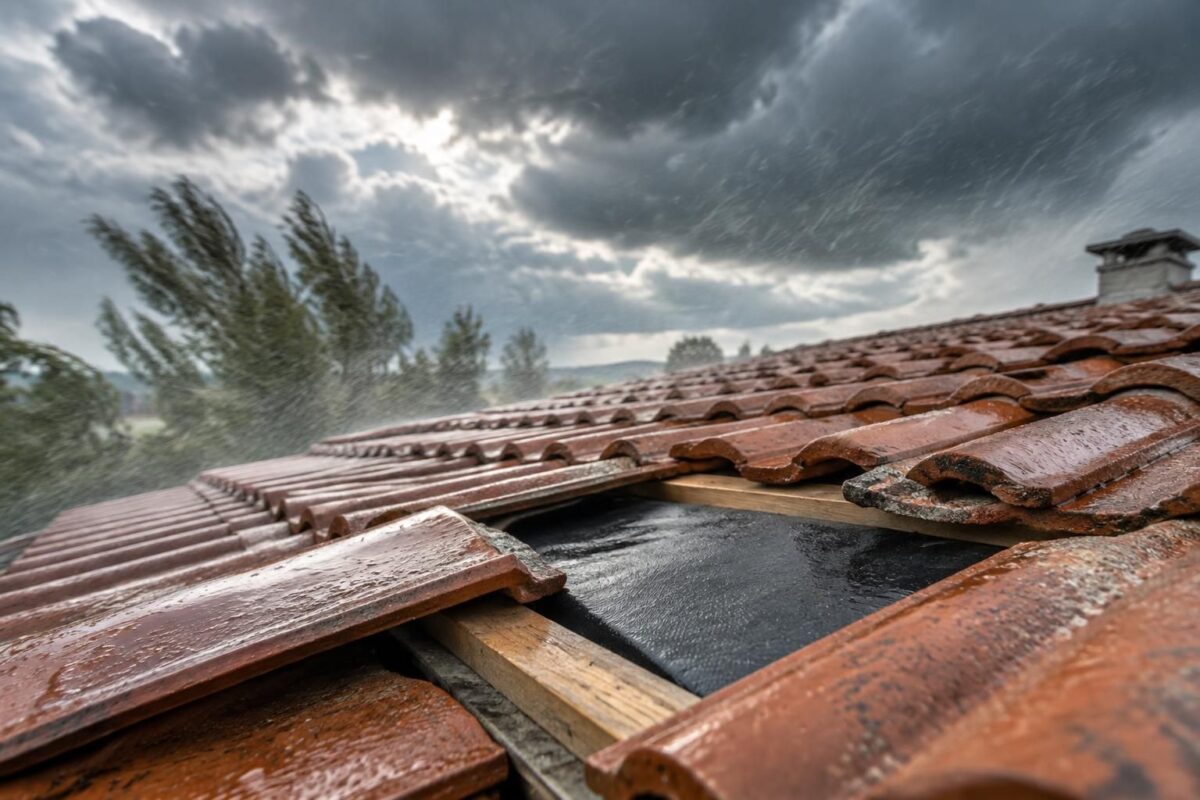
When gusts lift the tiles, rain can seep beneath the roof covering. The underlay then provides a second line of defense, provided the roof is also properly ventilated and watertight.
Here are the essential checks to protect your roof for the long term, without confusing underlay, insulation, and ventilation.
What to do right away
- Look for displaced tiles and signs of moisture in the attic after a windy spell.
- Check whether there is a roofing underlay and assess its condition from a safe access point, without walking on the roof covering.
- Check the air inlets and outlets: a ventilated air gap should allow moisture to escape.
- Have the verges, ridge, and fixings inspected—areas particularly exposed to gusts.
- Seek professional advice if the underlay is torn or sagging, or if water is getting in.
To understand the role of the underlay in insulating a roof without an underlay beneath the tiles and avoid confusing it with a vapor barrier, also see this guide to underlay, vapor barriers, and thermal insulation.
Roofing underlay and wind protection: what they can really do
A roof exposed to wind experiences pressure on its windward face and suction along the edges, verges, and ridge. These forces can displace roofing elements or drive rain beneath the tiles.
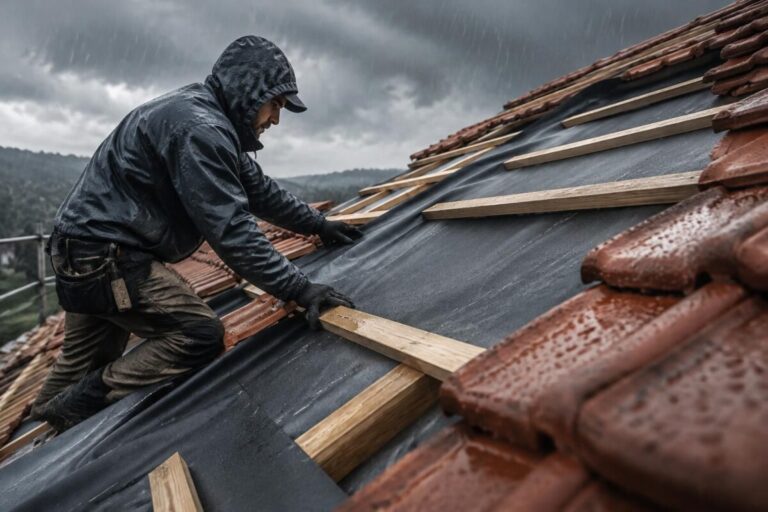
The roofing underlay catches some of the water or windblown snow that gets beneath the roof covering, then channels it toward the eaves. It also helps limit air infiltration beneath the roofing materials, but it cannot make the roof covering waterproof on its own.
A second line of defense, not a suit of armor
Imagine a house with properly fastened tiles but an underlay that is poorly sealed around a chimney. When rain is driven by the wind, water can get around the membrane and reach the insulation. The quality of the installation matters just as much as the product chosen.
Weather resistance depends on the whole system: roof covering, fixings, joints, underlay, and drainage. For lasting protection, every component must be compatible with the roof pitch and local conditions.
Roofing materials: choose according to exposure and ventilation
Tiles, slate, and metal roofing do not respond to gusts in the same way. Weight, size, pitch, and fastening system all affect how well the roof holds up. The choice should therefore be based on installation requirements and the building’s exposure, not just appearance.
A ventilated roof helps remove moisture from beneath the roof covering. The ventilated air gap must remain continuous, as specified by the roof design: a blocked air inlet or insufficient outlet can encourage condensation, even if the underlay is intact.
| Component | Role in wind protection | What to check |
|---|---|---|
| Roof covering | Directly protects against the elements | Condition of the materials and suitable fixings |
| Roofing underlay | Limits the effects of water or snow getting in | Continuity, joints, and drainage toward the eaves |
| Ventilated air gap | Helps remove moisture | Air inlets and outlets are unobstructed |
| Attic insulation | Reduces heat loss | No moisture and installation compatible with ventilation |
Key takeaway: improving attic insulation will not fix poor roof watertightness. The layers must work together without blocking the airflow designed into the system.
A common mistake: thinking the underlay is enough
An underlay that is slack, punctured, or poorly sealed can allow water to reach the roof structure. Conversely, a membrane installed without following ventilation requirements can trap moisture. In both cases, the problem often lies in the roof design or installation, not just the material.
If you find a damp patch in the attic after a storm, do not immediately assume the underlay has failed. The water may be coming from a displaced tile, a chimney joint, or a poorly protected verge. The path taken by the moisture is not always directly above the stain.
A three-step inspection
- Look for signs without taking risks. From the attic, check for water marks, damp wood, or compressed insulation. After strong winds, inspect the roof covering from the ground.
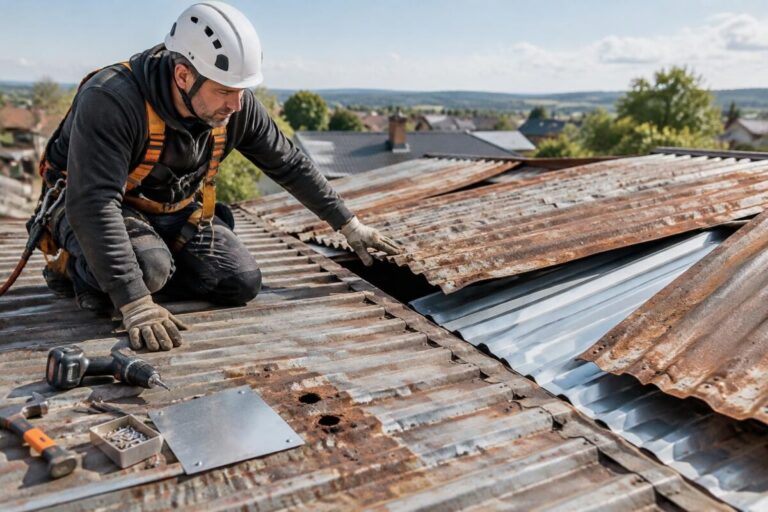
- Have the entry point identified. A roofer can inspect the fixings, joints, underlay, and ventilation, then determine whether the issue is water ingress or condensation.
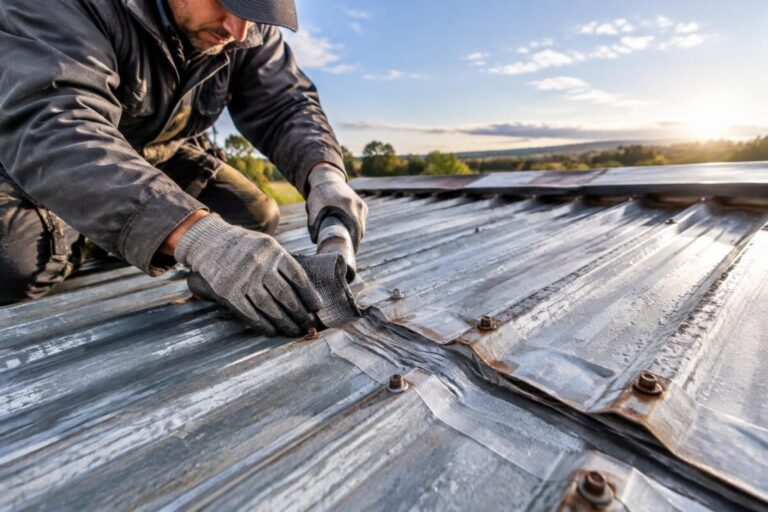
- Repair the system as a whole. Replace damaged components, restore the joints, and check that air is flowing as intended. A localized repair should not create a new weak point.
If there is an active leak, protect your belongings indoors and contact a professional promptly. Do not climb onto a wet roof or one exposed to the wind: an improvised inspection can worsen the damage and cause a fall.
Practical questions about roofing underlay and wind
Does a roofing underlay prevent all water ingress?
No. It provides additional protection against water or snow that gets beneath the roof covering, but it does not replace materials in good condition or properly installed joints and fixings.
Does a roof with an underlay need ventilation?
Ventilation must follow the roof design and the manufacturer’s instructions. A properly designed ventilated air gap helps remove moisture and reduce the risk of condensation.
How can I tell if the underlay is damaged?
Signs of moisture, recurring leaks, or a visibly torn membrane can be warning signs. A roofer can check its condition and joints without exposing the occupant to the risks of climbing onto the roof.
Does the underlay replace attic insulation?
No. The underlay protects beneath the roof covering, while insulation reduces heat loss. These components have different functions and need to be combined with suitable ventilation.
I hope you found these tips helpful. See you soon! — Ivar